






CBSE Class 12 Hindi Exam 2026 Review: Section-Wise Difficulty Level
 Neha Tanna16 Mar, 2026
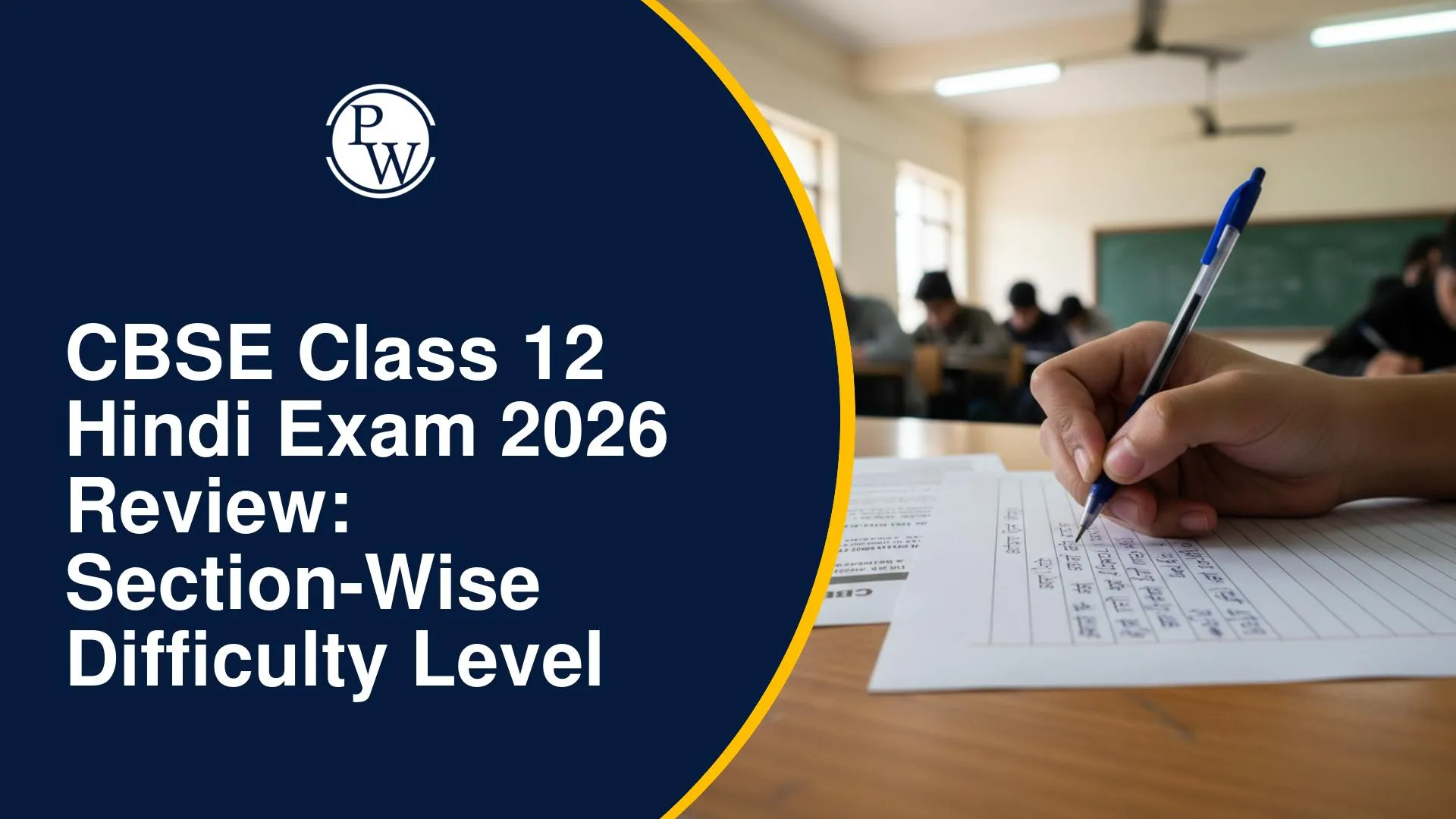
The CBSE Class 12 Hindi Exam 2026 was successfully conducted on 16th March 2026, is a pivotal assessment for students across India, testing their proficiency in the Hindi language, including grammar, comprehension, literature, and creative writing.
Preparing for this exam requires a deep understanding of the subject, its structure, and the types of questions commonly asked. In this article, we will provide a detailed analysis of the expected difficulty level for each section of the Hindi exam, helping students prepare effectively.
CBSE Class 12 Hindi Exam 2026
The CBSE Class 12 Hindi Exam 2026 will assess students' understanding of various aspects of the Hindi language. It will cover sections like comprehension, grammar, literature, and creative writing. The examination is designed to evaluate both the technical and creative skills of students, with a balanced distribution of marks across the sections.
|
CBSE Class 12 Hindi Exam Overview 2026 |
|
|
Aspect |
Details |
|
Conducting Authority |
Central Board of Secondary Education (CBSE) |
|
Official Website |
cbse.gov.in; cbseresults.nic.in (for results) |
|
Date Sheet Release |
October 30, 2025 (tentative/revised December 2025) |
|
Exam Date |
March 16, 2026 |
|
Exam Time |
10:30 AM – 1:30 PM |
|
Exam Mode & Duration |
Offline (pen-paper), 3 hours |
|
Total Marks |
100 (80 theory + 20 internal assessment) |
CBSE Class 12 Hindi Exam Structure
The CBSE Class 12 Hindi exam typically consists of the following key topics:
-
Comprehension Passages
-
Grammar and Writing Skills
-
Literature (Prose, Poetry, Supplementary Readers)
-
Creative Writing
Each section requires different strategies and levels of preparation. Let's delve into the expected difficulty levels for each section.
1. Comprehension Passages (Difficulty Level: Moderate)
The comprehension section of the CBSE Class 12 Hindi Exam 2026 will require students to read passages in Hindi and answer questions based on them. These passages will test students' reading comprehension, ability to infer meaning, and their understanding of key details.
In previous years, the difficulty level of the comprehension passages has been moderate, with passages drawn from various genres like literature, social issues, and current affairs. The questions usually include:
-
Fact-based questions: Students will need to recall specific details from the passage.
-
Inference-based questions: These will test students' ability to read between the lines and understand implied meaning.
-
Vocabulary-based questions: Some questions may ask for synonyms, antonyms, or meanings of certain words used in the passage.
To tackle this section, students should practice reading various types of Hindi texts and focus on improving their ability to quickly grasp the meaning of passages. Regular practice will help increase speed and accuracy, which is crucial for managing time during the exam.
2. Grammar and Writing Skills (Difficulty Level: Moderate to High)
The grammar section will assess students' understanding of Hindi grammar rules, such as sentence formation, tenses, and correct usage of words. This section often carries a significant weightage in the exam. It will include:
-
Fill-in-the-blank questions: These may ask students to complete sentences with the correct grammatical form.
-
Correction of sentences: Students may be required to identify and correct errors in sentences.
-
Translation: Translating sentences from Hindi to English or vice versa could be part of this section.
Grammar questions can be tricky for students who are not familiar with the rules of sentence structure and verb usage. To prepare for this, students should regularly revise grammar rules from their textbooks and practice sentence correction and translation exercises.
The writing skills section usually includes:
-
Letter writing (formal and informal)
-
Essay writing
-
Short story writing
The writing skills section tends to be of moderate to high difficulty, as it tests both creativity and technical language proficiency. Students should focus on improving their writing skills, focusing on clarity, coherence, and correct grammatical usage. Practicing past year papers and mock exams will help in enhancing writing speed and efficiency.
3. Literature (Prose, Poetry, Supplementary Readers) (Difficulty Level: Moderate)
The literature section is a major part of the CBSE Class 12 Hindi Exam 2026 and will test students' knowledge of the prescribed prose, poetry, and supplementary readers. Students will need to:
-
Answer questions based on themes, characters, and plot of the prescribed texts.
-
Explain important lines or stanzas from poems and prose pieces.
-
Discuss the moral or central message of a literary work.
The difficulty level of this section is generally moderate, but it can vary depending on the student's familiarity with the texts. To prepare effectively, students should thoroughly read all the prescribed chapters and poems. Understanding the core themes, character motivations, and the author's message is crucial for answering the questions accurately.
This section may also include questions related to:
-
Historical context: Understanding the background of the literature is important for a comprehensive response.
-
Character sketches: Students should be able to describe key characters and their roles in the story.
4. Creative Writing (Difficulty Level: Moderate)
Creative writing is a section that tests the student's ability to use the Hindi language creatively and expressively. The most common types of questions include:
-
Essay writing on a given topic
-
Letter writing (formal or informal)
-
Story writing based on a given prompt
This section typically carries a moderate difficulty level, but the challenge lies in expressing thoughts coherently and effectively. To excel in this section, students should focus on:
-
Clear structure: A well-organized essay or letter has a higher chance of scoring better.
-
Creativity and originality: This will make the writing more engaging and impactful.
-
Use of correct vocabulary and grammar: Mistakes in grammar or inappropriate word usage can negatively impact scores.
Regular practice of writing essays, stories, and letters on different topics will help students improve their writing skills. Students should also be mindful of time management during the exam.
CBSE Class 12 Hindi Exam Overall Difficulty Analysis
Based on past trends, the CBSE Class 12 Hindi Exam 2026 is expected to maintain a balanced difficulty level across all sections.
While some sections like grammar and creative writing might pose a moderate challenge, others like comprehension and literature will require a solid understanding of the subject. To perform well, students must ensure consistent revision, practice previous years' questions, and focus on both technical aspects of the language and creative expression.