PW Class 6 Science Notes Chapter 10 Living Creatures: Exploring Their Characteristics
 Jasdeep Bhatia19 Sept, 2026
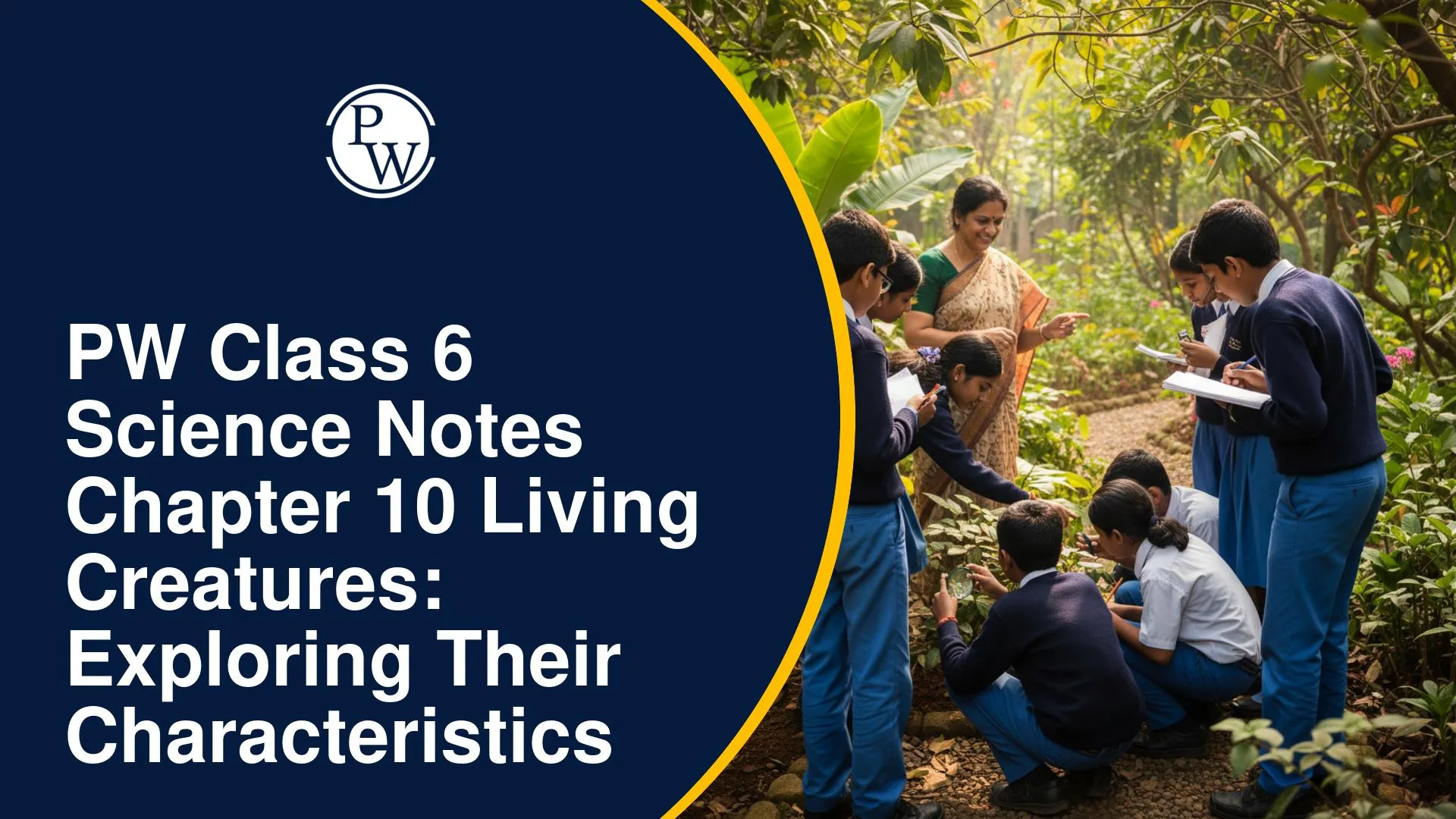
How can we tell whether something is living? Movement may be an obvious sign in animals, but living beings also grow, need nutrition, respire, reproduce, excrete, and respond to changes around them. Plants perform these life processes too, even though their responses may not always be immediately visible.
The PW Class 6 Science Notes Chapter 10: Living Creatures: Exploring Their Characteristics cover these features along with seed germination, movement and growth in plants, and the life cycles of plants and animals. Together, these concepts help students understand how living organisms survive, respond, grow, and continue their life cycles.
What Makes Something a Living Being?
A living being has life and the ability to grow, reproduce, and feed itself. A non-living thing is not alive and does not show the characteristics associated with living organisms.
Living beings share several common characteristics:
-
They show movement.
-
They need food.
-
They grow.
-
They respire.
-
They reproduce.
-
They excrete waste.
-
They respond to stimuli.
These characteristics help distinguish living organisms from non-living objects.
What Life Processes Do Living Beings Perform?
Living organisms carry out several processes necessary for life. These are seen in both plants and animals, although the way they occur may differ.
| Life Process | What It Involves |
| Nutrition | Living beings need food for growth and development. |
| Respiration | Living organisms respire as part of their life processes. |
| Excretion | Waste products are removed from the body. |
| Reproduction | Living beings produce new organisms of their own kind. |
| Response to stimuli | Living beings respond to events or changes around them. |
In humans, breathing involves taking air into the body and releasing it outside. Breathing is part of the process called respiration. Plants also respire, and tiny pores called stomata on leaves help in the movement of air in and out.
Excretion refers to the removal of waste products. Sweat contains water and salts removed as waste, while urine is formed as a product of excretion in animals. Plants can also remove excess water and minerals in the form of small droplets on leaves.
A stimulus is anything or any event that prompts a living being to respond. For example, the touch-me-not plant folds its leaves when touched.
How Do Plants Show Movement and Respond to Their Surroundings?
Plants do not move from one place to another like many animals, but different parts of a plant can show movement and respond to their surroundings.
Some examples include:
-
Flowers opening.
-
Climbers winding around nearby objects.
-
The touch-me-not plant folding its leaves when touched.
-
Shoots growing towards light.
-
Roots growing downwards.
What Conditions Are Needed for Seed Germination?
Germination is the process through which a seed or spore grows into a plant. Several conditions influence this process.
-
Water
Water supports the processes a seed needs for growth. It softens the seed coat and helps the tiny embryo inside the seed develop into a plant.
-
Air and Soil
Seeds use the air present in spaces between soil particles. These spaces also provide room for roots to spread as the plant begins to grow.
-
Light or Darkness
Light requirements can differ among seeds. Bean seeds can germinate without light, although the seedling later requires sunlight to continue growing.
Some flowering plants, such as Coleus and Petunia, require light for germination, while seeds such as Calendula and Zinnia need darkness and should be sufficiently covered with soil.
How Does a Plant Complete Its Life Cycle?
A plant passes through different stages during its life. A seed first germinates and develops into a young plant. Leaves appear as the plant grows, followed by flowers and fruits.
A simple sequence for the life cycle is:
Seed → Germination → Leaves → Flowers → Fruits with Seeds → New Plants
The fruit contains seeds that can germinate and begin another generation. The plant's life cycle continues from one generation of seeds to the next.
How Do the Life Cycles of Animals Differ?
Animals also pass through stages as they grow and develop. The chapter covers the life cycles of a mosquito, silk moth, and frog.
| Organism | Main Life Cycle | Key Point |
| Mosquito | Egg → Larva → Pupa → Adult | Mosquitoes pass through four stages, with early stages associated with water. |
| Silk Moth | Egg → Larva → Pupa → Adult | The larva forms a cocoon using thread-like material. |
| Frog | Egg → Tadpole → Froglet → Adult Frog | The tadpole develops into a froglet before becoming an adult frog. |
Although all three begin with an egg stage, their later stages differ, showing that different animals follow distinct patterns of growth and development before reaching adulthood.
PW Class 6 Science Living Creatures: Exploring Their Characteristics Notes PDF
Students can refer to the PW Class 6 Science Living Creatures: Exploring Their Characteristics Notes PDF for detailed chapter revision. The PDF includes visual examples and life-cycle diagrams that can help students revisit plant responses, germination, and the developmental stages of plants and animals.
PW Class 6 Science Notes Chapter 10 Living Creatures PDF
Study without using the internet
How Do PW Class 6 Science Notes Support Chapter 10 Revision?
Chapter 10 connects several Biology concepts, from identifying living beings to understanding how plants and animals grow. PW Class 6 Science Notes can help students revise these ideas in related groups instead of treating every example as a separate topic.
-
Connect Characteristics with Life Processes
Students can revise growth, nutrition, respiration, excretion, reproduction, movement, and response to stimuli together. This helps build a clearer picture of the characteristics used to identify living organisms.
-
Review Plant Responses with Examples
Examples such as Drosera, touch-me-not plants, climbers, and shoots growing towards light can help students connect plant movement with observable situations.
-
Keep Germination and Plant Growth Separate
PW notes can help students distinguish between the conditions needed for germination and the changes that occur after a seed develops into a growing plant.
-
Compare Life Cycles Side by Side
The plant, mosquito, silk moth, and frog life cycles contain different stages. Revising them together makes it easier to identify the correct sequence for each organism and notice where their development differs.
Living Creatures: Exploring Their Characteristics shows that being alive involves much more than visible movement. Growth, respiration, nutrition, excretion, reproduction, and responses to surroundings are all connected with life. PW Class 6 Science Notes can help students organise these concepts, while the PDF diagrams and related PW resources support further revision and practice.
Related PW Class 6 Science Resources
CBSE Class 6 Science Notes Chapter 10 FAQs
1. What characteristics should students revise to identify living beings?
2. How do plants show movement even though they do not move from place to place?
3. Which life cycles are important in Class 6 Science Chapter 10?
4. Which PW resources can students use after revising Chapter 10?


Have questions about your prep?
Our experts can answer all your questions