






PW Class 6 Social Science Notes Chapter 13: The Value of Work



Work is closely connected with everyday life, but not every kind of work is done for money. Some activities help people earn an income, while others are carried out because of love, care, gratitude, or respect. Recognising the contribution of both forms of work helps us understand how individuals, families, and communities function together.
Physics Wallah Class 6 Social Science Notes bring the important ideas from The Value of Work together for revision. You can understand the difference between economic and non-economic activities, see how value is added through work, and learn how selfless service and community participation contribute to social welfare and everyday well-being.
What Is the Value of Work?
The chapter explores the importance of different types of work and how each contributes to society. Work done at home, in a field, factory, or office is essential for the functioning of daily life.
Both paid and unpaid work have value and contribute to our well-being. Different jobs, whether big or small, are interconnected, which teaches us to respect and appreciate the efforts of everyone in society.
“When you are doing any work, do not think of anything beyond. Do it as worship, as the highest worship, and devote your whole life to it for the time being.”
— Swami Vivekananda
Which Activities Are Called Economic Activities?
Economic activities are those that involve money or are performed in exchange for money or money's worth for the parties involved.
Some examples are:
-
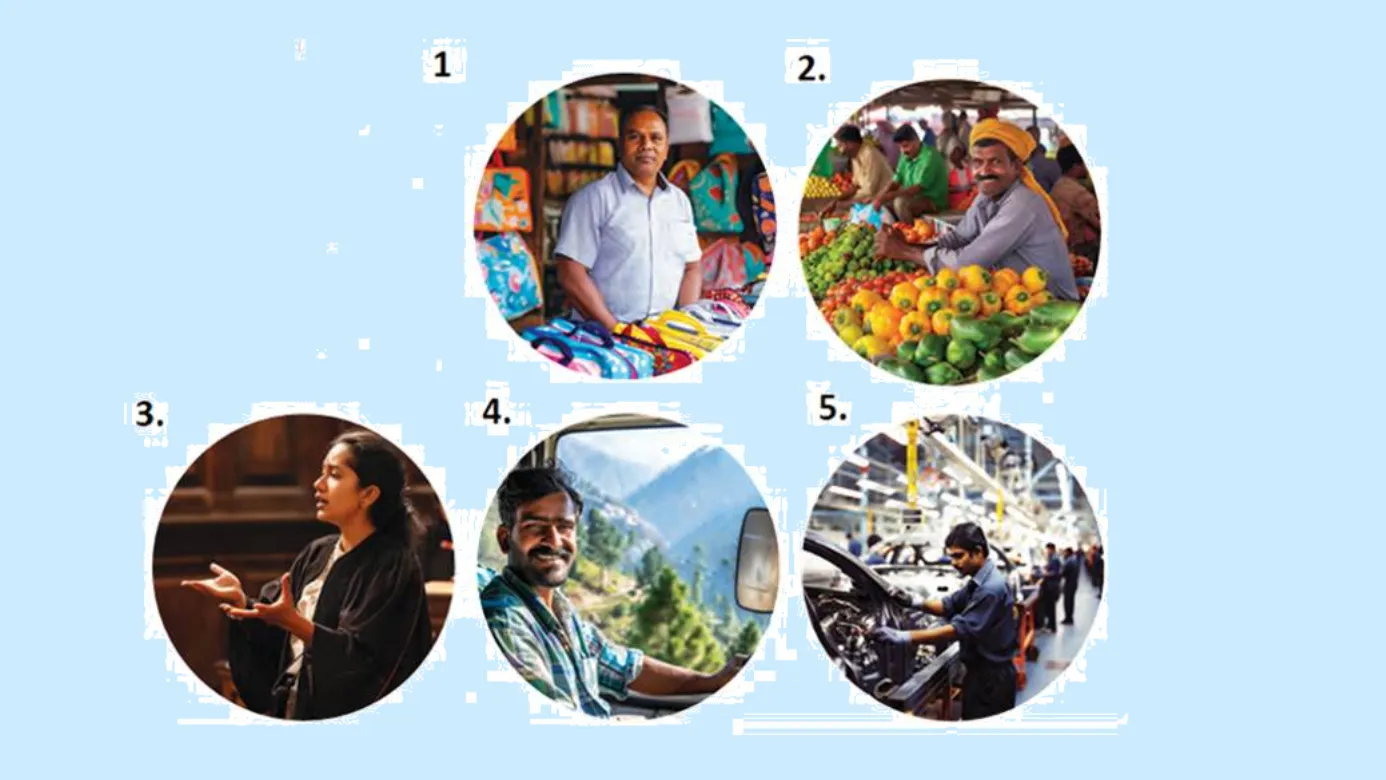
A business person selling school bags in the market.
-
Farmers selling their harvests, likely fresh produce or vegetables, in the market.
-
A lawyer arguing a case.
-
A truck driver transporting goods from one place to another.
-
Workers employed in a car manufacturing factory.
What Are Non-Economic Activities?
Non-economic activities are those that do not generate income or wealth. They are performed because of feelings such as gratitude, love, care, and respect.
Examples include:
-
Parents cooking food for the family.
-
A mother helping her children with schoolwork.
-
Youth taking care of their grandparents.
-
Family members helping in the renovation of the house.

How Do Different Economic Activities Work?
Kavya was excited to visit her aunt in the village of Kamlapur. On the way, she saw a highway being constructed, with large machines such as excavators and bulldozers in action. The new highway would reduce travel time to the nearest town from five hours to just two, allowing Kavya to visit more often.
After reaching the village, she enjoyed delicious jalebis with her aunt and uncle. Her uncle, a bulldozer operator working for a construction company, earns a monthly salary for his services and contributes to the project that would soon benefit the entire village.
-
Kavya's aunt works at the village post office and receives a monthly salary for her services. She also conducts online classes to help students and charges a weekly fee.
-
Sahil, a farm labourer, tills land using a tractor and earns a daily wage. Part of his payment is in cash, while the rest is in the form of mangoes, known as “payment in kind.”
These examples show different ways in which people earn money or its equivalent through their work.
How Does Work Add Value?
Economic activities have value in terms of money. They can also add value at each stage of the process of transforming something into another form. This is called value addition.
The example of Kavya's father, Rajesh, explains this idea.
Rajesh, a carpenter, engages in an economic activity by:
-
Purchasing wood for Rs. 600 from the market to make furniture.
-
Using his skills, tools, and materials to craft a chair, which he sells for Rs. 1,000.
-
Creating a difference of Rs. 400, which represents the value of his skill, time, and effort in transforming the wood into a chair.
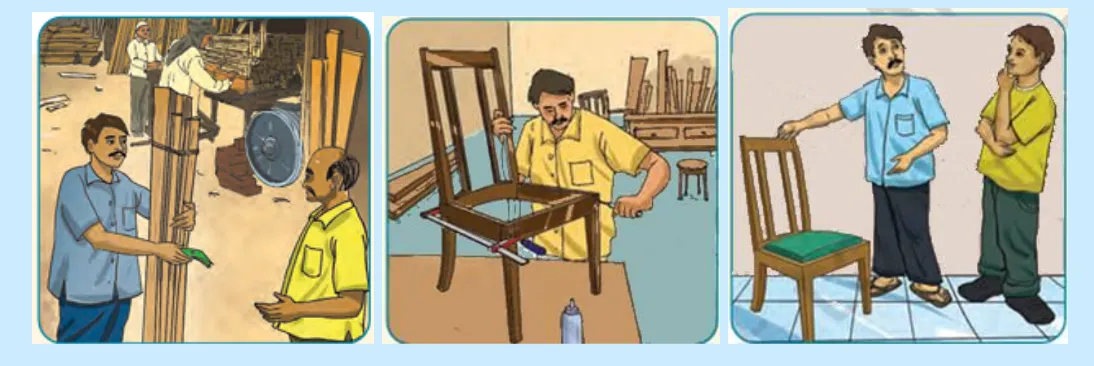
The process of buying raw materials, adding value through work, and selling the finished product for payment makes Rajesh's work a clear example of an economic activity.
Why Do Non-Economic Activities Matter?
Although non-economic activities may not involve money, the value they create is important in everyday life.
-
Sevā: The Value of Selfless Service
Sevā, or selfless service, can be seen in places such as temples, gurudwaras, mosques, and churches.
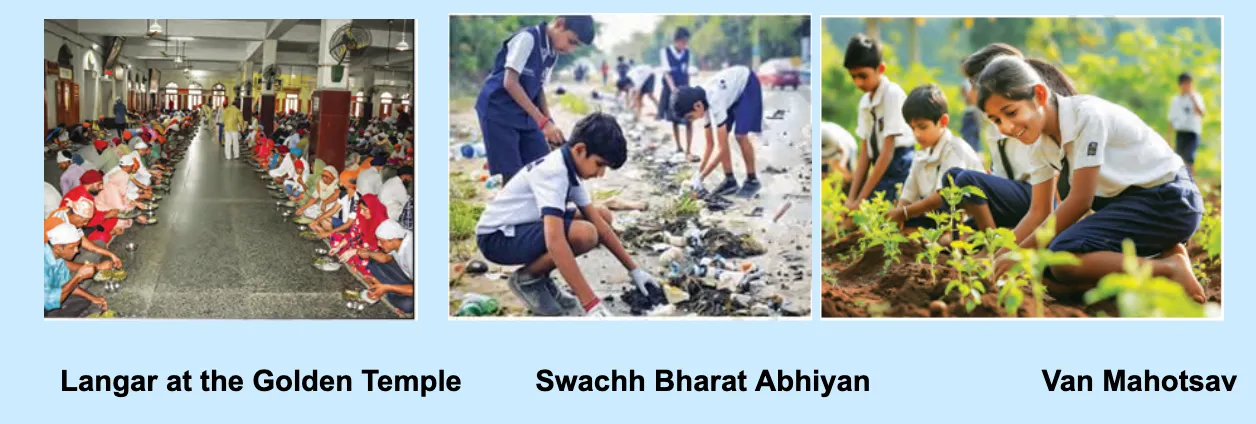
One example is langar, or the community kitchen at gurudwaras, where free food is served to all visitors. Such practices promote gratitude and satisfaction for what we have while encouraging contributions to society without expecting anything in return.
How Does Community Participation Create Change?
Community participation plays an important role in initiatives where people work together for a common purpose.
-
Swachh Bharat Abhiyan
The Swachh Bharat Abhiyan encourages citizens to work together to keep their surroundings clean. Beyond individual efforts at home, people join forces to clean streets, roads, parks, and public spaces, contributing to a cleaner nation.
-
Van Mahotsav
Van Mahotsav is a festival in India that promotes awareness about the importance of trees and forest conservation. It brings communities together for tree plantation drives and highlights the strength of collective efforts in environmental preservation.
CBSE Class 6 Social Science Chapter 13 Notes PDF
Download the The Value of Work notes PDF to revise economic and non-economic activities, value addition, selfless service, and community participation alongside your textbook.
CBSE Class 6 The Value of Work Chapter 13 Notes PDF
Download and Read without Internet
Why Choose Physics Wallah Notes for Chapter 12: The Value of Work?
Physics Wallah notes bring the chapter's important concepts together to support focused revision.
-
Economic activities: Revisit activities that involve money or money's worth.
-
Non-economic activities: Recall activities performed because of love, care, gratitude, and respect.
-
Value addition: Understand how work can increase the value of a product.
-
Sevā: Revise the idea of selfless service through the example of langar.
-
Community participation: Revisit the role of collective efforts in Swachh Bharat Abhiyan and Van Mahotsav.
Everyday life depends on many forms of work, whether they involve earning money or supporting others without financial gain. The chapter shows how economic activities create value, while non-economic activities contribute to social welfare and personal well-being. Together, these forms of work shape communities and improve the overall quality of life.