






PW Class 6 Social Science Notes Chapter 9: Family and Community

The people around you play an important role in everyday life. Families can have different structures, and each member contributes in different ways through care, responsibilities, support, and shared experiences. At the same time, communities bring people together through social activities, shared resources, education, and support during difficult situations.
The Class 6 Social Science Notes by Physics Wallah bring the chapter’s key ideas together for revision. You can revisit the different family structures, the roles of family members, the ways communities provide support, and the connection between family and community in one place.
What Are the Different Types of Family Structures?
Families can take different forms depending on who lives together and how family members are connected. The chapter discusses several family structures.
-
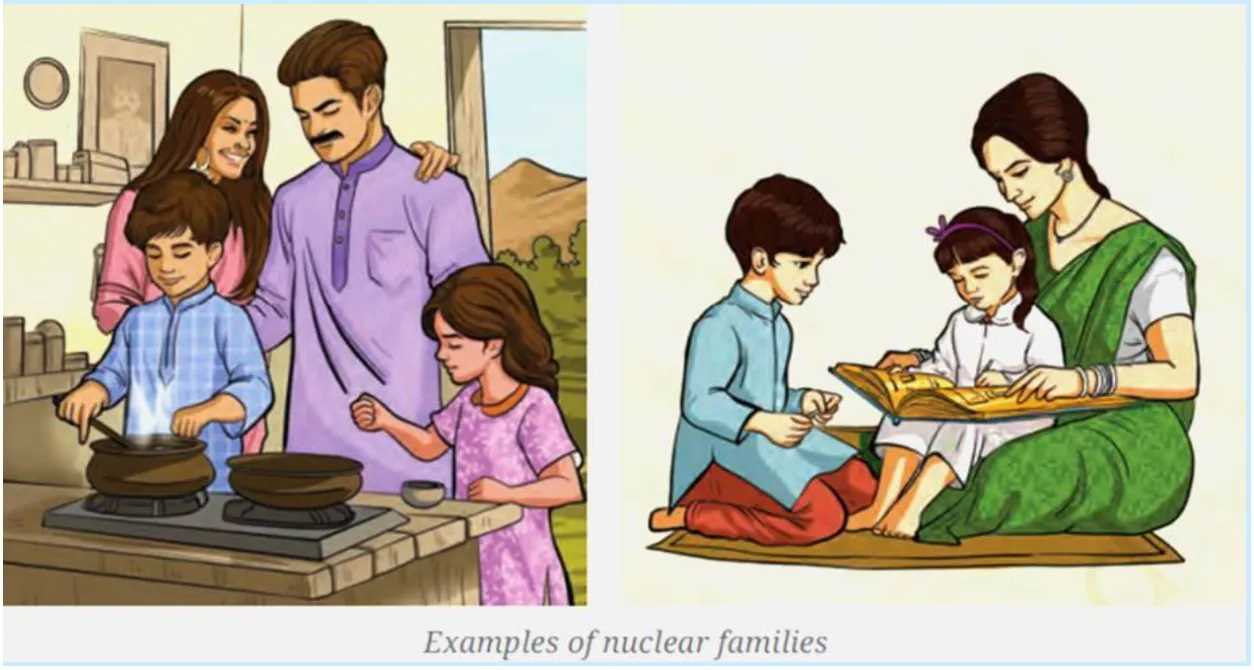
Nuclear Family
A nuclear family consists of two parents and their children living in the same household. It is often the most common family structure in many societies.
-
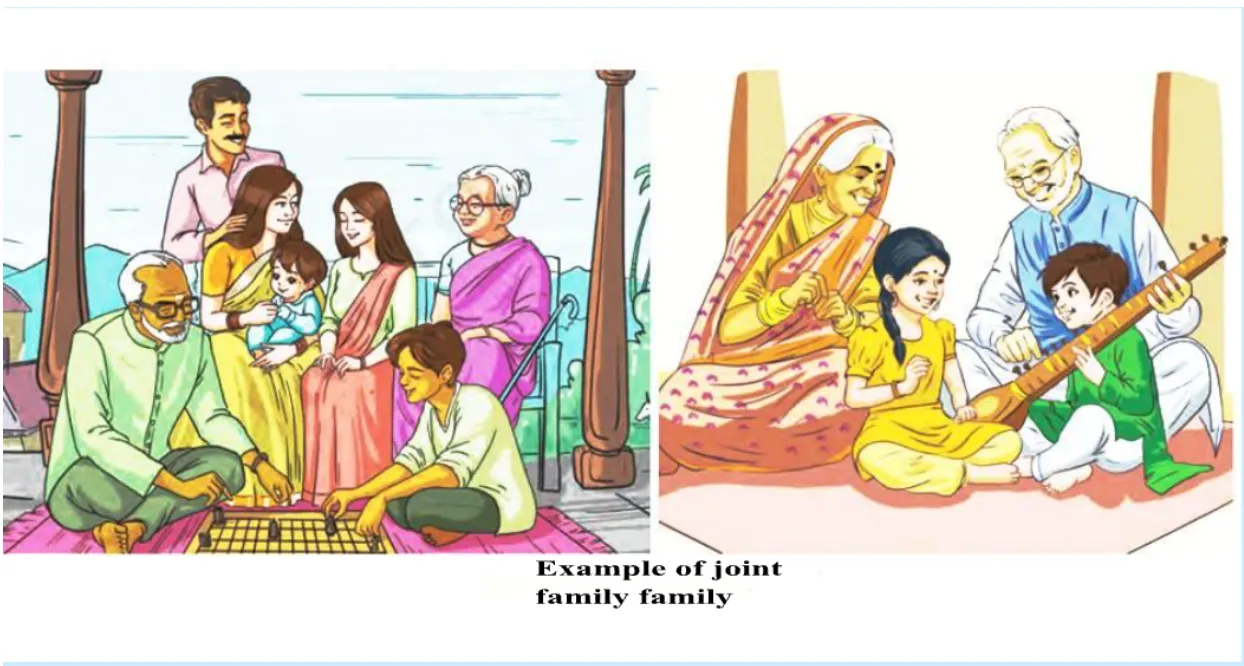
Joint Family
A joint family includes parents, their children, and other relatives such as grandparents, uncles, aunts, and cousins living together under one roof. This structure promotes strong family bonds and shared responsibilities.
-
Extended Family
An extended family may live together or close by and can include relatives beyond the immediate family, such as cousins, great-grandparents, or in-laws. They can offer support and help maintain family traditions.
-
Single-Parent Family
In a single-parent family, one parent is responsible for raising the children. This may happen because of separation, divorce, or the death of a partner.
-
Blended Family
A blended family is formed when one or both partners in a new marriage bring children from previous relationships into the family. Such families involve adjusting to new family dynamics and relationships.
How Do Family Members Share Roles and Responsibilities?
Every family member can contribute in different ways. Their roles include care, support, guidance, and sharing responsibilities at home.
-
Parents
Parents provide for their children's physical needs, such as food and shelter, along with their emotional and educational needs. They guide their children, teach them values, and look after their overall well-being.
-
Children
Children contribute by helping with chores, following household rules, and respecting their parents. Their family environment also helps them learn important life skills and values.
-
Siblings
Siblings support one another by sharing responsibilities, including helping with tasks around the house. They also provide emotional support and often develop close bonds through shared experiences and activities.
-
Grandparents
Grandparents share valuable wisdom and family history and may also assist with childcare. They help reinforce family traditions and provide additional support to parents and grandchildren.
-
Extended Family
Aunts, uncles, cousins, and other extended family members take part in family events and provide support in different situations. They strengthen the family network and offer a broader support system.
Why Is Community Support Important?
Communities can provide support in many areas of life. They help people connect with others, access shared resources, learn new skills, and receive assistance when needed.
-
Emotional Support
Community members can offer emotional support through friendships, counselling, and a sense of belonging. This helps people feel connected and less isolated.
-
Social Activities
Communities organise fairs, festivals, and sports activities that bring people together. These activities encourage social interaction and help create a sense of community spirit.
-
Shared Resources
Communities provide facilities such as parks, libraries, and community centres that are available for everyone to use. These shared resources offer spaces for leisure and learning and can improve quality of life.
-
Help in Emergencies
During emergencies or disasters, communities can come together to provide assistance. This may include shelter, food, and medical aid to ensure that people's needs are met.
-
Education and Learning
Community centres may organise educational programmes, workshops, and classes for people of different age groups. These opportunities support learning and skill development and are accessible to everyone in the community.
How Are Family and Community Connected?
Families and communities support one another in several ways. Their relationship can help people receive support, develop social skills, maintain traditions, and resolve problems.
-
Support Systems
Families and communities work together to support individuals in their daily lives. This mutual support helps people get the assistance they need to thrive.
-
Shared Responsibilities
Family and community both share responsibility for raising and nurturing children. This includes education, guidance, and moral support.
-
Cultural Practices
Families and communities help maintain and celebrate cultural practices and traditions. These shared customs strengthen a person's sense of identity and belonging.
-
Conflict Resolution
Families and communities can work together to resolve conflicts and deal with problems. Effective communication and mutual understanding are important for maintaining harmony.
-
Social Development
Interactions within families and communities contribute to personal growth and social development. These relationships help individuals learn important social skills and values.
Family and Community: Key Ideas to Remember
The chapter brings together the different ways in which families and communities support individuals and strengthen relationships.
-
Families can have different structures, including nuclear, joint, extended, single-parent, and blended families.
-
Family members share different roles and responsibilities.
-
Communities provide emotional support and opportunities for social interaction.
-
Shared facilities such as parks, libraries, and community centres benefit everyone.
-
Communities can provide assistance during emergencies and offer opportunities for education and learning.
-
Families and communities share responsibilities related to children, cultural practices, conflict resolution, and social development.
CBSE Class 6 Social Science Notes Chapter 9 Family and Community
Study without using the internet
How Can Physics Wallah Notes Help You Revise Family and Community?
Physics Wallah notes bring the chapter's important concepts together so you can return to specific topics during revision.
-
Family structures: Recall the features of nuclear, joint, extended, single-parent, and blended families.
-
Family responsibilities: Review the roles of parents, children, siblings, grandparents, and extended family members.
-
Community support: Revisit emotional support, social activities, shared resources, emergency assistance, and learning opportunities.
-
Family-community relationships: Refresh the ideas of support systems, shared responsibilities, cultural practices, conflict resolution, and social development.
Families and communities influence how people receive care, support, guidance, and opportunities to learn and grow. The chapter shows that these relationships involve shared responsibilities, cultural traditions, communication, and cooperation. Understanding the different family structures and forms of community support can help you better grasp the connections between individuals, families, and the wider community.
Related Resources
-
CBSE Class 6 Social Science NCERT Solutions
-
CBSE Class 6 Social Science Sample Paper
-
CBSE Class 6 Social Science Most Important Questions