






CBSE Class 8 Social Science Notes: Chapter 5 Universal Franchise and India’s Electoral System

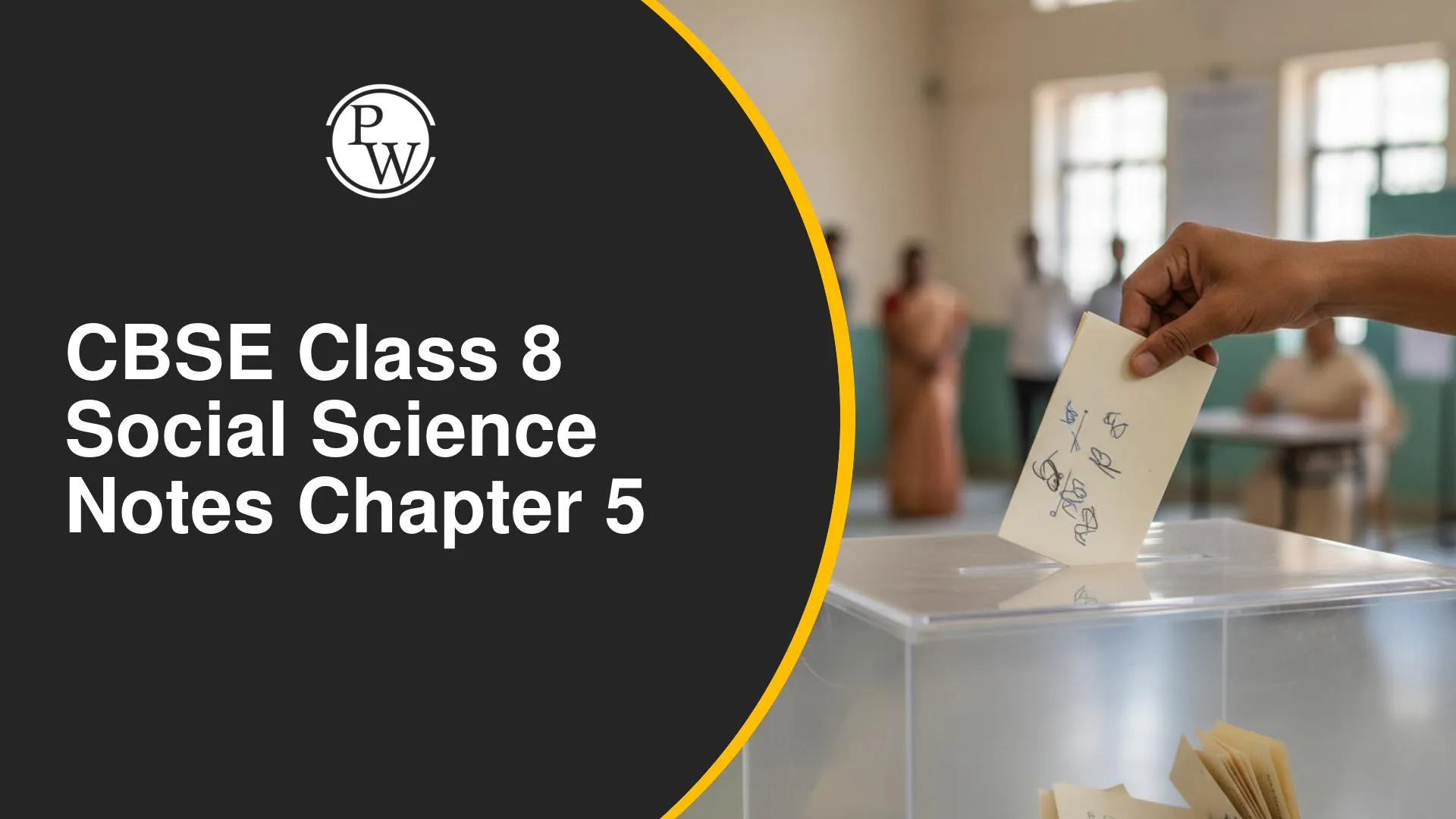
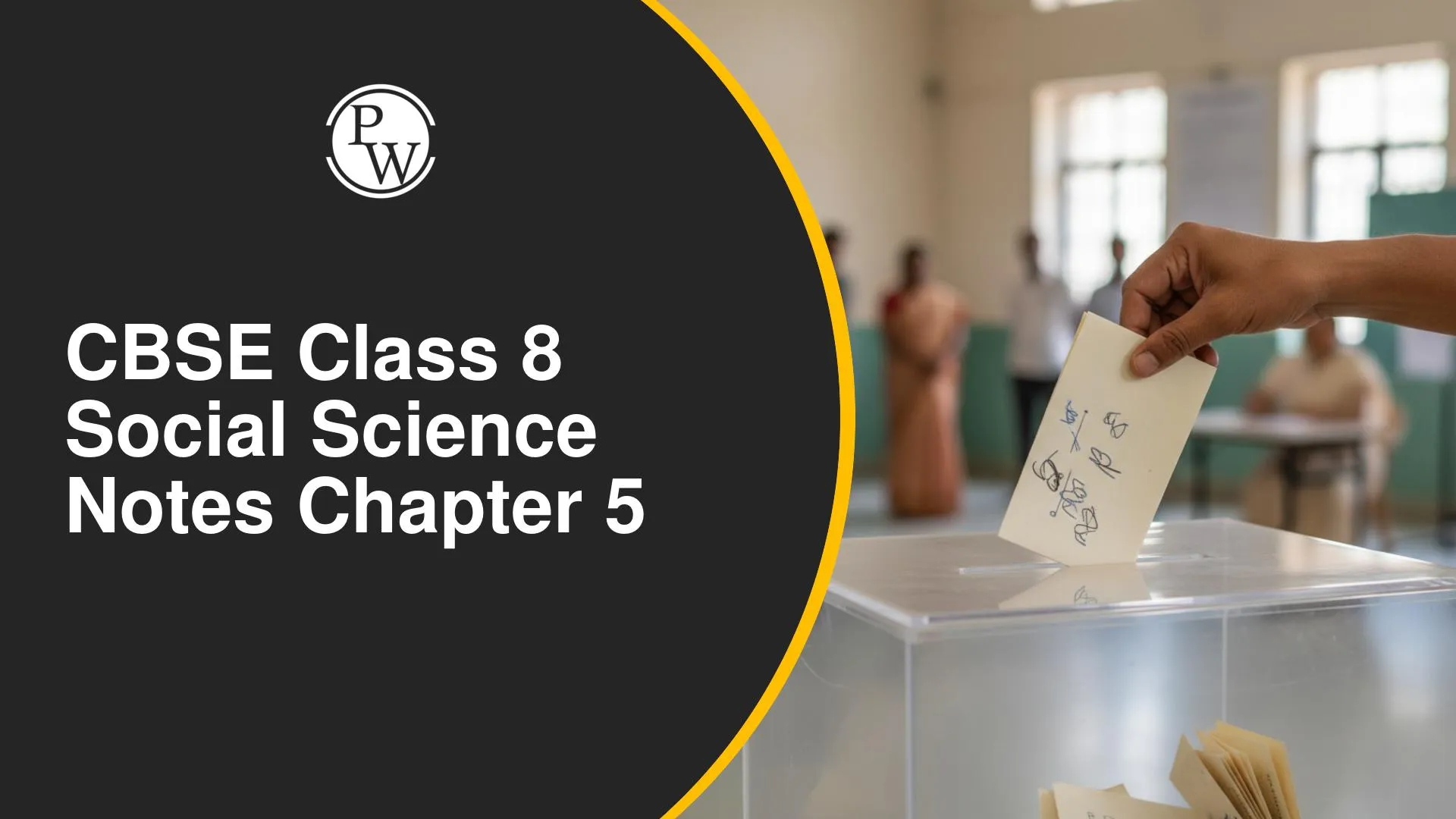
Universal Franchise and India's Electoral System is an important chapter in the CBSE Class 8 Social Science syllabus that introduces students to the functioning of democracy in India. It explains who can vote, how elections are conducted, and why every eligible citizen has an equal right to participate in the democratic process.
CBSE Class 8 notes cover the major concepts of the chapter in a simple and easy-to-understand manner. They are designed to help students revise quickly, understand key topics, and strengthen their preparation for school examinations.
Universal Franchise and India’s Electoral System Class 8 Notes
This chapter discusses the principles of democratic elections in India and highlights how every eligible citizen gets an equal opportunity to choose their representatives. Universal Franchise and India’s Electoral System Class 8 Notes are given here:
1. Introduction
• India has one of the largest democracies in the world.
• Every adult citizen has the right to vote and choose their leaders.
• Universal Adult Franchise ensures equal voting rights for all.
• Elections are conducted and managed by the Election Commission of India (ECI).
2. Universal Adult Franchise
• All Indian citizens 18 years and above have the right to vote.
• Voting is equal for everyone, regardless of caste, religion, gender, or income.
• Guaranteed under Article 326 of the Indian Constitution.
• No person can vote on behalf of another.
• Some criminals are barred from voting by law.
• In recent elections, around 98 crore voters were eligible.
• Universal franchise promotes equality and political participation.
3. Importance and Challenges of Universal Franchise
• Gives every citizen a voice in democracy.
• Strengthens equality and representation.
• India’s large size and population make elections complex.
• Remote areas and people with disabilities face voting difficulties.
• The ECI works to remove barriers and improve accessibility.
• Measures include:
→ Postal voting
→ Braille ballot papers
→ Home voting for elderly and disabled voters
4. Role of the Election Commission of India (ECI)
• An independent constitutional body, established in 1950.
• Conducts free and fair elections across India.
• Manages elections for:
→ Lok Sabha
→ Rajya Sabha
→ State Assemblies
→ President and Vice-President
• Updates voter lists and manages election machinery.
• Enforces the Model Code of Conduct to ensure fair campaigning.
• Lok Sabha elections involve 543 constituencies and millions of voters.
5. Elections in India
• India follows a parliamentary system.
• Elections are held at national, state, and local levels.
• Lok Sabha members are called Members of Parliament (MPs).
• State Assembly members are called MLAs.
• Uses the First-Past-The-Post system.
• A party or coalition with the majority of seats forms the government.
• Rajya Sabha members are elected indirectly by MLAs.
• Rajya Sabha is a permanent house with six-year terms.
• The President is elected by an Electoral College of MPs and MLAs.
• The Vice President is elected by MPs and chairs the Rajya Sabha.
6. Challenges and the Future of Elections
• Challenges include:
→ Money power
→ Criminal background of candidates
→ Voter apathy
• Strengthening democracy requires:
→ Voter education
→ Awareness campaigns
• Media and campaigns help voters make informed choices.
• An informed voter is essential for a healthy democracy.
CBSE Class 8 Social Science Notes Chapter 5 PDF
CBSE Class 8 Social Science Notes Chapter 5 PDF allows students to study anytime and revise important concepts before exams without going through the entire textbook.
The chapter notes PDF includes simplified explanations of Universal Adult Franchise, the electoral process, voting rights, the role of the Election Commission, and the significance of free and fair elections. It serves as a handy revision resource for classroom learning, homework, and exam preparation.
CBSE Class 8 Social Science Notes Chapter 5 PDF
Study without using the internet
How to Use CBSE Class 8 Social Science Chapter 5 Notes
Universal Franchise and India’s Electoral System Class 8 notes are prepared to make revision simple and time-efficient. Instead of reading the entire chapter repeatedly, students can use these notes to quickly review important concepts, definitions, and key points before tests and examinations.
-
Read the NCERT chapter once before referring to the notes for better understanding.
-
Use the notes to revise important topics such as Universal Adult Franchise, India's Electoral System, and the Election Commission of India.
-
Highlight key terms, dates, and definitions for quick recall.
-
Revise the notes regularly to strengthen your understanding of the chapter.
-
Solve NCERT exercise questions and sample questions after completing your revision to assess your preparation.
FAQs
What is Universal Adult Franchise?
Why are elections important in a democracy?
What is the role of the Election Commission of India?
How do CBSE Class 8 Social Science Notes Chapter 5 help students?






Get Free Counselling Today
and Clear up all your Doubts
 Live & recorded classes available at easeDashboard for progress trackingLakhs of practice questions

