






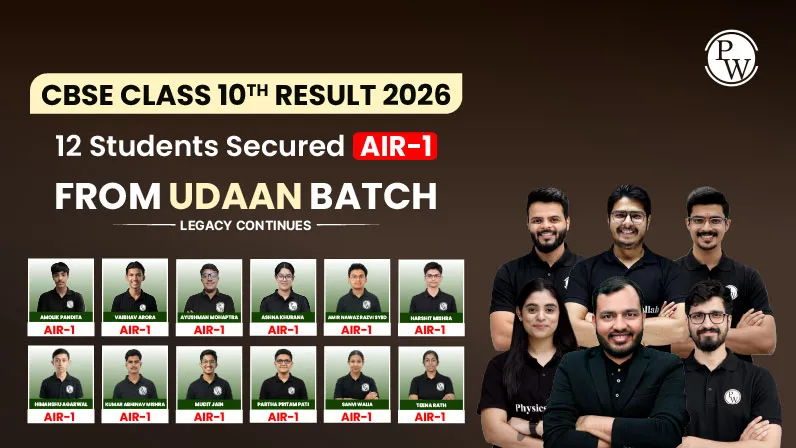
PW CBSE Class 10th 2026 Result Celebration: Toppers Share Success Secrets, Study Tips & Motivation



Physics Wallah (PW) celebrated the exceptional performance of its CBSE Class 10 students with the PW CBSE Class 10th 2026 Result Celebration, recognising the hard work of students, teachers, and parents. The event showcased inspiring success stories, topper strategies, and practical preparation tips for students preparing for future board examinations.
Beyond celebrating high scores, the event focused on building the right mindset, encouraging discipline, and helping students understand that consistent effort is the foundation of long-term academic success.
Dedicated Faculty Behind Students' Success
The event featured PW's experienced faculty members who guided students throughout the academic session, including:
-
Ritik Sir – Mathematics
-
Sunil Sir – Science
-
Rakshak Sir – Physics
-
Samriddhi Ma'am – Biology
-
Siddharth Sir – Social Science
-
Akash Tyagi Sir – Science
-
Anurag Sir – English
-
Prateek Sir – Computer Science
-
Ujjwala Ma'am & Aditi Ma'am – Hindi
-
Uday Sir – Mathematics
Teachers highlighted that classroom teaching is not limited to completing the syllabus. Their objective is to build conceptual clarity, develop confidence, and motivate students to believe they can achieve excellent results.
Meeting students in person after months of online teaching made the celebration especially memorable for both faculty and learners.
Celebrating More Than Just Marks
Speakers emphasized that board results are not merely about percentages but about the journey of learning.
Every successful student represents:
-
Months of consistent preparation
-
Strong parental support
-
Dedicated teacher mentorship
-
Self-discipline and determination
The celebration encouraged students to view success as continuous improvement rather than comparing marks with others.
Outstanding Student Performance
PW once again recorded remarkable board results.
Some major highlights included:
-
12 students secured perfect scores (100%).
-
More than 500 students scored above 99%.
-
Over 10,000 students secured more than 95%.
Faculty credited these achievements to students' dedication, regular practice, and disciplined preparation throughout the academic year.
Importance of Parents in Academic Success
Teachers acknowledged parents as equal partners in every student's success.
According to the faculty, parents contribute by:
-
Creating a positive study environment
-
Supporting emotional well-being
-
Providing necessary learning resources
-
Encouraging students during difficult phases
Their continuous support helps students remain motivated during board preparation.
Time Management Tips Shared by PW Faculty
One of the major discussion points was effective time management.
Students were advised to:
-
Identify where time is being wasted.
-
Complete daily targets instead of following rigid hourly schedules.
-
Reduce unnecessary social media usage.
-
Use free time for productive hobbies or relaxation.
-
Balance studies with proper sleep and recreation.
Faculty stressed that productivity depends more on completing meaningful tasks than following a perfect timetable.
Three Principles of Consistency
Teachers explained three pillars of long-term success:
1. Long-Term Commitment (Dirghkaleen)
Stay dedicated to your goals throughout the academic session.
2. Continuous Practice (Nirantar)
Study every day without long breaks.
3. Persistent Effort (Prayasrat)
Keep working even when motivation is low or challenges arise.
According to the speakers, these three principles are the real secret behind excellent board results.
Preparing for Class 11 and Competitive Exams
Faculty also guided students transitioning from Class 10 to Class 11.
Important advice included:
-
Class 11 is conceptually much more challenging.
-
Build conceptual understanding instead of memorising answers.
-
Revise regularly from the beginning.
-
Prepare simultaneously for school and competitive examinations.
-
Students aiming for JEE or NEET should maintain consistency from Day 1.
-
Those with lower Class 10 marks should not lose confidence, as improvement is always possible with disciplined preparation.
Students were also encouraged to keep alternative career options (Plan B) while pursuing competitive exams.
Balancing Studies and Hobbies
Teachers discouraged students from giving up all hobbies.
Instead, they advised students to:
-
Eliminate distractions rather than hobbies.
-
Continue activities that refresh the mind.
-
Maintain a healthy balance between academics and personal interests.
Positive hobbies help reduce stress and improve long-term productivity.
Effective Study Strategies Shared by Toppers
Successful students shared practical preparation methods that helped them score exceptionally well.
Their common strategies included:
-
Complete the syllabus by November.
-
Solve 60–75 sample papers before board exams.
-
Read NCERT textbooks thoroughly.
-
Make concise notes for quick revision.
-
Revise regularly instead of studying only before exams.
-
Focus on understanding concepts rather than rote learning.
-
Practice previous years' questions and sample papers consistently.
Several toppers said that writing difficult concepts in their own words made revision much easier.
Managing Backlogs Effectively
Students also discussed how they handled pending lectures and unfinished topics.
Their suggestions included:
-
Watch backlog lectures at faster playback speed when necessary.
-
Prioritise live classes while gradually clearing old topics.
-
Replace excessive mobile usage with productive study sessions.
-
Annotate important teacher explanations directly in NCERT books instead of maintaining multiple notebooks.
The focus should remain on completing concepts rather than creating excessive study material.
Lessons Shared by PW Toppers
The event concluded with several inspiring messages from students.
Some of the most valuable lessons included:
-
Consistency is more powerful than talent.
-
Discipline is more reliable than motivation.
-
Avoid comparing yourself with others.
-
Learn from mistakes instead of fearing them.
-
Trust your teachers and follow their guidance.
-
Revise regularly and practice daily.
-
Conceptual understanding creates long-term success.
-
Stay positive during setbacks and continue improving.
Students also encouraged juniors to enjoy Class 10 while preparing sincerely, as the academic level increases significantly in Classes 11 and 12.
PW CBSE Class 10th 2026 Result Celebration FAQs
1. What was the objective of the PW CBSE Class 10th 2026 Result Celebration?
2. What were the major result highlights shared during the celebration?
3. What study strategies did toppers recommend?
4. What advice was given for students moving to Class 11?






Get Free Counselling Today
and Clear up all your Doubts
 Live & recorded classes available at easeDashboard for progress trackingLakhs of practice questions

