







Why Engineers from Tier-2 Colleges Lose Jobs They're Qualified For

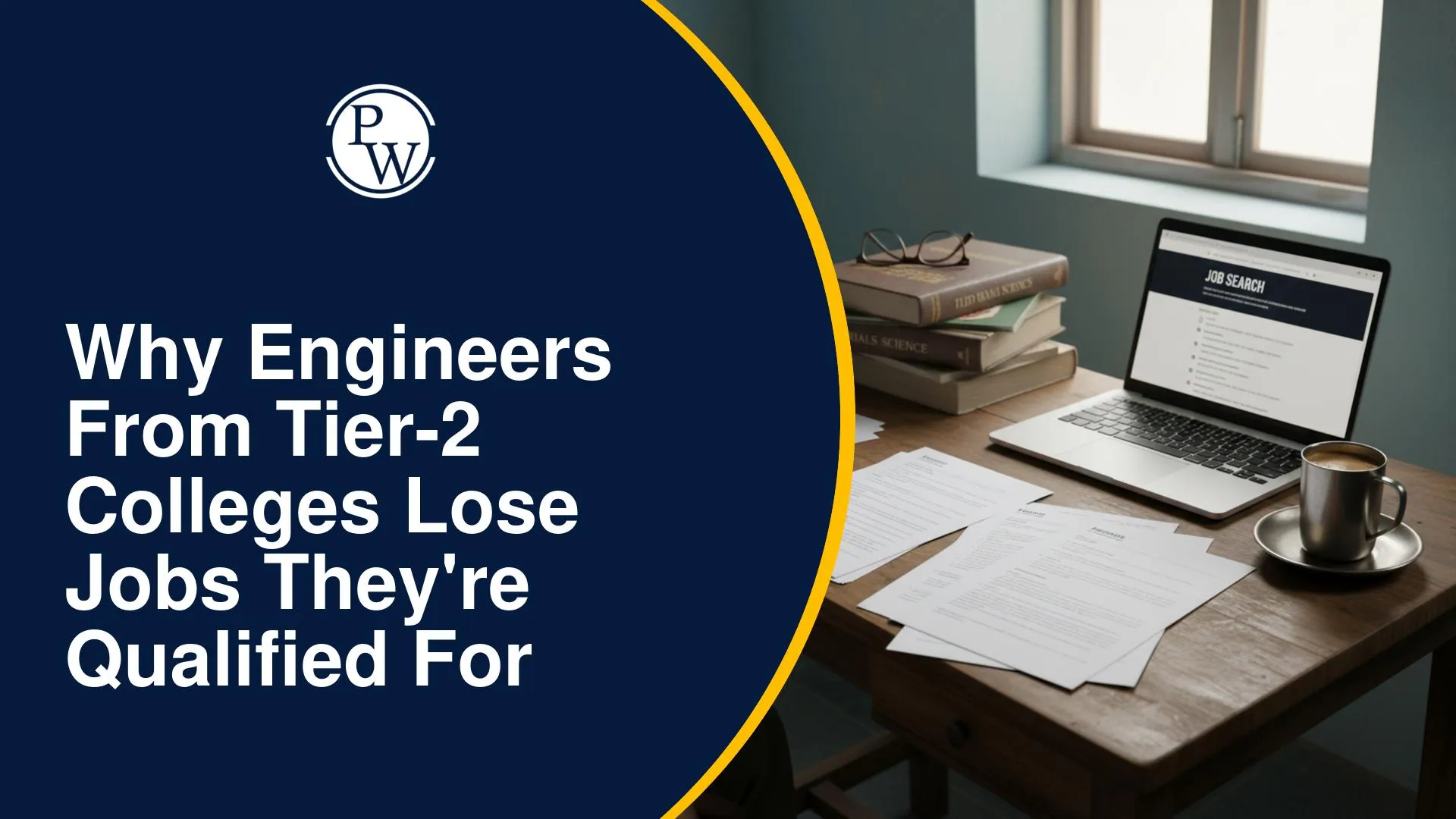
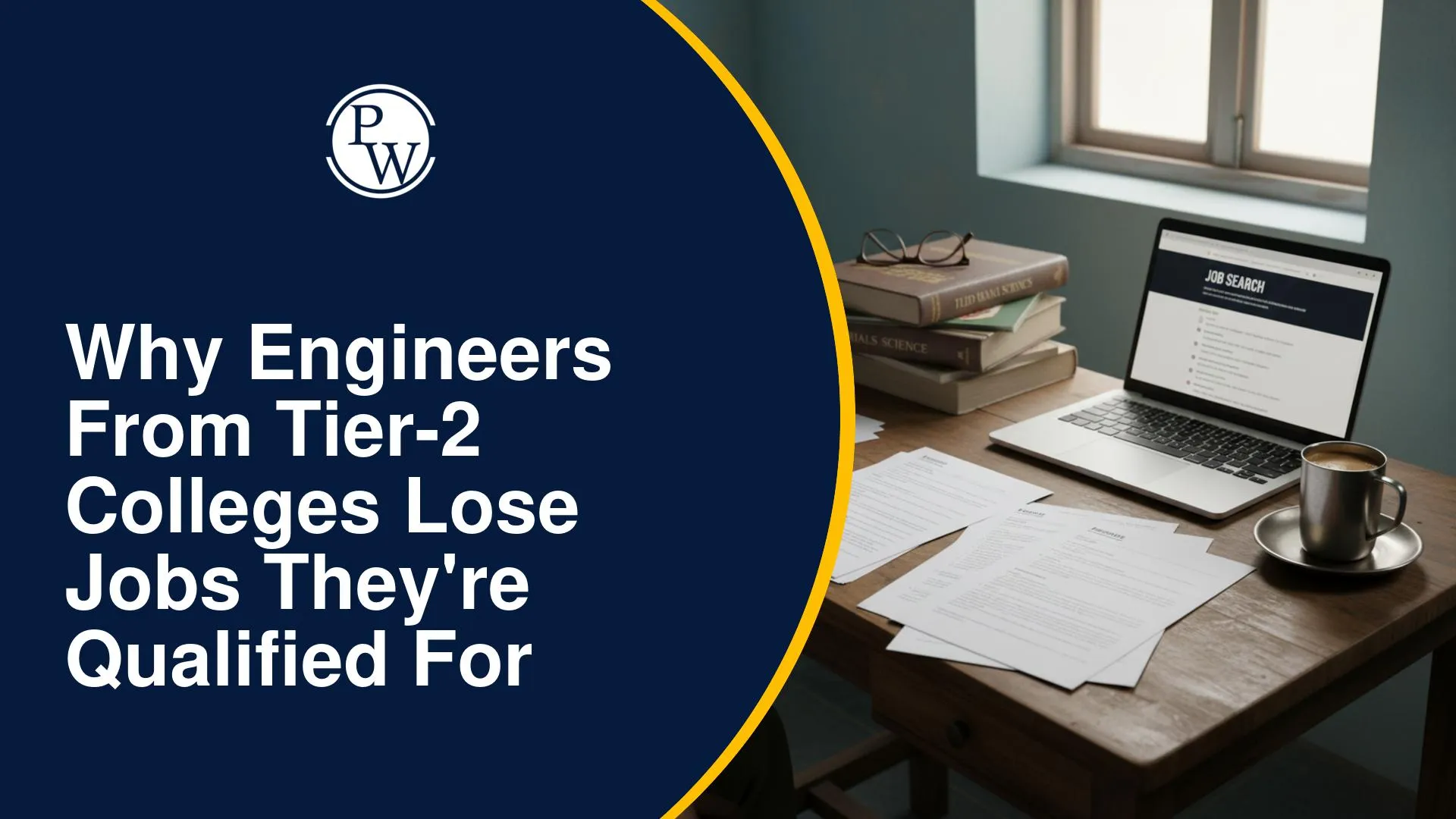
Many engineering graduates from Tier-2 colleges possess the technical knowledge required for job roles but still struggle to secure offers. The challenge is often not a lack of ability, but a gap between what students learn in college and what employers expect during the hiring process. Outdated curricula, limited practical exposure, and a lack of industry-focused training can make it difficult for candidates to showcase their true potential.
Modern recruitment processes evaluate much more than academic performance. Companies look for communication skills, problem-solving ability, practical experience, and confidence during interviews. Understanding these expectations can help engineering students identify skill gaps early and take the right steps to improve their employability and career opportunities.
For students looking to strengthen their spoken English and interview communication, platforms like PW Talk can provide practice through real-life speaking activities and interview-focused learning.
College Syllabus Does Not Match Industry Needs
A recent NITI Aayog report on expanding quality higher education in India flags something that shouldn't surprise anyone in the industry: courses, syllabi, and curricula have not kept pace with changing technologies and industry demands.
The problem isn't that students aren't learning; it's that what they're learning is often outdated. Concepts are taught in isolation from real-world application. Technologies that companies use daily may not appear in a syllabus for years after they become standard.
By the time a student graduates, the gap between what they studied and what a job requires can already be significant. Recruiters often identify this gap during assessments and interviews. A candidate may know the theory cold but struggle to connect it to the kind of problem they'd solve on day one at work.
Good Marks Don't Always Lead to Job Offers
There's a common assumption that a strong GPA or a solid grasp of fundamentals should be enough to pass a screening. It isn't, not anymore.
The report identifies an imbalance between academic rigour and practical applicability as a core challenge. Students are tested on recall and problem-solving within the controlled environment of an exam.
Hiring processes test something different: can you apply what you know, explain your thinking under pressure, and communicate your approach clearly to someone who doesn't share your context?
These are not the same skills. And the second set rarely gets trained in a traditional classroom.
Also Check:
- Why Your CGPA Isn't Enough: The Communication Filter in Indian Campus Hiring
- How to Introduce Yourself in English for a Job Interview: A Framework for Indian Students
Why the HR Interview Matters So Much
This is one area where many candidates may face challenges before reaching later stages of the hiring process.
The HR screening call is often treated as a formality. It isn't. It's the first filter, and it tests communication clarity, confidence, and the ability to present yourself professionally in English.
The report is direct about this: inadequate English-language proficiency is a significant contributor to talent outflow, with many capable graduates unable to demonstrate their skills because language becomes a barrier before technical ability is ever assessed.
A recruiter who cannot clearly understand a candidate's responses will not move them forward, regardless of how strong their resume looks. This isn't bias, it's a practical limitation that candidates from Tier-2 colleges are disproportionately exposed to, and one that rarely gets addressed in their curriculum.
Lack of Industry Exposure Creates Challenges
Students from Tier-2 colleges often enter the hiring process without ever having experienced what a real interview environment feels like. The report notes that limited engagement between universities and the private sector restricts collaborative research, skill development, and critical exposure to real-world hiring expectations.
When a candidate from a Tier-1 institution sits for an interview, they've often been through mock sessions, company-sponsored campus events, and peer networks that carry insider knowledge of how hiring actually works. Many Tier-2 candidates arrive without any of that scaffolding.
The report also highlights that industry participation in curriculum and pedagogical development is limited, meaning that what students are learning is not shaped by what companies are actually looking for. The result is a mismatch that shows up in interviews, not in aptitude.
What Companies Really Check During Interviews
This is the part most students don't realize until it's too late.
A technical interview doesn't just test whether you can write correct code. It evaluates how you approach a problem you haven't seen before. It tests whether you ask the right clarifying questions, how you communicate your reasoning as you work, and whether you can adapt when your first approach doesn't hold up.
The report's recommendations are aligned with exactly this: integrating employability-focused initiatives into curricula, developing learning outcomes around practical skills, problem-solving abilities, and communication skills, and making internships and apprenticeships mandatory.
These aren't soft add-ons. They are the skills being evaluated in every round of a modern hiring process.
Also Check:
Programs That Help Students Become Job-Ready
This isn't an unsolvable problem. Telangana's TASK (Telangana Academy for Skill and Knowledge) model demonstrates what's possible when industry, academia, and government align around a shared goal.
By providing modules that develop technological, personal, and organizational skills, TASK has benefited nearly 9.84 lakh students over the past decade and facilitated more than 35,000 placements. The model works because it treats employability as a measurable outcome, not an afterthought.
What Engineering Students Can Do to Improve Their Chances
Waiting for the system to catch up is not a strategy. Here's what matters in the near term:
-
Close the communication gap. Practice explaining your thinking out loud, not just solving problems, but narrating your approach. Record yourself. Get feedback. Communication is a skill, and it responds to practice.
-
Build outside the classroom. Projects, open-source contributions, internships, anything that creates a portfolio of practical work you can speak to concretely in an interview.
-
Understand how hiring works. Research the companies you're applying to. Understand what they build, what roles they hire for, and what a day in that role actually looks like. Candidates who demonstrate this understanding stand out.
-
Prepare for the HR round as seriously as the technical round. It isn't a formality. It's a filter. Treat it like one.
The engineers losing jobs they're qualified for aren't failing because they lack ability. They're failing because the hiring process tests a broader set of skills than their education developed, and because nobody told them that early enough.
Improve Communication and Interview Confidence with PW Talk Online Batches
Strong communication skills can help engineering students perform better in HR interviews, technical discussions, and workplace conversations. Along with technical preparation, improving spoken English and interview communication can increase overall placement readiness.
PW Talk Online Batches help learners improve communication skills through structured practice and real-life speaking activities. Key features include:
-
AI-powered speaking partner with instant feedback
-
250+ short video lessons in Hinglish
-
4000+ practice questions for revision
-
50+ roleplay scenarios, including interview conversations
-
Grammar, vocabulary, and pronunciation support
-
Weekly live masterclasses with English trainers
-
Personalized learning path and progress tracking
-
Flexible learning access for practice anytime
Why Engineers from Tier-2 Colleges Lose Jobs They're Qualified For FAQs
Why do engineers from Tier-2 colleges struggle to get jobs?
Is a good GPA enough to secure a job offer?
Why is the HR interview important for engineering students?
How does limited industry exposure affect placements?
What skills do companies look for besides technical knowledge?


Have questions about your prep?
Our experts can answer all your questions
 Live & recorded classes available at easeDashboard for progress trackingLakhs of practice questions

