

Science Tissues Notes for SSC Exams: Classification of Plant and Animal Tissues

Science Tissues Notes for SSC Exams: Biological sciences form a significant part of the General Awareness section in various competitive examinations. For candidates preparing for the 2026 cycle, mastering the topic of Science Tissues Notes for SSC Exams is essential.
Tissues are groups of cells that work together to perform specific functions. Provided here is a detailed breakdown of plant and animal tissues, focusing on the concepts most likely to appear in SSC CGL, CHSL, CPO, MTS, and Railway exams.
What is Tissues in Biology?
A tissue is a collection of similar cells that have a common origin and perform a specific task. In the context of Science Tissues Notes for SSC Exams, understanding the distinction between plant and animal tissues is the first step. Plants are stationary and require structural support, whereas animals move and require more energy and flexibility. This difference leads to varied tissue structures in both kingdoms.
Classification of Plant Tissues
Plant tissues are broadly divided into two categories based on their ability to divide: Meristematic Tissues and Permanent Tissues.
1. Meristematic Tissues
These are tissues where cells are capable of active division. They are responsible for the growth of the plant.
-
Apical Meristem: Found at the tips of roots and stems; responsible for primary growth (height).
-
Lateral Meristem: Found in the cork cambium; responsible for secondary growth (girth/thickness).
-
Intercalary Meristem: Located at the base of leaves or nodes (internodes). This is often seen in plants like sugarcane, helping them elongate quickly.
2. Permanent Tissues
When meristematic cells lose their ability to divide, they become permanent tissues.
-
Simple Permanent Tissues:
-
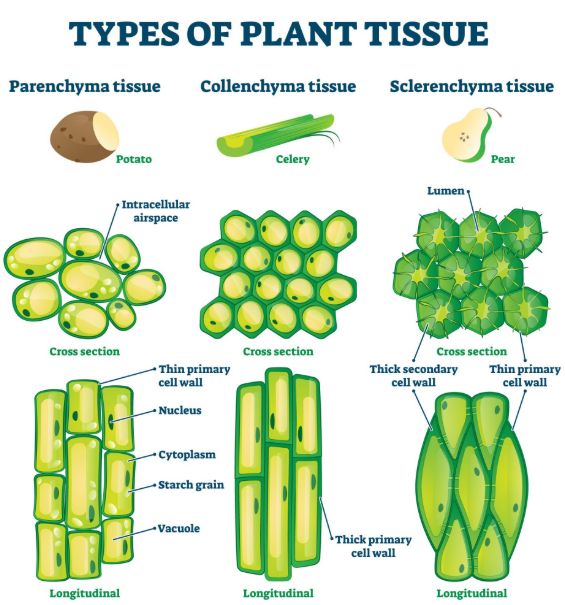
Parenchyma: Thin-walled cells that primarily store food. They are the most common plant cells.
-
Collenchyma: Living tissues that provide flexibility and support. They have thickened cell walls specifically at the corners (angular collenchyma).
-
Sclerenchyma: These are dead tissues with very thick walls. They provide mechanical strength and stiffness to the plant (e.g., the husk of a coconut).
-
Complex Permanent Tissues (Vascular Tissues):
-
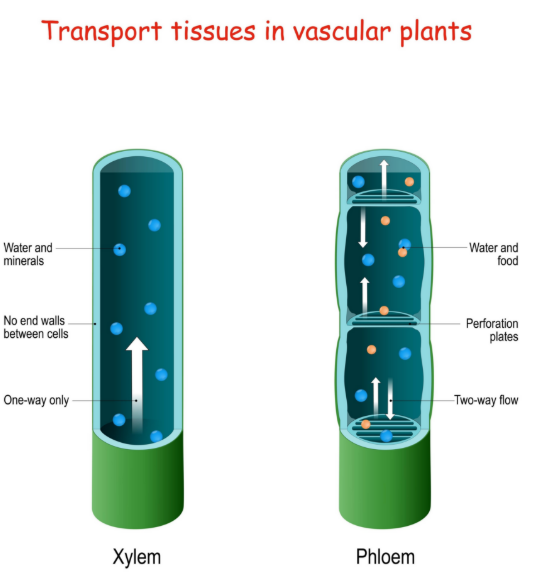
Xylem: Transports water and minerals from the roots to the leaves. This movement is unidirectional. It consists of tracheids, vessels, xylem parenchyma, and xylem fibers.
-
Phloem: Transports prepared food from the leaves to other parts of the plant. Unlike xylem, phloem movement is bidirectional. It consists of sieve tubes, companion cells, phloem parenchyma, and phloem fibers.
Classification of Animal Tissues
In the study of Science Tissues Notes for SSC Exams, animal tissues are categorized into four main types: Epithelial, Connective, Muscular, and Nervous.
1. Epithelial Tissue
This tissue forms the protective covering of the body and lines internal organs. Types include squamous, cuboidal, and columnar epithelium.
2. Connective Tissue
These tissues link and support other tissues or organs.
-
Blood: A fluid connective tissue containing plasma and cells (RBCs, WBCs, and platelets).
-
Bone: Provides a structural framework.
-
Ligament: A fibrous tissue that connects bone to bone.
-
Tendon: Connects muscle to bone.
-
Adipose Tissue: Specialised connective tissue that stores fat.
-
Areolar Tissue: Fills spaces inside organs and supports internal organs.
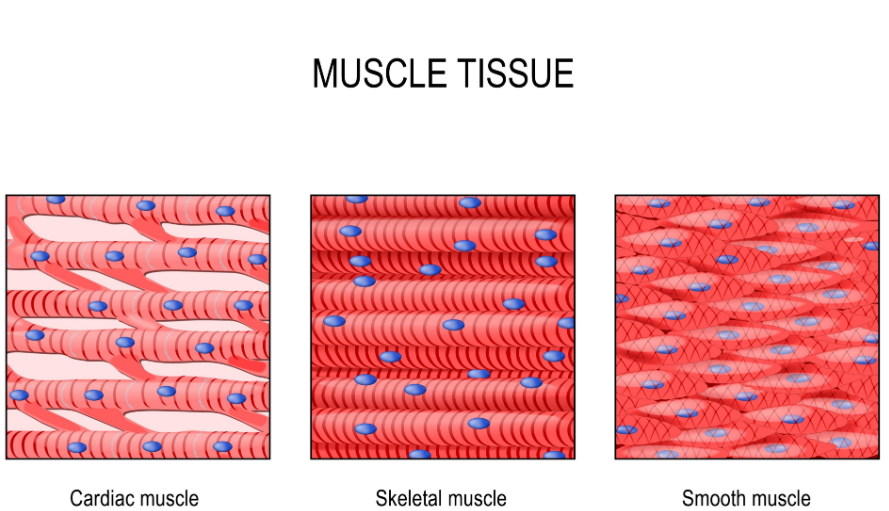
3. Muscular Tissue
Muscular tissues are responsible for movement through contraction and relaxation.
-
Skeletal Muscles (Striated/Voluntary): Under our conscious control. They are attached to bones.
-
Smooth Muscles (Non-striated/Involuntary): Not under our conscious control. Found in the walls of internal organs like the stomach and intestines.
-
Cardiac Muscles: Found exclusively in the heart. They are involuntary and work rhythmically throughout life.
4. Nervous Tissue
This tissue is responsible for receiving stimuli and transmitting impulses.
-
Neuron: The basic structural and functional unit of the nervous system.
Important Facts for Competitive Exams 2026
To excel in the Science Tissues Notes for SSC Exams section, candidates should remember these high-frequency facts:
| Important Facts for Competitive Exams 2026 | ||
| Feature | Xylem | Phloem |
| Primary Function | Water & Mineral Transport | Food Transport |
| Direction of Flow | Unidirectional (Upward) | Bidirectional (Up & Down) |
| Cell Status | Mostly Dead cells | Mostly Living cells |
| Key Components | Tracheids, Vessels | Sieve tubes, Companion cells |
-
Dead Tissues: Sclerenchyma in plants is a classic example of dead tissue used for mechanical support.
-
Involuntary Actions: Cardiac and smooth muscles work without our conscious thought.
-
Flexibility: Collenchyma allows plants like climbers to bend without breaking.
-
Fat Storage: Adipose tissue acts as an insulator and energy reserve.
Practice Questions on Science Tissues Notes for SSC Exams
Regular practice is vital for retention. Here are some sample questions based on the latest 2026 exam patterns:
-
Which plant tissue is responsible for the transport of food?
-
Answer: Phloem.
-
Which tissue connects one bone to another?
-
Answer: Ligament.
-
What is the functional unit of the nervous system?
-
Answer: Neuron.
-
Which simple permanent tissue provides mechanical strength and is composed of dead cells?
-
Answer: Sclerenchyma.
-
Where is the Intercalary Meristem located?
-
Answer: At the nodes and internodes of plants.
Preparation Strategy for SSC General Science
When studying Science Tissues Notes for SSC Exams, follow these simple steps to ensure success:
-
Visual Learning: Use diagrams to understand the cell wall thickness in collenchyma vs. sclerenchyma. Visual aids help in differentiating between complex structures.
-
Comparative Tables: Create tables for voluntary vs. involuntary muscles and xylem vs. phloem as shown above.
-
PDF Revision: Utilize study materials from reliable series like the "RM Series" which provides foundational knowledge for free.
-
Common Sense Application: Often, names give away the function (e.g., "Cardiac" relates to the heart, "Adipose" relates to fat).
-
Daily Quizzes: Participate in live sessions or Telegram groups to stay updated with the latest question trends for 2026.
The study of Science Tissues Notes for SSC Exams is a rewarding part of the science syllabus. By focusing on the structural differences and functional roles of these tissues, you can secure significant marks in your upcoming competitive examinations.
PW provides SSC exam content, including SSC Exams Updates, sample papers, mock tests, guidance sessions, and more. Also, enroll today in the SSC Online Batches for preparation.
Science Tissues Notes for SSC Exams FAQs
Is blood a tissue?
What is the difference between voluntary and involuntary muscles?
Which tissue makes a plant hard and stiff?