






SSC CGL Reasoning Mirror and Water Image, Important Questions
 Aarti .1 Jul, 2026
Mirror and Water Image is an important topic in SSC CGL Reasoning that tests a candidate’s ability to visualize objects and figures after reflection. Questions from this section are commonly asked in the exam and can help candidates score quick marks with the right approach.
Understanding the difference between mirror images (left-right inversion) and water images (top-bottom inversion) is essential for solving non-verbal reasoning questions accurately. Regular practice of image-based questions can improve observation skills, speed, and accuracy in the SSC CGL examination.
SSC CGL Mirror and Water Image
The topic of Mirror and Water Image falls under Non-Verbal Reasoning and is frequently tested in competitive exams. Typically, one to two questions are asked from this section. Mastering these concepts is essential for accurately solving image-based reasoning problems, ensuring valuable marks in the examination.
Mirror Image: Principles
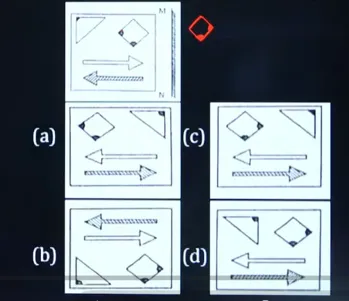
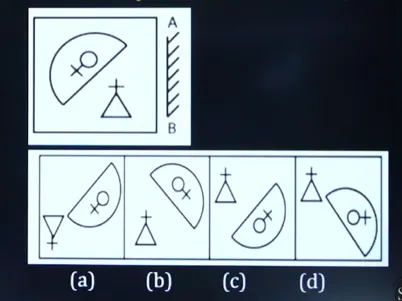
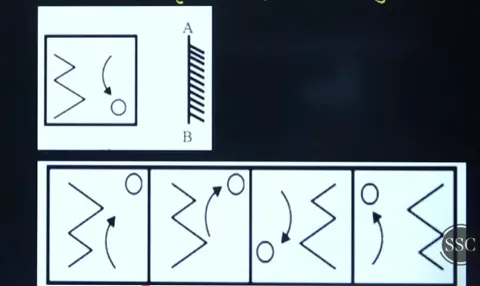
In a Mirror Image, objects undergo horizontal changes. This means the right side of an object appears as the left side in the mirror, and the left side appears as the right side. Crucially, there is never any vertical change, so the top and bottom portions of an object remain unaltered.
(Memory Tip: Imagine extending your hands like Shah Rukh Khan; your actual right hand appears as the left in the mirror, and vice-versa, demonstrating the horizontal flip.)
Water Image: Principles
Conversely, a Water Image involves vertical changes. The top part of an object moves to the bottom, and the bottom part moves to the top. However, there is never any horizontal change. The left side of an object remains on the left, and the right side remains on the right.
(Memory Tip: When looking into a bucket of water, you first see your feet, then your head, illustrating the top-bottom inversion. Moving your hands shows the left staying left and the right staying right.)
|
Feature |
Mirror Image |
Water Image |
|---|---|---|
|
Change Type |
Horizontal changes occur. |
Vertical changes occur. |
|
Vertical |
No change (Top & Bottom unchanged). |
Changes (Top becomes Bottom, Bottom becomes Top). |
|
Horizontal |
Changes (Left becomes Right, Right becomes Left). |
No change (Left & Right unchanged). |
|
Mirror Placement |
Typically vertical. |
Typically horizontal (placed below). |
Method for Finding Mirror Images
To determine the mirror image of an object or letter:
-
Divide the object vertically exactly in the middle.
-
Observe the Left and Right portions:
-
If these portions are identical, the mirror image will be the same as the original object (e.g., A, M).
-
If they are not identical, apply the "near/far" rule: The part of the object closer to the mirror will appear closer to the mirror in the image, and the part further from the mirror will appear further from the mirror in the image (e.g., B, C).
(Memory Tip: The universal concept of a mirror is that what is near the mirror stays near, and what is far from the mirror stays far.)
Method for Finding Water Images
To find the water image of an object or letter:
-
Divide the object horizontally exactly in the middle.
-
Observe the Top and Bottom portions:
-
If these portions are identical, the water image will be the same as the original object (e.g., B, C).
-
If they are not identical, apply the "near/far" rule relative to the horizontal mirror (water surface): The part of the object closer to the water surface will appear closer to the mirror in the image, and the part further from the water surface will appear further from the mirror in the image (e.g., M).
Important Questions on SSC CGL Mirror and Water Images
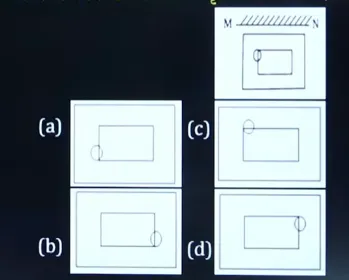
Q1. Which of the options is the exact mirror image of the following figure when the mirror is held at the MN line as shown?
Q2. Select the option that depicts the correct mirror image for the given word.
STRONG
(a) ƧTЯONƆ
(b) ƆNOЯTƧ
(c) ƆNORTS
(d) GNORTS
Q3. If a mirror is placed on the line MN, then which of the answer figures is the mirror image of the given figure?
Q4. Select the option that depicts the correct mirror image of the following term when the mirror is held vertically.
miR11TmimTm
(a) mTmimT11ЯiM
(b) ɯTɯiɯT11Яiɯ
(c) ɯTɯiɯT11Яiɯ
(d) miR11TmimTm
Q5. Choose the correct mirror image of the problem figure if the mirror is placed to the right of the figure.
Q6. Which of the Answer Figures is the correct water image of the given Problem figure?
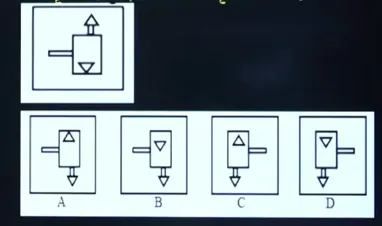
(a) B
(b) D
(c) A
(d) C
Q7. Select the correct mirror image of the Problem Figure from the given Answer Figures.
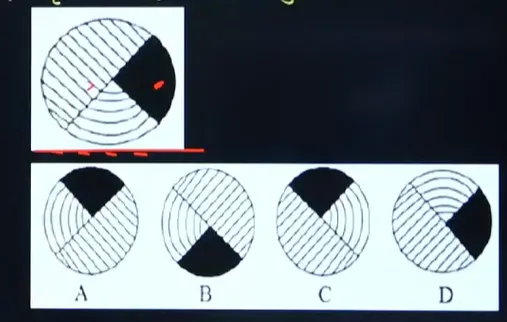
Q8. From the given four figures choose the correct water image of the below figure.
SSC CGL Reasoning Image FAQs
What is the fundamental difference between a Mirror Image and a Water Image?
How do I apply the "near/far" rule for finding a Mirror Image?
Can a question asking for a "Mirror Image" actually require a Water Image solution?
When reflecting a word in a mirror, what happens to the letters?
What aspect of an object remains unchanged in a Water Image?






Get Free Counselling Today
and Clear up all your Doubts
 Live & recorded classes available at easeDashboard for progress trackingLakhs of practice questions

