






SSC GD Science Digestive System by Muskam Mam
 Ekta Rakesh singh31 Mar, 2026
Share
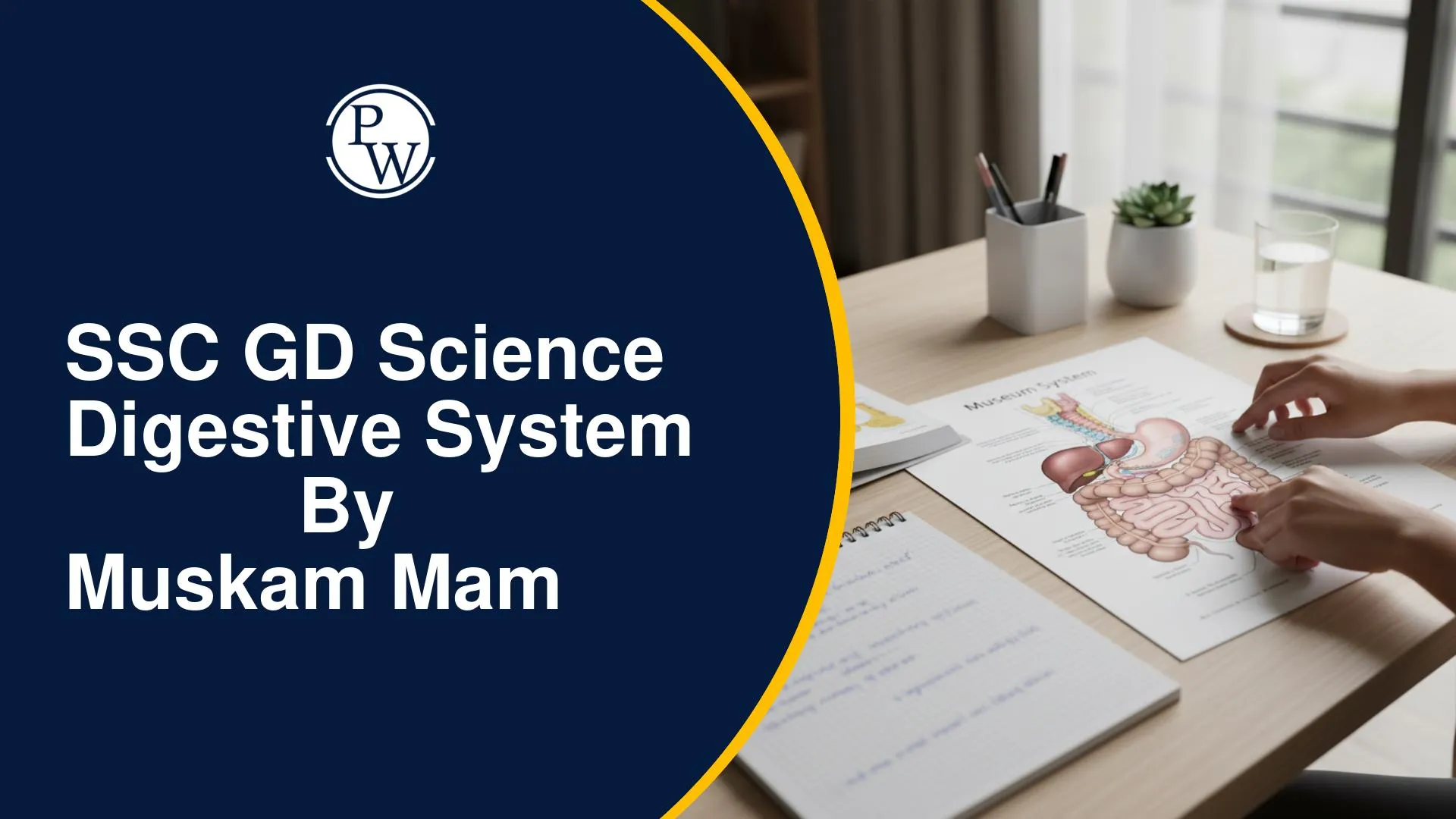
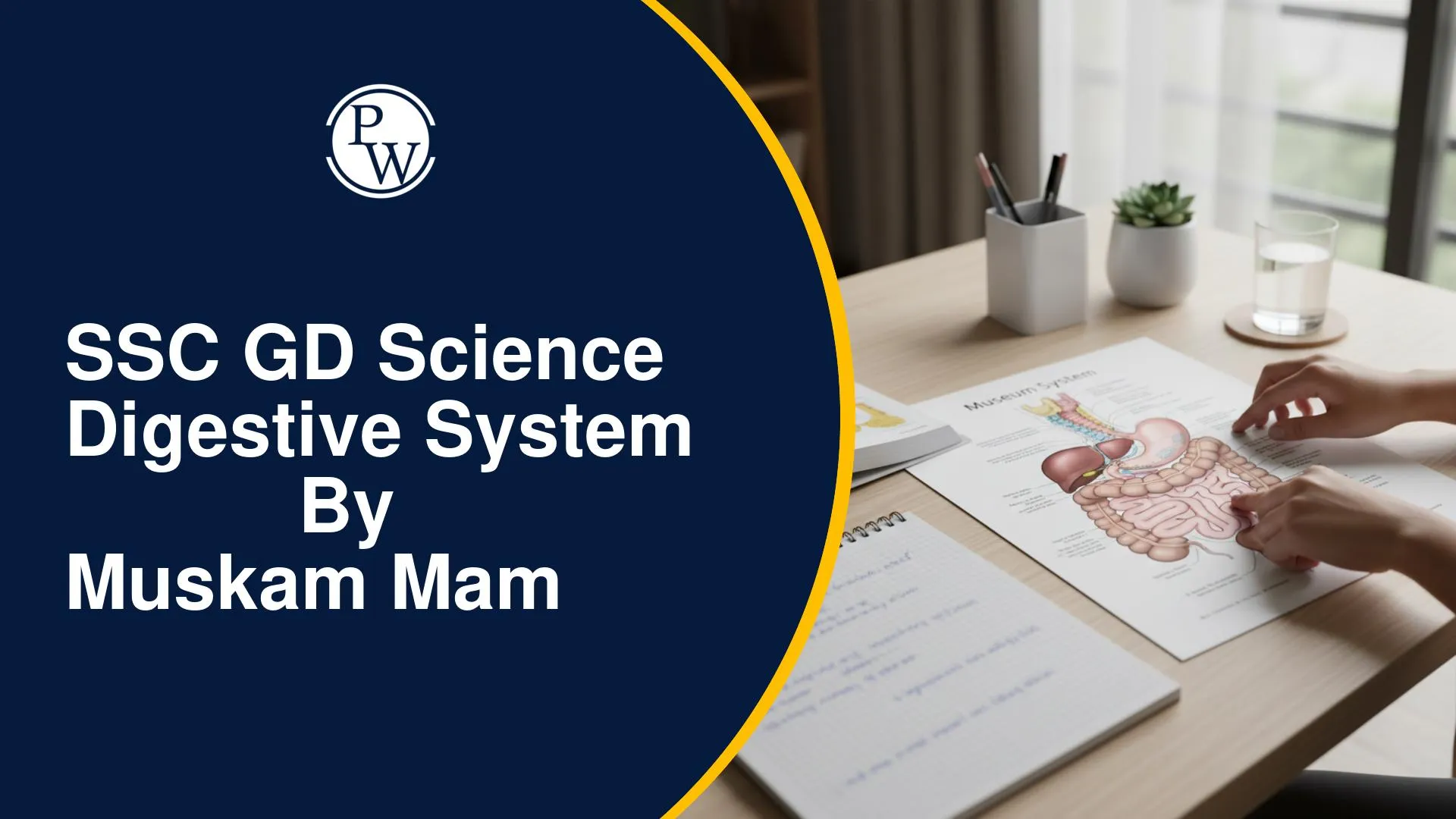
SSC GD exam is expected soon, making it important for aspirants to focus on key topics in the syllabus. The Digestive System is an important part of the SSC GD Science section and is frequently asked in exams. It explains how the body breaks down food into simpler, absorbable nutrients used for energy, growth, and repair.
Understanding its organs, functions, and processes can help you answer questions accurately. Read on to learn the SSC GD Science Digestive System by Muskam Mam.
Understanding Digestion Process
The digestion process is a vital function of the human body that converts food into simple, soluble nutrients. It involves both mechanical and chemical actions carried out by different organs and enzymes.
This process ensures that the body receives energy, supports growth, and maintains overall health:
-
Saliva (लार) contains an enzyme called Ptyalin, initiating carbohydrate digestion. Starch is the carbohydrate that begins digestion in the mouth by salivary amylase.
-
Protein digestion begins in the stomach (आमाशय), a J-shaped organ containing gastric juice (जठर रस). The enzyme Pepsin is present in gastric juice. Pepsin functions optimally in an acidic medium (अम्लीय माध्यम). The pH of gastric juice is highly acidic, approximately 2 (ranging from 1.2 to 2.3). The inner lining of the stomach is protected by mucus.
-
The small intestine is the longest part of the alimentary canal, measuring approximately 6.5 meters. It is the primary site where all digestion and absorption (पाचन और अवशोषण) are completed.
-
Lacteals, which are lymphatic capillaries (लसिका की केशिकाएं), are present in the small intestine and aid in nutrient absorption (अवशोषण).
-
Villi are finger-like projections found exclusively in the small intestine. Their main role is to increase the surface area for enhanced absorption.
-
The large intestine (बड़ी आंत) is primarily responsible for the absorption of water. The appendix, considered a vestigial organ, is attached to the cecum, which is part of the large intestine.
Movement of Food
-
The process of swallowing is called deglutition. This is distinct from mastication (chewing) and digestion (breakdown of food).
-
Peristalsis (क्रमाकुंचन की क्रिया) refers to the wave-like movement of food. This movement is crucial for moving food from top to bottom in organs like the esophagus and stomach.
Enzymes and Their Substrates
-
The enzyme Lipase acts on fat (वसा).
-
Trypsin digests protein. (Memory Tip: Pepsin and Trypsin are like "brothers" because they both digest protein. However, Pepsin requires an acidic environment, while Trypsin requires an alkaline environment.) Trypsin is found in pancreatic juice.
-
Specific enzymes break down disaccharides:
-
Maltase converts Maltose into Glucose.
-
Lactase breaks down Lactose.
-
Sucrase breaks down Sucrose.
-
Amylase breaks down starch or other carbohydrates.
|
Enzyme Name |
Enzyme Function |
|
Ptyalin (Salivary Amylase) |
Breaks down starch into simpler sugars (initiates carbohydrate digestion in the mouth) |
|
Amylase (Pancreatic/General) |
Converts starch and complex carbohydrates into simpler sugars |
|
Pepsin |
Breaks down proteins into peptides in the stomach (works in acidic medium) |
|
Trypsin |
Digests proteins into smaller peptides in the small intestine (works in alkaline medium) |
|
Lipase |
Breaks down fats into fatty acids and glycerol |
|
Maltase |
Converts maltose into glucose |
|
Lactase |
Breaks down lactose into glucose and galactose |
|
Sucrase |
Breaks down sucrose into glucose and fructose |
Glands and Secretions
The liver (यकृत) is the largest gland in the human body. It produces bile juice, which is important for the emulsification of fat (वसा का पाइसीकरण) and creating an alkaline environment necessary for converting Trypsinogen into Trypsin. The main function of bile salts specifically is the emulsification of fats.
-
The gallbladder (पित्ताशय) primarily stores bile. It is important to note that bile juice is produced in the liver, stored in the gallbladder, and subsequently released into the small intestine.
Note: A deficiency of bile impairs fat digestion (emulsification).
-
The pancreas is unique as it secretes both enzymes and hormones.
-
Enzymes include pancreatic amylase, Trypsinogen, and Lipase.
-
Hormones include Insulin and Glucagon.
-
Insulin lowers blood sugar levels, while Glucagon raises blood sugar levels, working together to maintain blood sugar levels.
-
The functional unit of the liver, its smallest cell, is the hepatocyte.
End Products of Digestion
The end product of protein digestion is amino acids.
-
The end products of fat (वसा) digestion are fatty acids and glycerol. These simpler forms are absorbed in the small intestine by the villi and transferred to the blood.
-
The end product of carbohydrate digestion is glucose, the simplest form of sugar.
Sphincters in the Digestive System
The opening of the stomach into the small intestine is controlled by the pyloric sphincter.
-
The cardiac sphincter controls the opening between the esophagus and stomach.
-
The ileocecal valve is located at the junction of the ileum (small intestine) and cecum (large intestine).
-
The anal sphincter controls defecation.
Note: Vitamin K and Vitamin B12 are synthesized by gut bacteria.