



Top 4 Videos on Metals and Non-Metals for SSC Science by PW


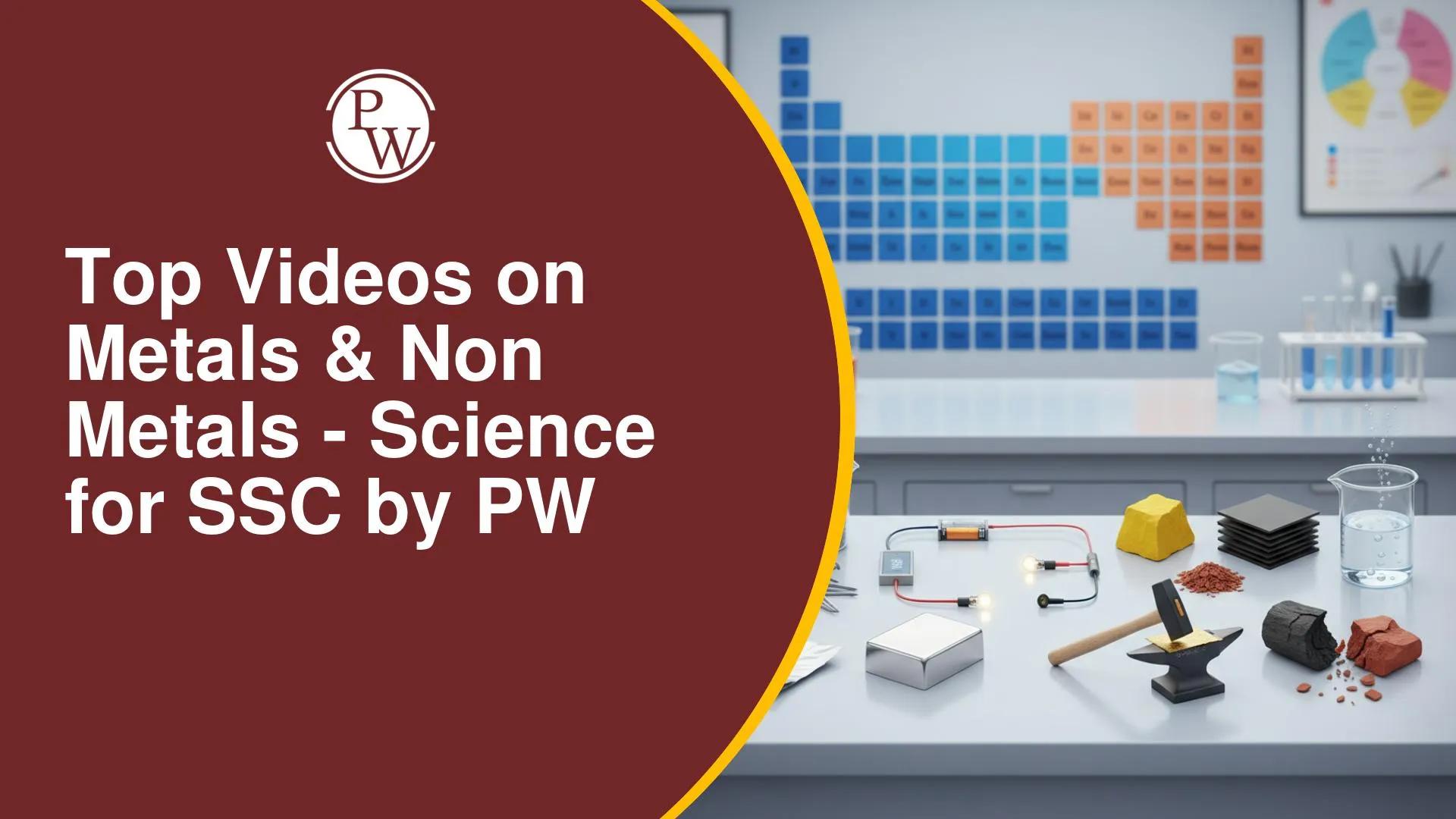
Metals and non-metals form an important part of the Science syllabus for SSC examinations. Questions can cover their physical and chemical properties, reactions with different substances, uses and exceptions. Remembering facts about elements such as sodium, iron, lead and silver can also become difficult when several details appear together. A clear understanding of periodic classification and element properties makes these topics easier to revise.
PW's video lessons cover the chapter through periodic table concepts, element-specific facts, chemical reactions and objective questions. You can begin with the fundamentals, study important elements and then use MCQ sessions to test your understanding. Here are four videos to include in your SSC Science preparation.
Video 1. Understand the Periodic Table Before Studying Metal and Non-Metal Properties
The periodic table provides the foundation for understanding how elements are classified. This lesson introduces the modern periodic table, its groups and periods, natural and artificial elements, and the contributions of Mendeleev and Moseley.
It also explains the classification of elements into metals, non-metals and metalloids, along with S, P, D and F blocks and periodic metallic trends. Hydrogen's position is discussed as part of the classification. The session then moves to physical and chemical properties, including lustre, states of matter and exceptions such as mercury, gallium, caesium and bromine.
Students who are not confident about periodic classification should begin with this class before moving to element-specific lessons. Understanding groups, periods and blocks gives you a clearer basis for studying element properties. You can also revisit the examples of elements with unusual physical states while preparing short notes for factual questions.
Video 2. Test Your Understanding of Metal Properties Through MCQs
How well can you distinguish between the properties of metals and non-metals? This lesson approaches the topic through questions based on previously covered theory. It revisits ductility, malleability, electrical conductivity and the role of free electrons.
The practice also includes liquid bromine, the storage of sodium and potassium, graphite, and reactions with oxygen, water and dilute acids. Other concepts include acidic and basic oxides, salt and hydrogen formation, nitric acid behaviour, noble metals, reactions with steam and the brittleness of non-metals.
This class is particularly useful after you have studied the basic properties and reactions. Instead of revisiting every concept in detail, attempt the questions and identify the facts you cannot recall. The MCQ format also gives you an opportunity to understand how chemical properties and exceptions can be tested in SSC examinations.
Video 3. Explore Element Classification Through Sodium and Its Properties
This session starts with the periodic table and the classification of 118 elements into metals, non-metals and metalloids. It then focuses on sodium, covering its symbol, block, group, atomic number, atomic mass, valency and electron donation.
You will also study its reactivity, storage, softness and melting behaviour. The lesson connects these facts with sodium chloride, common salt, neutralisation, pH and the salinity of seawater. NCERT-based questions and notes provide additional support for understanding and revisiting the concepts.
If you are beginning this chapter, the class offers a structured introduction to element classification and sodium-related facts. Make a short note of the important properties and numerical details discussed in the session. This will give you a compact set of points to revisit when preparing for direct factual questions in SSC Science.
Video 4. Remember Important Facts About Iron, Lead and Silver
Some questions from Metals and Non-Metals focus on individual elements rather than general properties. This lesson of SSC Wallah covers iron, lead and silver through facts relevant to competitive examinations. For iron, it discusses its block, group, atomic number, role in haemoglobin and major ores.
You will also learn the differences between cast iron, wrought iron and pig iron based on carbon content. The remaining topics include rusting, galvanisation using zinc, galena, uses of lead, Minamata disease and the symbol and Latin name of silver.
This video works well as a focused revision resource once you have covered the chapter's basic concepts. Pay special attention to the differences between types of iron, important ores and element-related facts. These details are easier to retain when you organise them into a comparison table or short revision notes.
These four PW videos cover Metals and Non-Metals through periodic classification, element properties, chemical reactions, important ores and MCQ practice. Each session addresses a different part of the chapter, allowing you to study the concepts in a logical sequence. Use the explanations to build your notes and the question-based lesson to assess your preparation for SSC Science examinations.


Have questions about your prep?
Our experts can answer all your questions

 Live & recorded classes available at easeDashboard for progress trackingMillions of practice questions at your fingertips