








Top 4 Videos on Soil Types for SSC Geography by PW

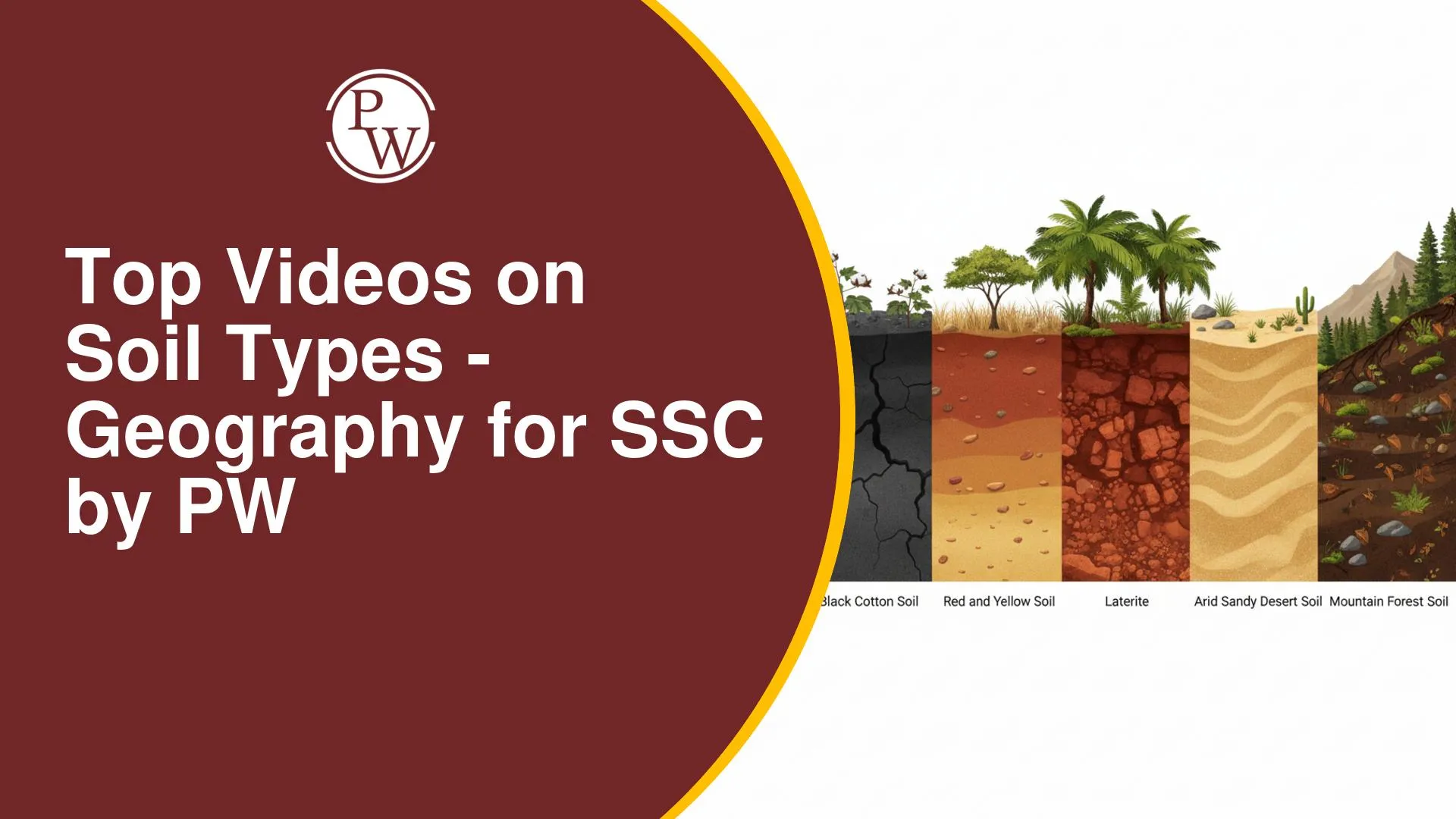
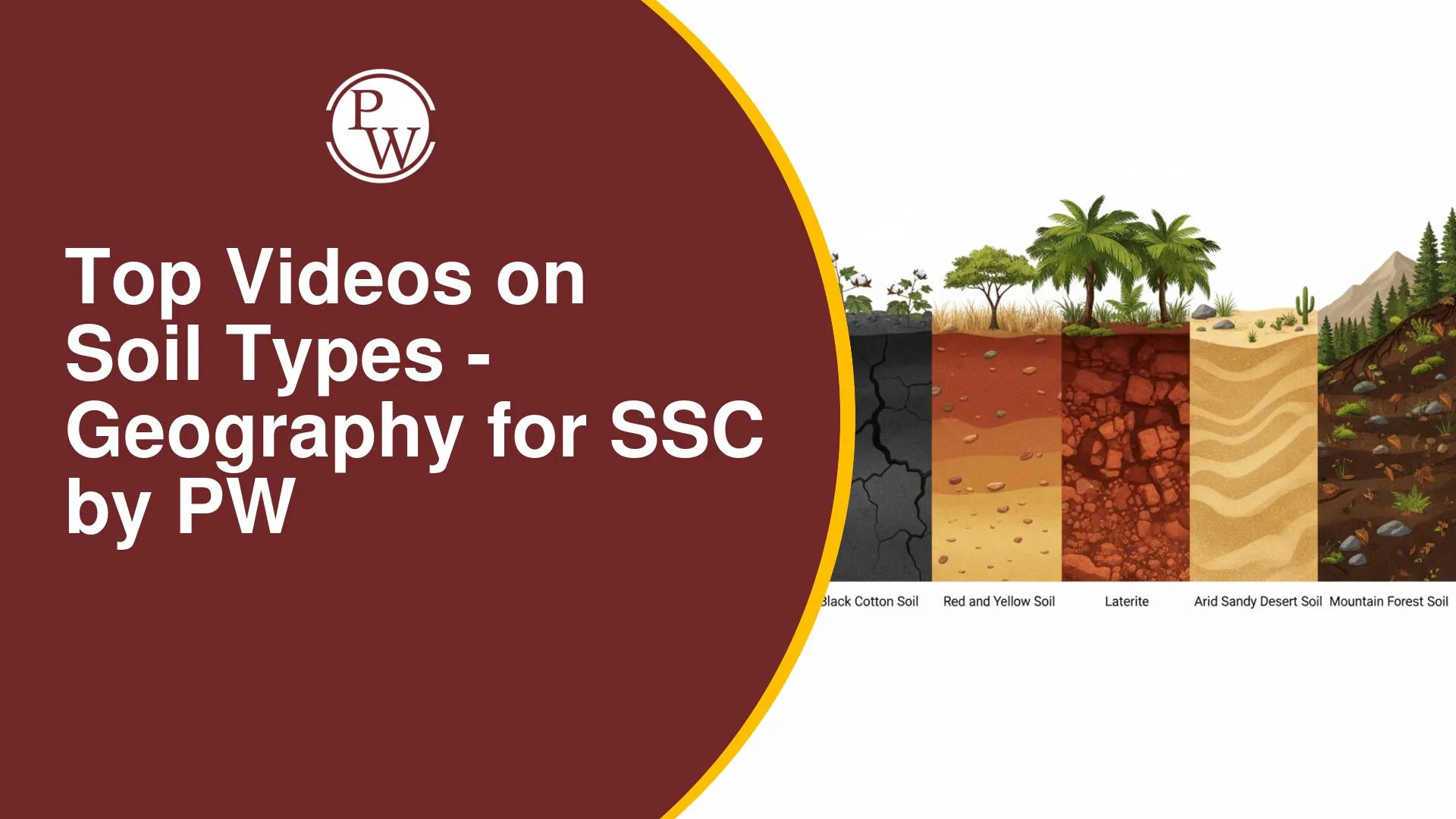
Soil Types is an important topic in SSC Geography, with questions covering soil formation, characteristics, regional distribution, and agricultural uses. You may confuse similar categories such as khadar and bhangar or find it difficult to remember which crops grow in different soil conditions. Understanding soil horizons and the factors responsible for soil formation also requires careful revision.
PW videos explain Indian soils through diagrams, examples, comparisons, and practice questions. You can understand how soils develop, connect their properties with geographical regions, and revise important facts through MCQ-based sessions. The following lessons cover different aspects of the topic, from basic concepts to SSC exam-oriented revision.
Video 1. Understand Indian Soil Types Through Agriculture and Crop Examples
This lesson from SSC Wallah connects Indian soil classification with agricultural practices and crop distribution. It explains soil formation through rock weathering, bedrock, soil horizons, minerals, organic matter, organisms, and water.
You will study alluvial, black, red, laterite, mountain, forest, arid, and semi-arid soils, including their characteristics, fertility, distribution, and suitable crops. The session also covers khadar, bhangar, and the kharif, rabi, and zaid seasons, with examples such as rice, wheat, cotton, coffee, rubber, cashew, saffron, and millets.
If you want to study soil classification alongside its agricultural importance, begin with this lesson. Connecting soil properties with crops, regions, and farming seasons can make it easier to remember related geographical facts during SSC preparation.
Video 2. Test Your Knowledge of Indian Soils with 50 Practice Questions
This session covers Indian soil types through 50 questions designed for factual revision. It introduces eight soil groups and discusses their distribution, area coverage, fertility, and common nutrient deficiencies.
The questions also connect soil types with crops such as soybean, wheat, cotton, sugarcane, and maize. Multiple-choice exercises, percentage-based facts, and short explanations provide opportunities to check your understanding.
Watch this lesson after studying the basic classification of Indian soils. Attempt the questions independently before checking the explanations to identify gaps in your knowledge and revise facts that are frequently confused in SSC Geography.
Video 3. Learn Soil Formation and Profile Layers Through Simple Explanations
This lesson explains how soil develops and what determines its characteristics. It covers the effects of rock weathering, temperature, rainfall, wind, volcanic activity, and tectonic processes on soil formation.
Other topics include parent rock, climate, relief, organisms, time, humus, nitrogen deficiency, leguminous crops, and the use of urea, with examples connecting these concepts to Indian soils.
If you find soil formation processes or profile layers difficult to remember, use this lesson to understand them individually. The explanations help connect definitions, formation factors, and soil horizons, making it useful for the initial study of this Geography topic and SSC Questions.
Video 4. Revise Indian Soil Groups with Diagrams and Visual Examples
This class introduces the meaning and formation of soil, along with its role in plant growth. It covers pedogenesis and the O, A, B, and C horizons, including humus, roots, mineral matter, and bedrock.
The session then discusses eight ICAR soil groups: alluvial, red, black, desert, mountain, saline, marshy, and laterite soils. Khadar and bangar are explained through their distribution, age, fertility, colour, and nutrient characteristics.
Use this lesson when you want to revise soil classification with the help of diagrams, slides, and memory aids. It is particularly useful before an SSC mock test for reviewing soil groups and recalling the differences between soil horizons and categories.
These four PW videos cover Indian Soil Types through agricultural connections, soil formation, profile layers, classification, and MCQ practice. Begin with the detailed lessons to understand the concepts, then use the question-based session to test your knowledge.
Revising soil groups alongside their properties, distribution, and crop associations can help you improve factual recall and prepare more effectively for SSC Geography questions.


Have questions about your prep?
Our experts can answer all your questions







 Live & recorded classes available at easeDashboard for progress trackingMillions of practice questions at your fingertips


