







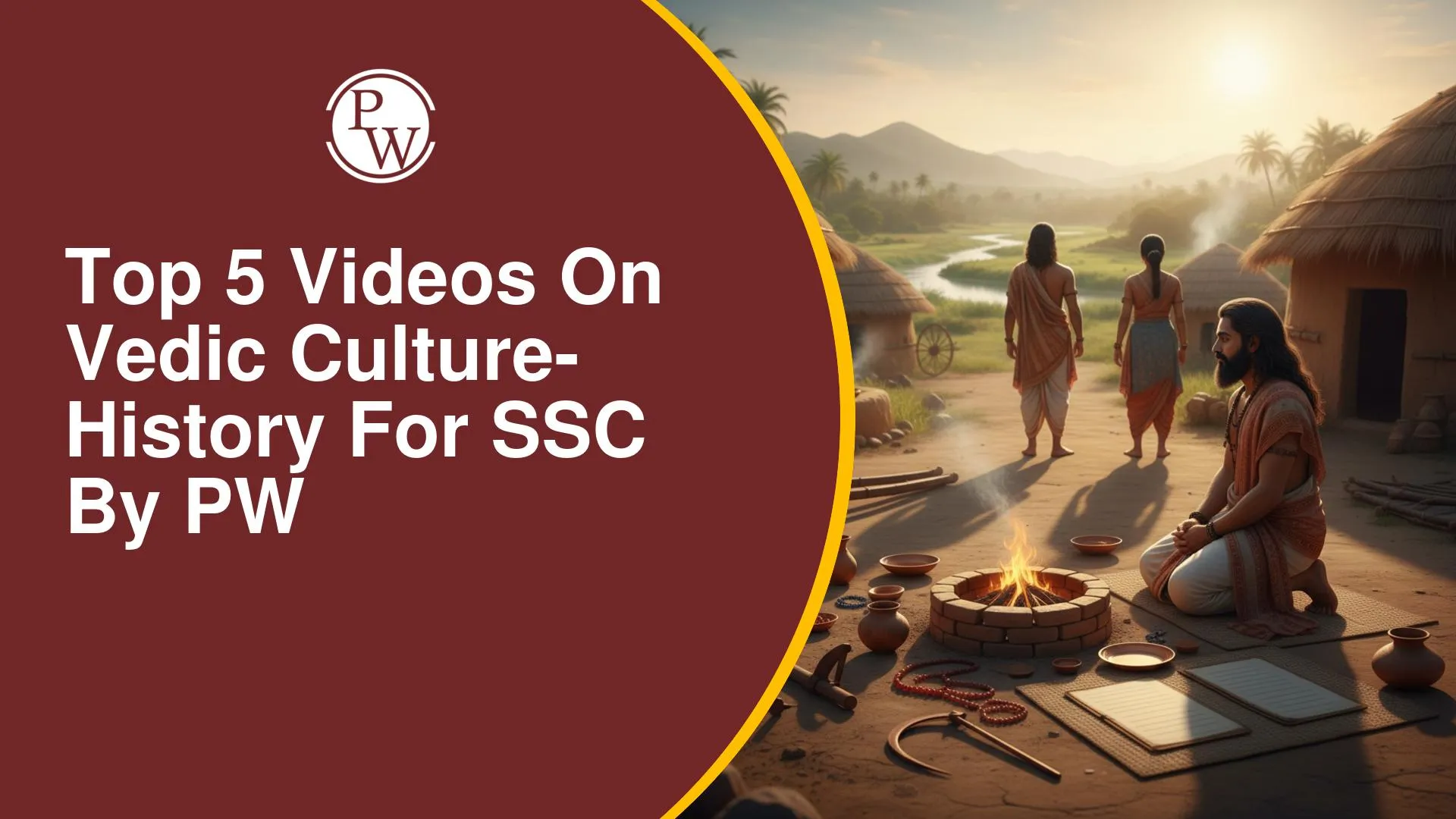
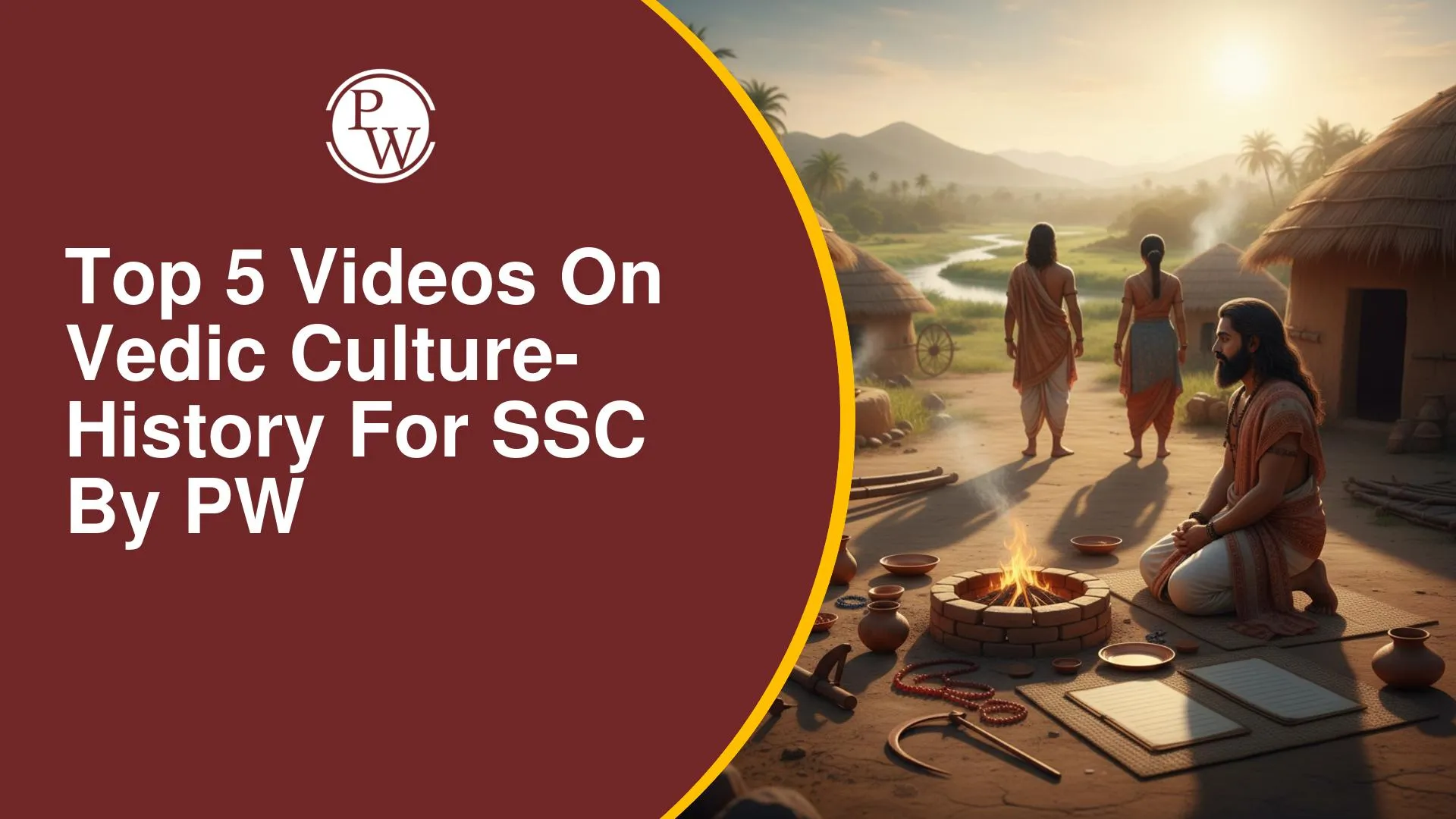
Top 5 Videos on Vedic Culture for SSC History by PW

Vedic Culture is an important topic in Ancient Indian History for SSC exams. Students often find it difficult to remember the Vedas, religious practices, political institutions, and social customs while distinguishing between the Early and Later Vedic periods. Similar terms and historical facts can also become confusing during last-minute revision.
PW’s SSC Wallah offers videos that cover Vedic Culture through concept explanations, factual revision, maps, and MCQ practice. Some lessons focus on the foundations of the Vedic Age, while others explain political and social institutions or test your knowledge through objective questions.
You can choose a video based on whether you are beginning the topic, revising important facts, or practising for an SSC examination.
Video 1: Learn the Foundations of the Vedic Age for SSC
This introductory lesson connects Vedic Culture with the Indus Valley Civilisation and explains the meaning of Veda, Aryans, and the word Arya.
It also discusses Max Müller's language-based views and introduces the two broad phases of the Vedic Age: Rig Vedic Culture and Later Vedic Culture. Questions, notes, SSC Mock Tests and PDF resources accompany the lesson to support regular study and revision.
This video is a suitable starting point if you are new to the topic or returning to Ancient History after a break. Use it to familiarise yourself with the main terms and period divisions before moving on to detailed lessons about Vedic society, religion, and political institutions.
Video 2: Understand Vedic Culture Through Its Political and Social Institutions
This lesson introduces theories about Aryan origins, including references to Central Asia, the Caspian Sea, and the Khyber Pass. It discusses Max Müller's view, the Bogazkoy evidence, and the Zend-Avesta before moving to the Early and Later Vedic periods.
The class also explains political and social institutions such as Rajan, Jana, Sabha, Samiti, Gramani, Purohit, and Senapati. Women's position, marriage customs, social divisions, and widow remarriage are covered as well.
Choose this lesson if you want a connected explanation of Vedic Culture rather than a list of facts to memorise. The use of charts, tables, examples, and questions can help you organise your notes and understand how political and social systems fit into the topic.
Video 3: Test Your Knowledge of Vedic Texts, Deities, and Social Systems
This MCQ-based lesson revises Shruti, Apaurusheya, the structure of the Rigveda, and deities such as Agni and Indra. It also covers the four Ashrams, six Vedangas, Brahmana texts, the four-varna framework, mandalas, Ashtaks, Suktas, and Mantras. Interactive polls, repeated questions, and answer explanations help reinforce the factual details needed for competitive examinations.
Use this session once you are familiar with the basic concepts and want to check how well you remember important terms. Answering each question before viewing its explanation can help you identify gaps and improve your accuracy in objective History sections.
Video 4: Study Rig Vedic Culture Through Maps and MCQs
This lesson focuses on Rig Vedic Culture, its sources, the Aryans' entry into the northwestern region, the Sapt-Sindhu area, clan-based settlements, and early geographical limits. It also revisits the divisions of the Vedic Age, theories about the Aryans' homeland, Mitanni-Hittite evidence, and deities such as Indra, Mitra, Varuna, and Nasatya. Maps and direct questions help reinforce geographical and factual connections.
This video is useful when you want to strengthen your understanding of the Rig Vedic period and practise recalling its sources, geographical features, and religious ideas. Watch it after studying the introductory concepts, then use the questions to check your preparation before solving SSC CGL PYQs.
Video 5: Revise Vedic Culture With Important Facts and MCQs
This short revision session covers the Early and Later Vedic periods through questions on major deities, the Vedas, mandalas, the Gayatri Mantra, Purusha Sukta, Upanishads, Vedangas, and Puranas. It also revisits rivers, occupations, agriculture, cattle rearing, the use of iron, marriage practices, and the varna system.
Short explanations and memory aids help connect these facts with objective questions relevant to SSC History.
This video is useful when you have already studied Vedic Culture and need to revise several topics in one sitting. Attempt the MCQs before checking the answers to test your recall and identify facts that need another round of revision.
These five PW videos cover Vedic Culture through introductory lessons, detailed explanations, factual revision, and MCQ practice.
Start with the foundation class if you are learning the topic for the first time, then study the political and social institutions before moving to question-based revision. Revisit the questions you answer incorrectly to strengthen recall and prepare more effectively for SSC History.


Have questions about your prep?
Our experts can answer all your questions







 Live & recorded classes available at easeDashboard for progress trackingLakhs of practice questions



