








Top 5 YouTube Videos on Blood for Science for SSC by PW

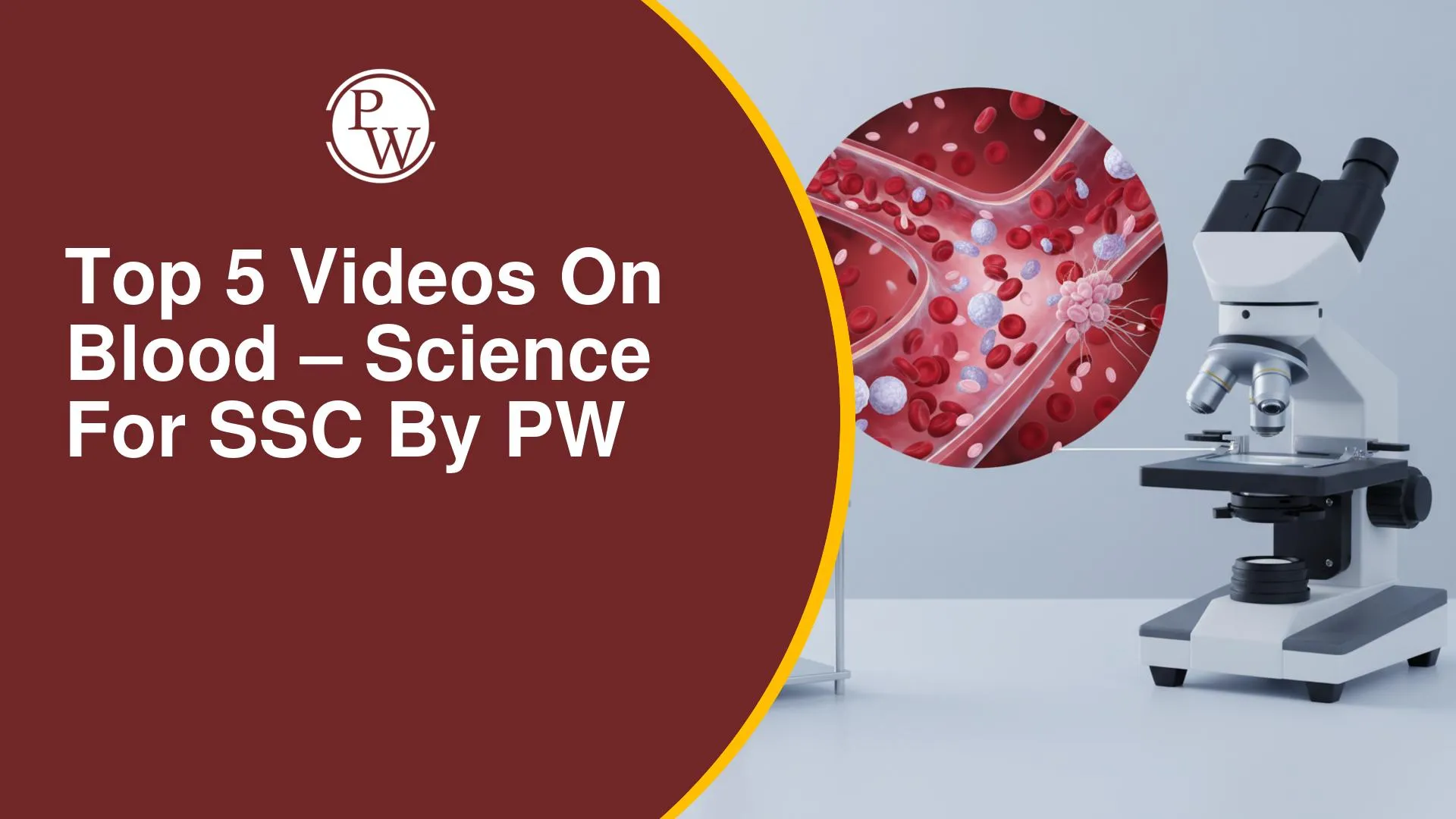
Blood can be challenging for SSC aspirants because several scientific terms, cell functions, blood groups, and clotting facts need to be remembered together. Confusing plasma with serum, mixing up RBC and WBC functions, or forgetting the roles of platelets and clotting factors can lead to mistakes in Science questions.
PW SSC Wallah YouTube videos help you study these concepts through structured explanations, diagrams, examples, and MCQ practice. The lessons range from basic blood composition to detailed revision of scientific terms and commonly tested facts, helping you build your understanding before moving to quick revision and question practice.
Video 1: Revise Human Blood Concepts in a 10-Minute SSC Science Lesson
This one-shot lesson revises human blood through important facts about blood volume, pH, pressure, haematology, blood formation, and bone marrow. It explains plasma, serum, RBCs, WBCs, and platelets, including their functions, life spans, and formation sites. This lecture also covers blood groups, antigens, antibodies, clotting factors, bilirubin, the spleen, and selected question-based facts related to hemocytometers, dialysis, leukopenia, leukaemia, and vitamin K.
Use this video after learning the basics or before an SSC Science test. Its broad topic coverage and rapid recall format can help you revisit key facts without studying each concept from scratch.
Video 2: Understand Blood Components Through Simple Explanations and MCQs
This lecture introduces blood as a fluid connective tissue and explains its main components, including plasma, RBCs, WBCs, and platelets. It also connects their functions with oxygen transport, immunity, and clotting. It also discusses centrifugation, haemoglobin, scientific names, fibrinogen, and vitamin K, using MCQs to reinforce important concepts.
Start with this lesson if you are studying Blood for the first time or need to revisit its basic concepts. Practising the questions alongside the explanations can help strengthen recall and reduce confusion between components and their functions.
Video 3: Strengthen Blood Concepts Through Theory and Practice Questions
This YouTube video explains blood as a fluid connective tissue and uses centrifugation to distinguish its plasma and cellular portions. It also introduces plasma proteins such as albumin, fibrinogen, and globulin, along with the roles of RBCs, WBCs, and platelets. It also classifies WBCs into neutrophils, basophils, eosinophils, lymphocytes, and monocytes. Diagrams, analogies, repetition, and practice questions help organise these concepts for revision.
Choose this class when you want to connect blood theory with practice rather than memorise isolated facts. It can help you organise your notes, distinguish WBC types, and review important concepts before attempting SSC Science questions.
Video 4: Understand Human Blood Through a Focused SSC Science Class
This lecture covers human blood from its basic structure to the functions of its major components. It also explains how blood transports oxygen, nutrients, and waste, then focuses on RBCs, including their scientific name, shape, lack of a nucleus, haemoglobin, oxyhaemoglobin, life span, and removal through the spleen. WBCs, platelets, clot formation, and haemophilia are also introduced through examples and MCQs, supporting focused revision of important SSC Science concepts.
This lesson is useful when you need to revisit RBC characteristics and understand the role of platelets in clotting. Review the explanations first, then practise related questions to check your understanding of scientific terms and functions.
Video 5: Revise RBCs, WBCs, and Platelets for SSC CHSL Science
This SSC CHSL YouTube video introduces blood through three key cellular components: red blood cells (RBCs), white blood cells (WBCs), and platelets. It also provides a starting point for identifying these components and recalling their names. It is particularly useful for you if you want to revisit the basic structure of blood before moving on to more detailed explanations of cell functions, blood composition, and related scientific facts.
Use this video for a quick review of the main blood components, especially during early preparation or before a revision session. For broader coverage of blood groups, plasma, and clotting, combine it with the more detailed lessons in this list.
These PW SSC YouTube videos help you prepare Blood for SSC Science by covering its composition, plasma, RBCs, WBCs, platelets, blood groups, clotting, and important scientific facts. Begin with the foundational lessons, use the detailed classes to clarify specific concepts, and revisit the one-shot session for quick recall. Regular MCQ practice alongside video revision can help you remember key facts, distinguish similar terms, and approach SSC CGL, CHSL, CPO, and MTS Science questions with greater confidence.


Have questions about your prep?
Our experts can answer all your questions






 Live & recorded classes available at easeDashboard for progress trackingLakhs of practice questions



