








Top Videos on World Heritage Sites of India: Static GK for SSC Preparation by PW

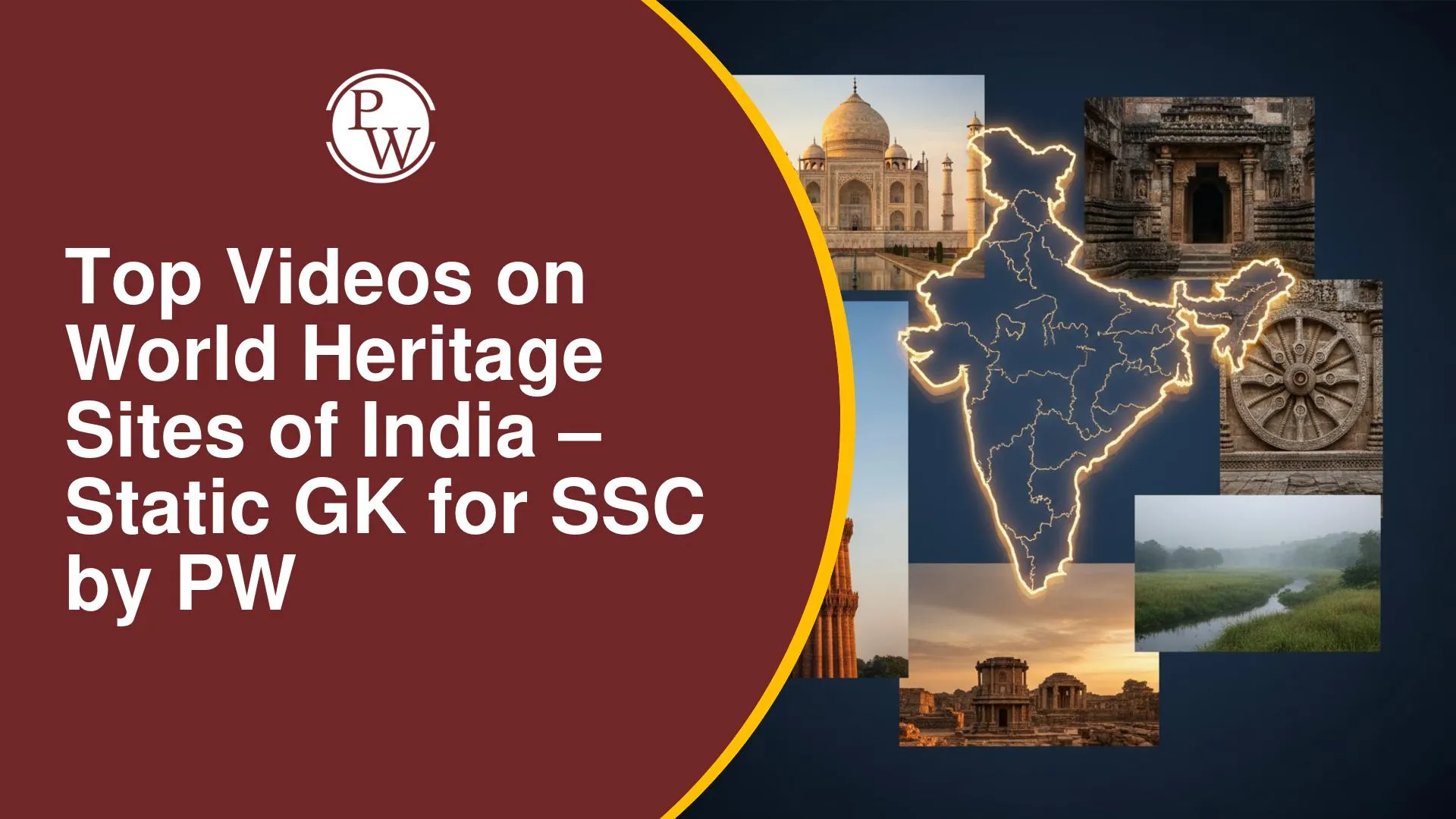
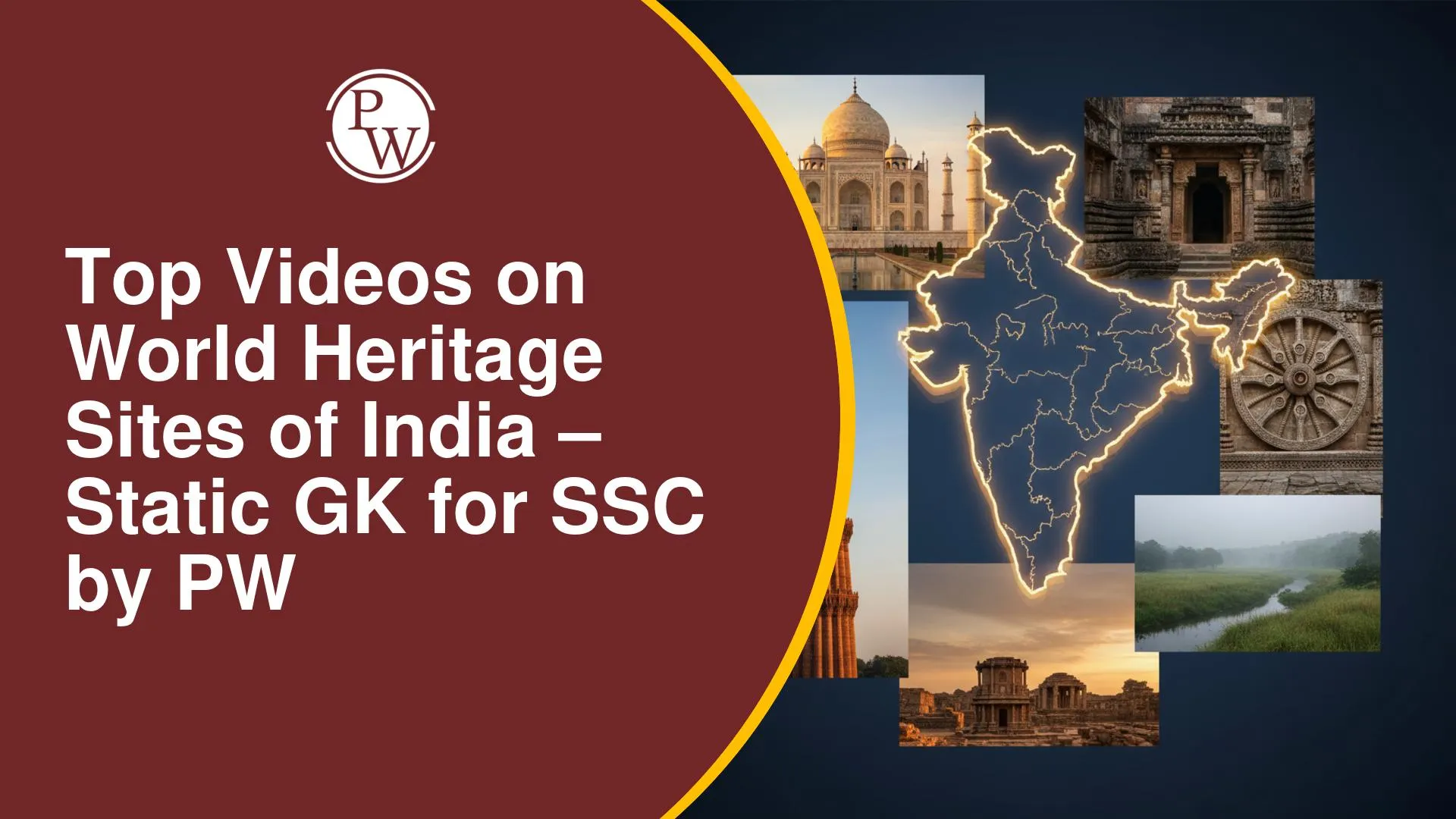
World Heritage Sites of India can be confusing because students have to remember many names, locations, states, categories, and important dates. It can also be difficult to remember which site belongs to which state and what makes it special.
Physics Wallah videos make this topic easier to study through pictures, maps, timelines, simple explanations, and MCQs. Students can learn about different heritage sites, understand their important features, and revise key facts. These videos can help SSC aspirants prepare for Static GK in a simple and organised way.
Video 1: Build Full Coverage Of Indian UNESCO Sites With Category-Based Learning
In the video, the faculty explains UNESCO’s role, its headquarters, and India’s cultural, natural, and mixed World Heritage Sites. The video uses category-based slides to discuss Bhimbetka, Dholavira, Ajanta, Ellora, Elephanta, Mahabalipuram, Pattadakal, Chola Temples, Sanchi, Nalanda, Khajuraho, Konark, Qutub Minar, Humayun’s Tomb, and Fatehpur Sikri, with locations, dynasties, religions, periods, features, and inclusion-year questions. Interactive prompts support factual recall and exam-focused understanding for SSC CGL Static GK.
Use this video when you need broad topic coverage before a test or revision cycle. It supports connections between sites, states, historical periods, and architectural features, helping you handle matching and identification questions with greater accuracy.
Video 2: Revise World Heritage Sites Through A Quick Timeline And Map Review
The video presents a short revision lesson on UNESCO and the purpose of World Heritage recognition. Sites are arranged with their inclusion sequence, states, and key historical or natural features. Important examples include Ajanta-Ellora, Taj Mahal, Khajuraho, Hampi, Sanchi, Qutub Minar, Mountain Railways, Western Ghats, Dholavira, Santiniketan, and the Hoysala Temples. Pictures, maps, comparisons, and short questions make the review useful for SSC Static GK.
This format suits students who have already studied the topic and want a fast recap before a mock test or exam. It strengthens timeline recall, location matching, and recognition of cultural and natural categories.
Video 3: Strengthen SSC Revision With MCQs And Location-Based Practice
In the video, the faculty explains UNESCO’s conservation role and the difference between tangible and intangible heritage. The video revises Mahabalipuram, Fatehpur Sikri, Nanda Devi and Valley of Flowers, Khangchendzonga, Sundarbans, Ellora, Ajanta, Nalanda, Keoladeo, Kaziranga, Dholavira, Ramappa Temple, Humayun’s Tomb, Khajuraho, Western Ghats, Mahabodhi Temple, Pattadakal, Santiniketan, Bhimbetka, Nilgiri Mountain Railway, Chandigarh’s architectural work, and Kalka-Shimla Railway. MCQs reinforce categories, locations, and inclusion-year recall.
Choose this video for question-solving practice after learning the basic facts. It is useful for improving speed in category identification, location-based questions, and quick elimination during SSC exams.
Video 4: Use A Fast-Track Review For Site, State, And Feature Recall
The faculty gives a rapid overview of India’s UNESCO World Heritage Sites and their cultural, natural, and mixed classifications. The video discusses Sarnath, the Maratha Military Landscapes, Moidams, Hoysala Temples, Santiniketan, Taj Mahal, Ajanta-Ellora, Kaziranga, Hampi, Khajuraho, Nalanda, and Western Ghats. Site-wise inclusion details, states, historical features, visual clues, questions, and revision prompts support broad Static GK coverage.
This video works well for final revision or a quick refresher before solving SSC practice sets. It improves memory of site-state links, visual recognition, and rapid recall when answering direct factual questions.
These PW videos help students prepare for World Heritage Sites of India through simple explanations, maps, timelines, important facts, and MCQ practice. They cover UNESCO categories, site locations, inclusion years, and key features that are useful for SSC Static GK preparation.
Students can watch these lessons to learn new facts, revise important sites, and practise exam-related questions. Regular revision can help improve memory, save time during preparation, and answer Static GK questions with greater confidence.


Have questions about your prep?
Our experts can answer all your questions





 Live & recorded classes available at easeDashboard for progress trackingLakhs of practice questions



