







Padma Porwal Success Story: From Teaching Job to Scoring 150.85 in UPTET Maths & Science with PW
Padma Porwal scored 150.85 in UPTET Maths & Science and around 146 in Primary. While managing teaching and family responsibilities, she studied consistently for two hours daily, used PW recorded classes, practised regularly and focused on quick revision.
 Mishika Gupta7 Sept, 2026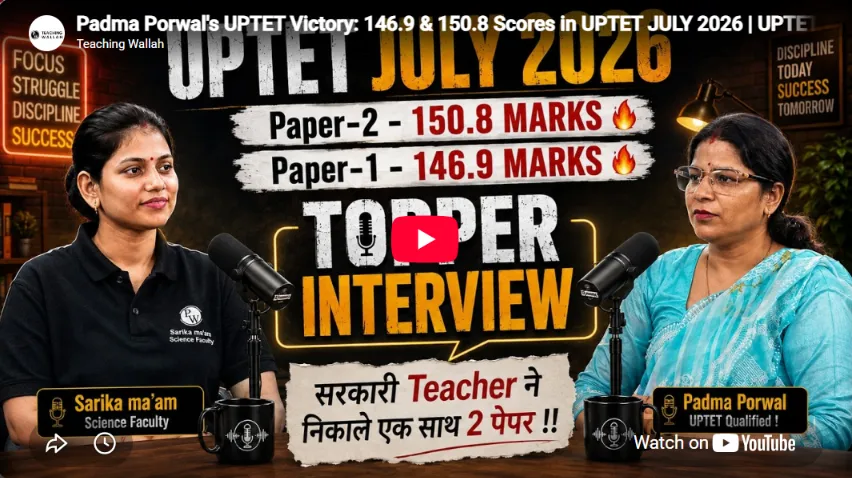
Padma Porwal from Etawah, Uttar Pradesh, has shown how consistent preparation can help you achieve a strong UPTET score even while managing a full-time teaching job and family responsibilities. A government teacher since 2003, she teaches Classes 6, 7 and 8 in a junior school, with Maths and Science as her subjects.
While preparing for UPTET, Padma mainly studied for around two hours every day after work. She relied on recorded classes, practice sets, books, short notes and quick revision to make the most of her limited time. Her consistent efforts helped her score 150.85 in UPTET Junior (Maths & Science) and around 146 in the Primary paper.
Managing UPTET Preparation Alongside a Teaching Job
For Padma, finding long hours for preparation was difficult because she was already working as a teacher and also had responsibilities at home. Instead of waiting for a full day to study, she used the time available after finishing her work.
She explained how some preparation happened naturally during school, while the remaining work was completed through classes and practice.
“Kuchh toh school mein bachchon ke saath karte-karte ho jaati thi… baaki apna practice set vagairah solve kar lete the aur class kar lete the.”
Her regular study slot was in the evening, when she was free from work.
“Yahi kareeb do ghante shaam ko kaam se free ho ke, haan 9 se 11 kareeb padhai kar lete the. Classes toh mostly recorded hi dekh paate the.”
This routine helped Padma maintain consistency without allowing her professional responsibilities to stop her preparation. She focused on making two hours of daily study useful rather than worrying about the number of hours she could not give.
What Preparation Strategy Did Padma Porwal Follow for UPTET?
Padma’s preparation focused on making the most of her limited study time. She combined classes with regular practice, worked more on the topics where she needed improvement, revisited CDP after a long gap, made short notes during classes and used the final days for quick revision.
She used books and practice sets to reinforce what she learnt in class.
“Books manga li rakhi thi, toh unhi books se practice kar li thi. Mostly practice set books ke questions solve kiye the.”
Since Maths was already one of her strong subjects, Padma focused more on the few topics where she faced difficulty.
“Maths mera shuru se strong hai. Bas ek-do cheezon mein dikkat thi, isliye unhi topics par thoda focus kiya.”
She also gave attention to time management so that she could solve questions quickly during the examination.
“Thoda time management ka dekhte the ki bas jaldi se jaldi solve kar paayein. Us pe thodi si practice ki thi ki kahin aisa na ho ki time short ho jaaye.”
For the final revision, Padma did not try to solve new papers in the last week. Instead, she quickly revised the material she had already prepared.
“Paper ke time maine phir ek hafta lagbhag paper vagairah solve nahi kare hain. Sirf jo mere paas material tha usko main quick revision kiya hai bas saara.”
Overall, Padma’s preparation strategy was based on regular practice, targeted improvement, active note-making and quick revision. Instead of trying to study everything repeatedly, she focused on understanding concepts, practising them and revising the material she had already covered.
How Did Physics Wallah Support Padma Porwal’s UPTET Preparation?
When Padma started preparing for UPTET, she needed clarity about the syllabus and the topics she had to cover. Physics Wallah classes helped her understand the syllabus and gradually clear concepts that were not familiar to her.
“Shuruaat mein toh matlab bahut helpful rahi kyunki cheezein samajh nahi rahe the. Jab shuru-shuru mein classes ki na toh cheezein clear hoti rahi ki haan ye saara CG syllabus hai aur wo sab se hota gaya, saari cheezein.”
The classes were especially useful for subjects she had not revised for several years. Physics was one such area where she felt she had forgotten many concepts, but the classes helped her bring them back.
“Physics mein kaafi bhool chuke the… toh achhe se ho gaya tha.”
Since Padma was managing her preparation alongside her teaching job, recorded classes gave her the flexibility to study according to her schedule. She could also adjust the playback speed when she wanted to cover a lecture faster.
“Recorded classes ko toh aap speed ke saath bhi dekh sakte hain agar 1.5x ho toh us tarah se bhi dekh lete the…”
The flexibility went beyond choosing the lecture speed. Padma could also watch recorded classes while completing household work, which helped her make use of the time available to her.
“Koi bhi kaam kar rahe the toh us time recorded classes aaraam se hum dekh lete ghar ka kaam karte hue.”
For Padma, PW’s classes provided the concept clarity she needed, while recorded lectures made it easier to continue learning around her work and home responsibilities. This flexibility helped her maintain her preparation without having to compromise on her daily responsibilities.
What Advice Does Padma Porwal Have for Teachers Preparing for UPTET?
Padma’s advice to teachers preparing for UPTET is to first build a strong command over their subjects and then stay consistent with their preparation. She believes that you do not need to study for long hours every day, but you should give regular time to the exam from the beginning.
“Ye apne subject pe apna control rakhein. Apne subject ko achhe se karein.”
Padma also believes that preparing for an important examination requires commitment. When you decide to pursue your goal, you may have to make some adjustments to your usual routine and give up certain comforts for a while.
“Thoda toh matlab apne sacrifice karne padenge sukh suvidhaon se bhi ki ab aaye hain ismein toh ab karke hi jaana hai.”
Padma does not believe in putting unnecessary pressure on yourself. She encourages learners to keep studying with a positive mindset and focus on learning rather than being overwhelmed by the examination.
“Impossible kuchh bhi nahi hai. Sab kuchh possible hai. Agar man mein chahe toh sab kuchh kar sakte hain.”
Her final message is to keep learning without allowing exam stress to take over the process.
“Padhte rehna hai… kuchh bhi… tension lekar ke kuchh bhi nahi… bas khushi-khushi mein seekhne ke uddeshya se…”
Padma Porwal’s journey proves that consistent effort can overcome limited time and busy responsibilities. Her 150.85 score in UPTET Maths & Science reflects her disciplined preparation, regular practice and focused revision. Her story reminds every teacher that with commitment, confidence and a willingness to learn, no goal is impossible.





Get Free Counselling Today
and Clear up all your Doubts
 Live & recorded classes available at easeDashboard for progress trackingLakhs of practice questions

