







UGC NET History: Indian National Army (INA) Important Facts and MCQ Explanation
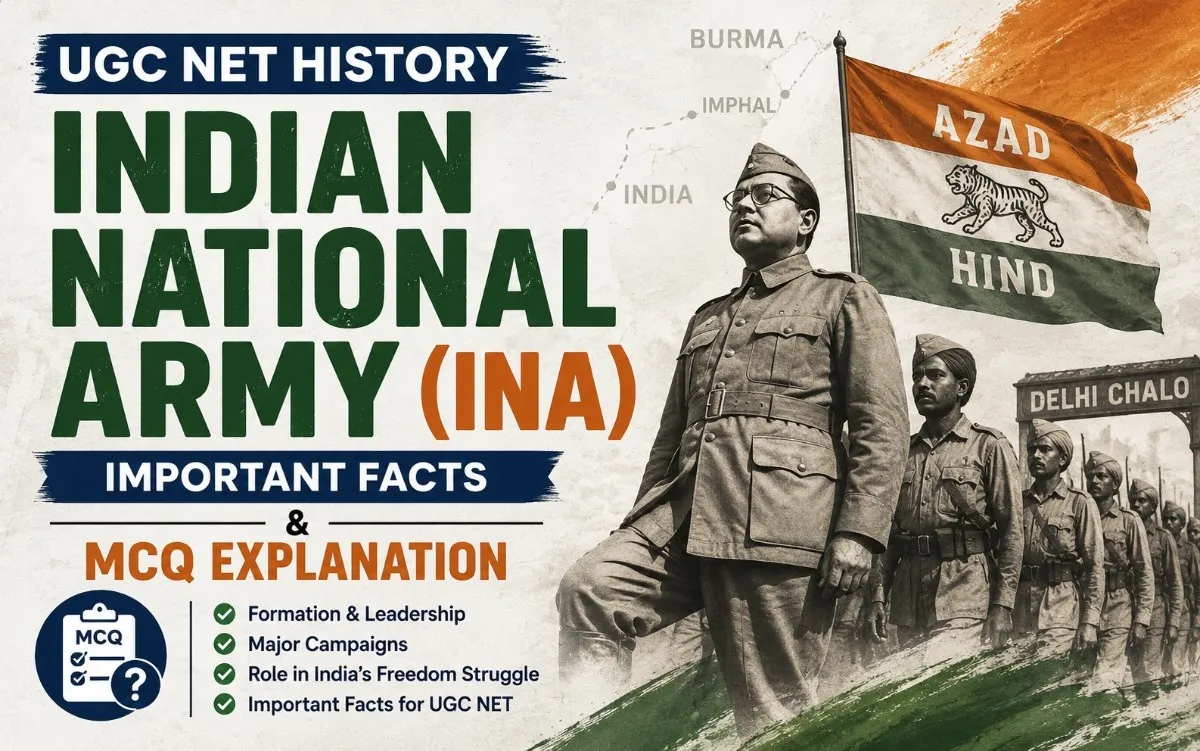
The Indian National Army (INA) was formed during World War II to fight British rule in India with Japanese support. Mohan Singh led the first phase of the INA, while Subhas Chandra Bose reorganized and strengthened it later, making it an important topic for UGC NET History preparation.
 Abhishek Kumar29 May, 2026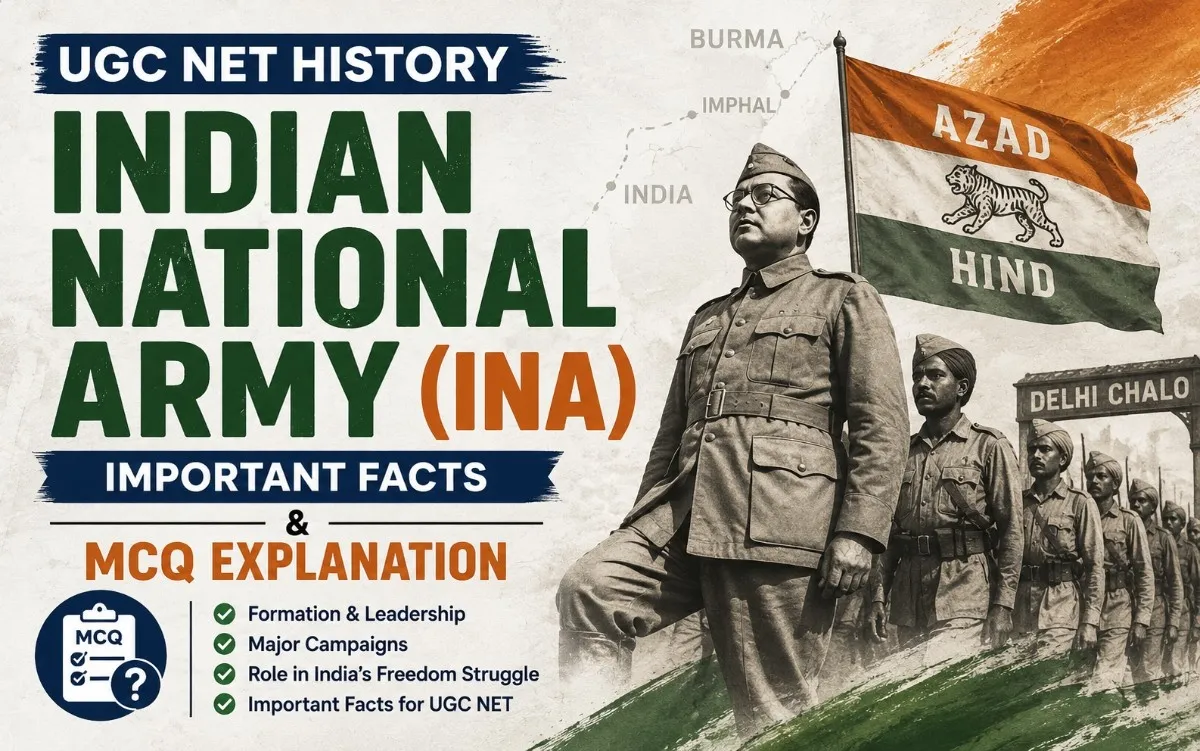
Which of the following statements regarding the Indian National Army (INA) are correct?
-
The first division of INA, formed in September 1942, had 16,300 men.
-
Serious differences emerged between Indian Army officers led by Mohan Singh and the Japanese over the size of the INA.
-
Subhas Chandra Bose arrived in Singapore and took command of the INA during the second phase of its existence.
-
Rashbehari Bose, who fled to Japan in 1915, played a significant role in getting the Japanese interested in the Indian independence movement.
-
Mohan Singh was supportive of the Japanese plan for a token force of 2,000, while the Japanese wanted a much larger army.
Explanation of Each Statement
Statement 1: Correct
The first division of the Indian National Army (INA) was formed in September 1942 with around 16,300 soldiers. The formation of the INA gained momentum after the Quit India Movement and the growing anti-British sentiment during World War II.
The Japanese considered the INA useful for their planned invasion of India and for mobilizing Indian prisoners of war against British rule.
Statement 2: Correct
Serious disagreements developed between Mohan Singh and the Japanese authorities regarding the role and size of the INA.
Mohan Singh wanted to build a large and independent Indian army capable of liberating India, whereas the Japanese preferred a smaller symbolic force under their influence. These differences eventually led to Mohan Singh’s arrest by the Japanese.
Statement 3: Correct
The arrival of Subhas Chandra Bose in Singapore marked the beginning of the second phase of the INA.
Subhas Chandra Bose reorganized and revitalized the INA, giving it stronger leadership, broader political direction, and mass appeal among Indians in Southeast Asia.
Before reaching Singapore, Bose met Japanese Prime Minister Hideki Tojo in Tokyo in June 1943 while travelling under the alias Abid Hussain.
Statement 4: Correct
Rashbehari Bose played an important role in building Japanese support for India’s freedom struggle.
After escaping to Japan in 1915 following failed revolutionary activities in India, he later acquired Japanese citizenship through naturalisation. He actively promoted the cause of Indian independence by:
-
Establishing the Indian Club in Tokyo
-
Participating in Pan-Asian organizations
-
Delivering speeches against Western imperialism
His efforts helped create political support in Japan for the INA movement.
Statement 5: Incorrect
This statement is incorrect because the positions of Mohan Singh and the Japanese have been reversed.
Mohan Singh wanted to organize a much larger army, while the Japanese only wanted a small token force of around 2,000 soldiers under their control.
Conclusion
Statements 1, 2, 3, and 4 are correct, while Statement 5 is incorrect. The Indian National Army became one of the most important military efforts against British rule and played a major role in strengthening nationalist sentiments during India’s freedom struggle.
What Was the Indian National Army (INA)?
The Indian National Army (INA), also known as the Azad Hind Fauj, was an armed force formed during World War II with the objective of ending British rule in India.
Initially formed under Mohan Singh with Japanese support, the INA later came under the leadership of Subhas Chandra Bose, who transformed it into a powerful nationalist movement.
The INA is remembered for:
-
Its military campaigns against British forces
-
Inspiring anti-colonial nationalism
-
Promoting the slogan “Delhi Chalo”
-
Establishing the Provisional Government of Free India
Important Facts for UGC NET Exam
| Topic | Key Detail |
| Popular Name | Azad Hind Fauj |
| First Leader | Mohan Singh |
| Major Leader | Subhas Chandra Bose |
| First INA Formation | September 1942 |
| Support Received From | Japan |
| Important Contributor | Rashbehari Bose |
| Objective | End British rule in India |
| Famous Slogan | Delhi Chalo |
UGC NET History: Indian National Army (INA) FAQs
Who founded the Indian National Army?
Who reorganized the INA?
Why was Rashbehari Bose important in INA history?
Why did Mohan Singh and the Japanese disagree?
Why is the INA important for UGC NET?






Get Free Counselling Today
and Clear up all your Doubts
 Live & recorded classes available at easeDashboard for progress trackingLakhs of practice questions

