








UGC NET History: Rowlatt Act 1919 Important Facts and MCQ Explanation
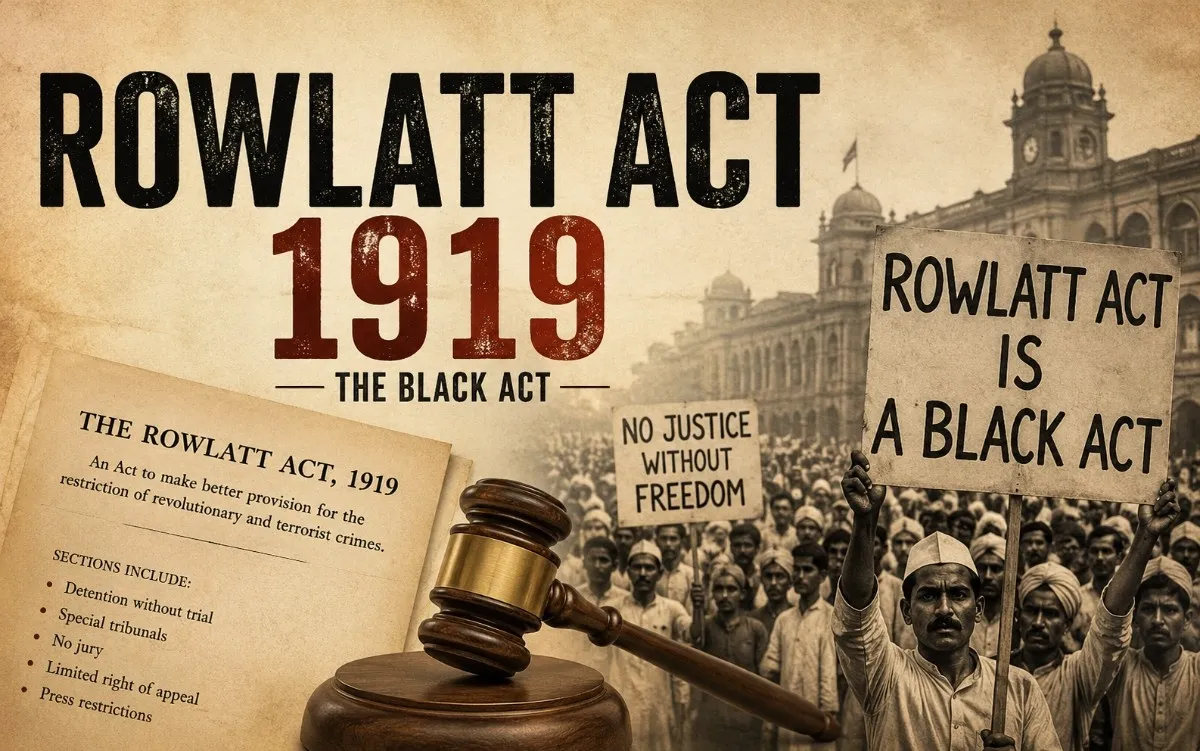
The Rowlatt Act, officially called the Anarchical and Revolutionary Crimes Act, was passed in 1919 to suppress revolutionary activities in India. It allowed imprisonment without trial and triggered nationwide protests led by Mahatma Gandhi, making it an important topic for UGC NET History preparation.
 Abhishek Kumar29 May, 2026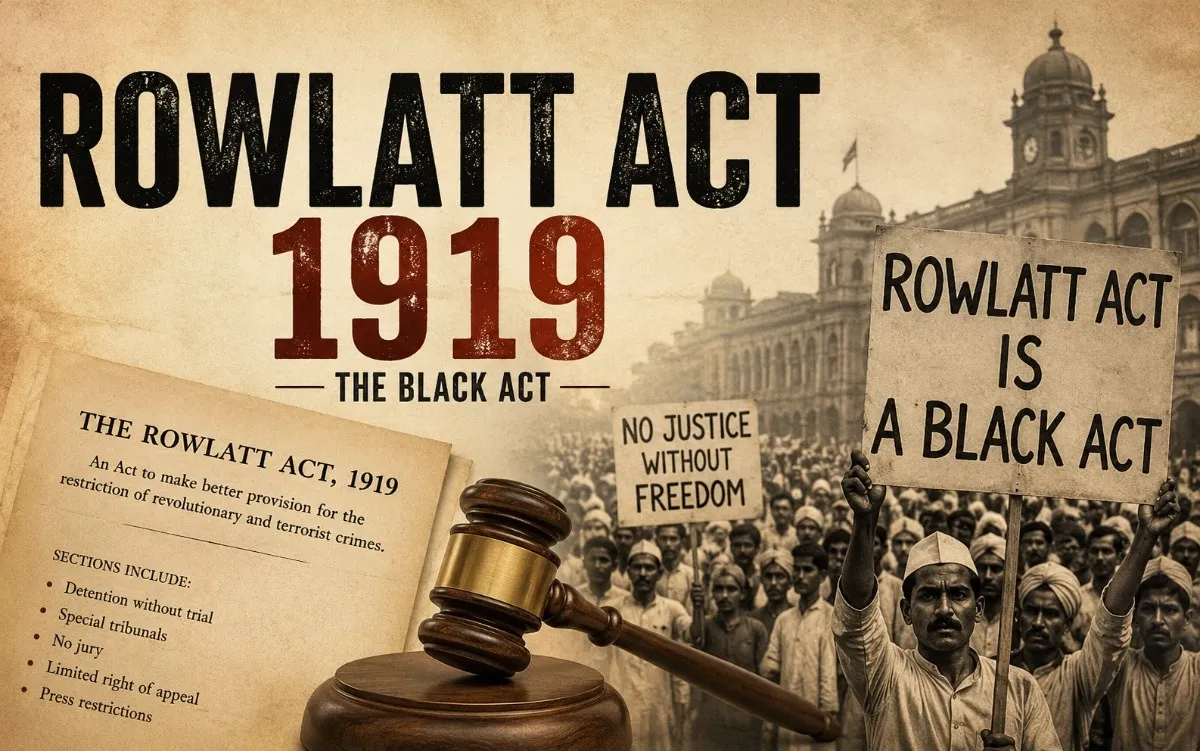
Which among the following statements regarding the Anarchical and Revolutionary Crimes Act are correct?
A. The Anarchical and Revolutionary Crimes Act was passed in March 1919.
B. The act allowed political activists to be tried without juries or even imprisoned without trial.
C. All the elected Indian members of the Imperial Legislative Council voted against the bill.
D. Gandhi organised a Satyagraha Sabha against the act and roped in older members of Home Rule Leagues and the Pan Islamists.
E. All the elected Indian members of the Imperial Legislative Council—who included Mohammed Ali Jinnah, Madan Mohan Malaviya and Mazhar Ul Haq – resigned in protest.
Options
-
(A) A, B, C, D, E
-
(B) A, B, C, D
-
(C) A, B, C, E
-
(D) B, C, D, E
Explanation of Each Statement
Statement A: Correct
The Anarchical and Revolutionary Crimes Act was passed in March 1919. It was officially enacted as an extension of the Defence of India Regulations Act, 1915.
The act later became popularly known as the Rowlatt Act, named after Justice Sidney Rowlatt, who headed the Sedition Committee
Statement B: Correct
The Rowlatt Act gave extraordinary powers to the British government.
Under this act:
-
Political activists could be imprisoned without trial.
-
Suspects could be arrested without warrant.
-
Trials could occur without juries.
-
Civil liberties were heavily restricted.
The law was widely criticized because it violated basic principles of justice and individual freedom.
Statement C: Correct
All the elected Indian members of the Imperial Legislative Council opposed the bill and voted against it.
However, the British official members held the majority and overruled the Indian representatives, leading to the passage of the act despite widespread opposition
Statement D: Incorrect
This statement is incorrect because Gandhi mobilized younger members of the Home Rule Leagues and the Pan Islamists, not older members.
Mahatma Gandhi formed the Satyagraha Sabha to oppose the Rowlatt Act and launched nationwide protests including:
-
Hartals (strikes)
-
Fasting and prayer
-
Civil disobedience
-
Courting arrest
This movement marked Gandhi’s emergence as a mass national leader.
Statement E: Correct
Several prominent Indian leaders resigned from the Imperial Legislative Council in protest against the Rowlatt Act.
These leaders included:
-
Mohammed Ali Jinnah
-
Madan Mohan Malaviya
-
Mazhar Ul Haq
Their resignations symbolized strong nationalist opposition to British repression.
Conclusion
The correct answer is Option C (A, B, C, E) because Statements A, B, C, and E are factually correct, while Statement D is incorrect due to the mention of “older members” instead of “younger members.” The Rowlatt Act remains a crucial topic in the history of India’s freedom struggle and an important area for UGC NET preparation.
What Was the Rowlatt Act?
The Rowlatt Act of 1919 empowered the British government to suppress revolutionary activities in India. Indians strongly opposed the act because it allowed detention without trial and restricted civil liberties.
The act triggered:
-
Nationwide protests
-
The Rowlatt Satyagraha
-
Growing anti-British sentiment
-
Events leading to the Jallianwala Bagh Massacre
It became one of the major turning points in the Indian freedom struggle.
Important Facts for UGC NET Exam
| Topic | Key Detail |
| Official Name | Anarchical and Revolutionary Crimes Act |
| Popular Name | Rowlatt Act |
| Year Passed | 1919 |
| Purpose | Suppress revolutionary activities |
| Opposed By | Indian nationalists and political leaders |
| Led Protest | Mahatma Gandhi |
| Major Outcome | Rise of mass nationalist movements |
UGC NET History Rowlatt Act 1919 FAQs
Why was the Rowlatt Act opposed in India?
Who introduced the Rowlatt Act?
Which movement was launched against the Rowlatt Act?
Why is the Rowlatt Act important for UGC NET?


Have questions about your prep?
Our experts can answer all your questions




 Live & recorded classes available at easeDashboard for progress trackingLakhs of practice questions

