Aurangzeb: Biography, Battles, Policies, Death and Legacy of the Mughal Emperor
Aurangzeb, the sixth Mughal Emperor, ruled India from 1658 to 1707. Known for his strict Islamic policies and strong administration, he expanded the empire through wars in the Deccan but drained its wealth. His reign saw both growth and decline. Aurangzeb died in 1707 at Ahmadnagar, marking the beginning of the Mughal Empire’s downfall.

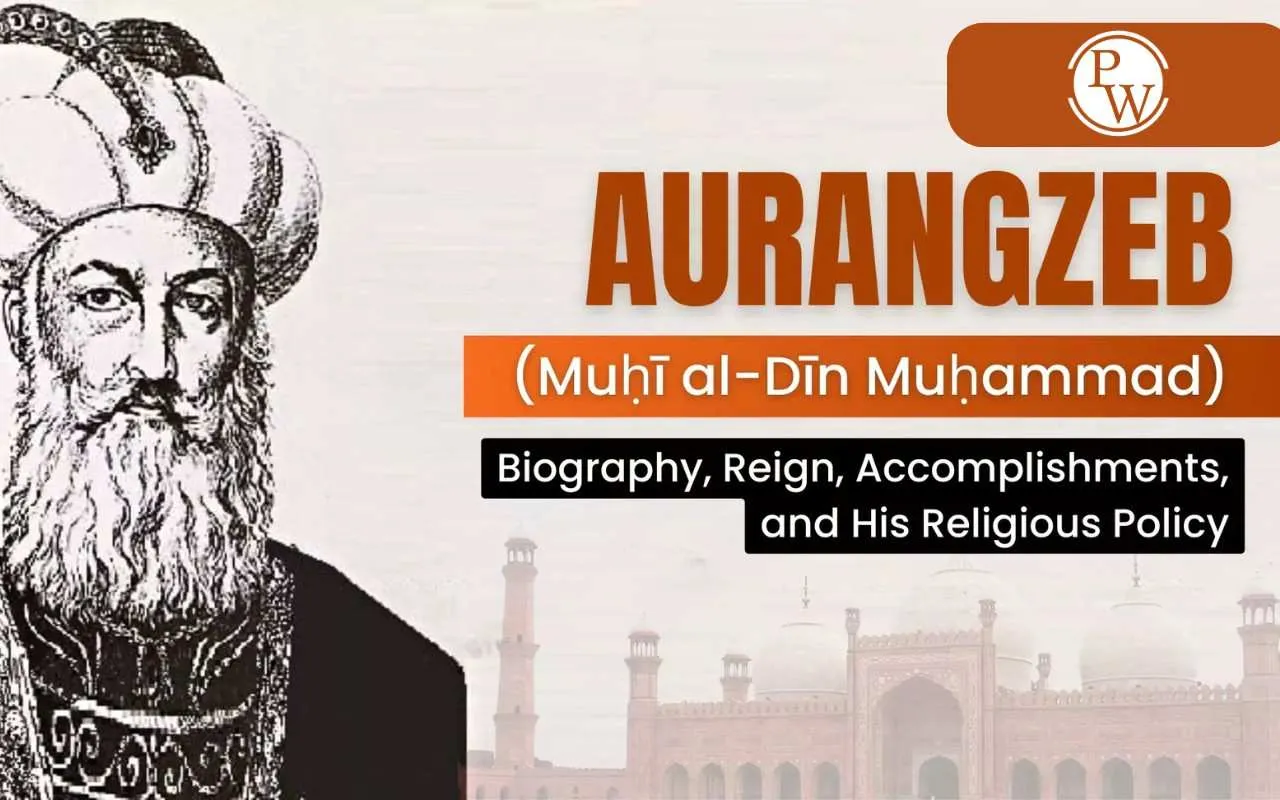
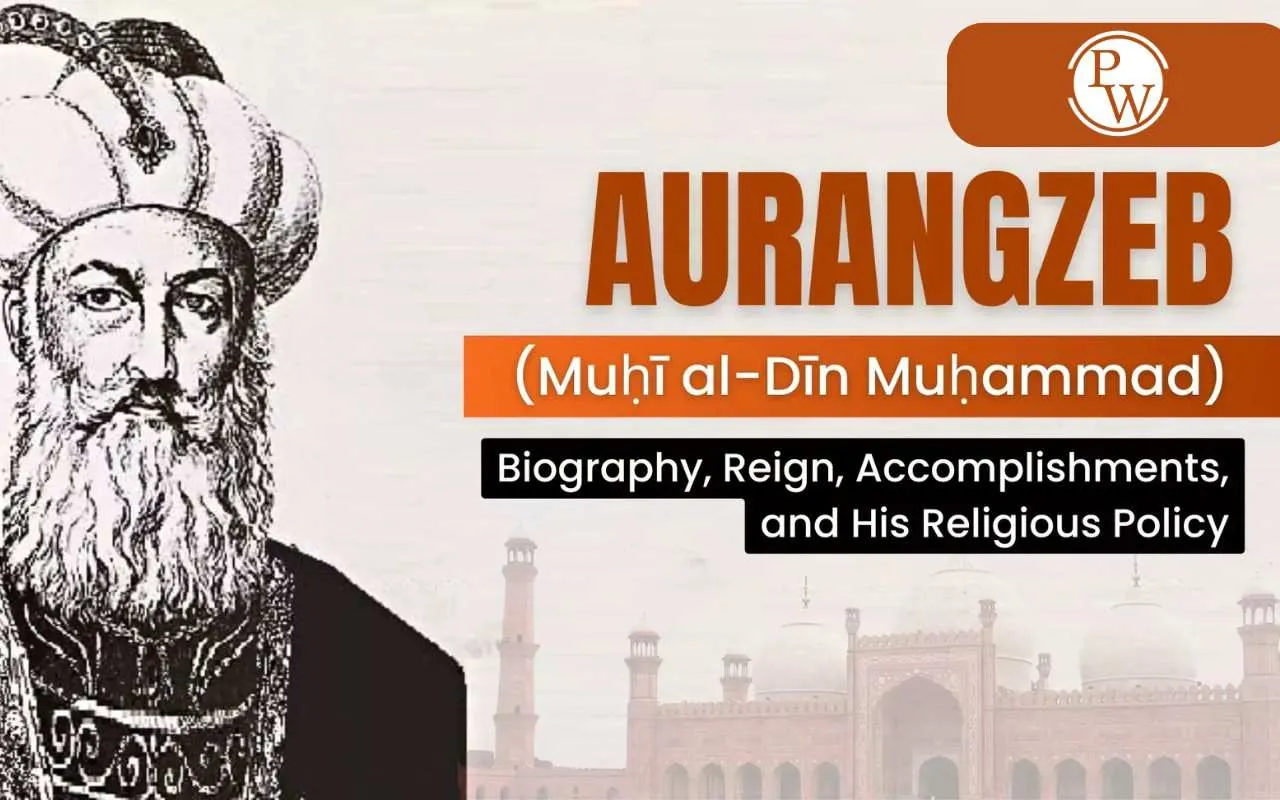
Aurangzeb was one of the strongest kings of the Mughal Empire. He ruled in India from 1658 to 1707. During his rule time, the Mughal Empire became very big, but after some time, it also started becoming weak. Aurangzeb is known for following strict Islamic rules, fighting many long wars, and trying to keep full control over his empire. Below, we will learn about Aurangzeb’s rule, his administration, his wars, and what kind of legacy he left behind after his death.
Who was Aurangzeb?
Aurangzeb, also known as “Aurangzeb Alamgir,” was the sixth Mughal Ruler. He was the son of Ruler Shah Jahan and Mumtaz Mahal. Among Shah Jahan’s sons, Aurangzeb proved that he was the most ambitious and disciplined son. His name, “Alamgir,” means “World Conqueror.” He ruled the Mughal Empire for about fifty years, making him one of the longest-ruling Mughal Emperors.
Aurangzeb Biography and Early Life
Aurangzeb was born on 3 November 1618 at Dahod in Gujarat. His father, Shah Jahan, was a great builder, and his mother, Mumtaz Mahal, was known for her beauty and grace. Aurangzeb received a strong education in Persian, Arabic, and Islamic law. From a young age, he showed great interest in the religious studies and military training.
He worked as a governor in different provinces before becoming emperor. His early experiences in administration and warfare helped him understand the challenges of ruling such a vast empire. The Aurangzeb biography shows how his early life shaped his strict nature and focus on discipline.
Aurangzeb Family Tree
Aurangzeb belonged to the famous Mughal family that started with Babur, the founder of the Mughal Empire. The family line continued with Humayun, Akbar, Jahangir, and Shah Jahan. After Shah Jahan, Aurangzeb became the ruler by defeating his brothers Dara Shukoh, Shuja, and Murad in the fight for the throne.
Aurangzeb had several children, and one of them, Bahadur Shah I, became the next emperor after him. The Aurangzeb family was the last strong generation of Mughal rulers before the empire started to weaken.
Rise of Aurangzeb to Power
Aurangzeb became the ruler after a long and difficult fight for the throne. When his father, Shah Jahan, got sick, his four sons started fighting to become the next king. Aurangzeb defeated his brothers, especially Dara Shukoh, in the Battle of Samugarh in 1658. After that, he imprisoned his father in the Agra Fort and declared himself the emperor.
This was the start of his long rule as the Mughal Emperor. He was known for being strict, powerful, and strong in battles.
Aurangzeb Administration
Aurangzeb’s way of ruling was very strict and controlled. He believed that the emperor should make all the important decisions himself. He removed the post of prime minister and personally looked after major matters of the empire. Aurangzeb chose his officers based on their talent and honesty, not on their family background.
He tried to save money by cutting the extra expenses, removing unfair tax benefits, and making sure land taxes were collected properly. His rule brought discipline and order, but many people were also scared because of his strict nature.
Aurangzeb’s Religious Policy
Aurangzeb’s religious policy was based on his strong Islamic beliefs. He brought back the Jizya tax, which non-Muslims had to pay and which Akbar had earlier removed. He also stopped music, dance, and other activities that he felt were against Islamic rules. In some areas, temples were destroyed, and strict religious rules were followed.
At the same time, Aurangzeb supported Islamic education, built mosques, and helped scholars. But his strict religious rules made many people unhappy, which led to revolts by groups like the Sikhs, Jats, and Marathas.
Aurangzeb Battles and Deccan Campaigns
Aurangzeb fought many battles to make the Mughal Empire bigger and to take control of the Deccan region. He fought against the kingdoms of Bijapur and Golconda and won after long fights.
He also had tough battles with the Marathas, first led by Shivaji and later by his son Sambhaji. These long wars in the south used up a lot of money and tired the Mughal army. The fights continued until Aurangzeb’s death, making his last years full of hard work and struggle.
Economy under Aurangzeb
During Aurangzeb’s rule, the economy had both good and bad sides. He focused on farming and collecting taxes fairly. He encouraged farmers to grow crops like indigo and opium, which were sold for trade. Roads and transport, especially the Grand Trunk Road, were improved so goods could move easily.
But the long wars in the Deccan cost a lot of money and made the empire’s treasury weak. Many farmers suffered because of heavy taxes and famines. Even though trade in cloth like muslin and brocade increased, the empire’s economy started to struggle because of high war and administration expenses.
Art, Culture and Architecture under Aurangzeb
During Aurangzeb’s rule, art and culture became simple and less fancy. Unlike the earlier Mughal kings who built big and beautiful monuments, Aurangzeb liked simple buildings. He built mosques like the Badshahi Mosque in Lahore and the Bibi Ka Maqbara in Aurangabad.
He also stopped music and dance performances in the royal court, which made Mughal art traditions weaker. However, Persian and Urdu literature continued to grow, and many books on science and religion were translated. The Mughal style of buildings continued, but became plainer and less decorated.
Aurangzeb Death and the Beginning of Decline
Aurangzeb died on 3 March 1707 in Ahmadnagar when he was 88 years old. He was buried in a simple grave at Khuldabad, near Aurangabad, just as he had wished.
After Aurangzeb’s death, the Mughal Empire started to become weak very quickly. His long wars and strict rules had already made the empire tired and difficult to manage. The rulers who came after him could not handle such a big empire. Many parts of the kingdom started rebelling, and slowly the Mughal Empire began to lose its power.
Legacy of Aurangzeb Mughal Emperor
The legacy of Aurangzeb, the Mughal Emperor, is still discussed in different ways. Some people remember him as a king who was very serious about his religion and duties. Others think he was too strict, and his rules created problems among people. He worked hard to make the empire stronger and bigger, but his religious rules and long wars made the Mughal Empire weak.
After Aurangzeb died, the next Mughal rulers could not keep the empire united. Because of this, new powers like the Marathas, Sikhs, and British started becoming stronger. Aurangzeb left behind a large empire, but also the reasons that later led to its fall.
Aurangzeb FAQs
Who was Aurangzeb?
Who were Aurangzebs parents?
What were the main battles fought by Aurangzeb?
What was Aurangzebs administration like?