Ayushman Card: Benefits, Eligibility, Application Process, Status Check

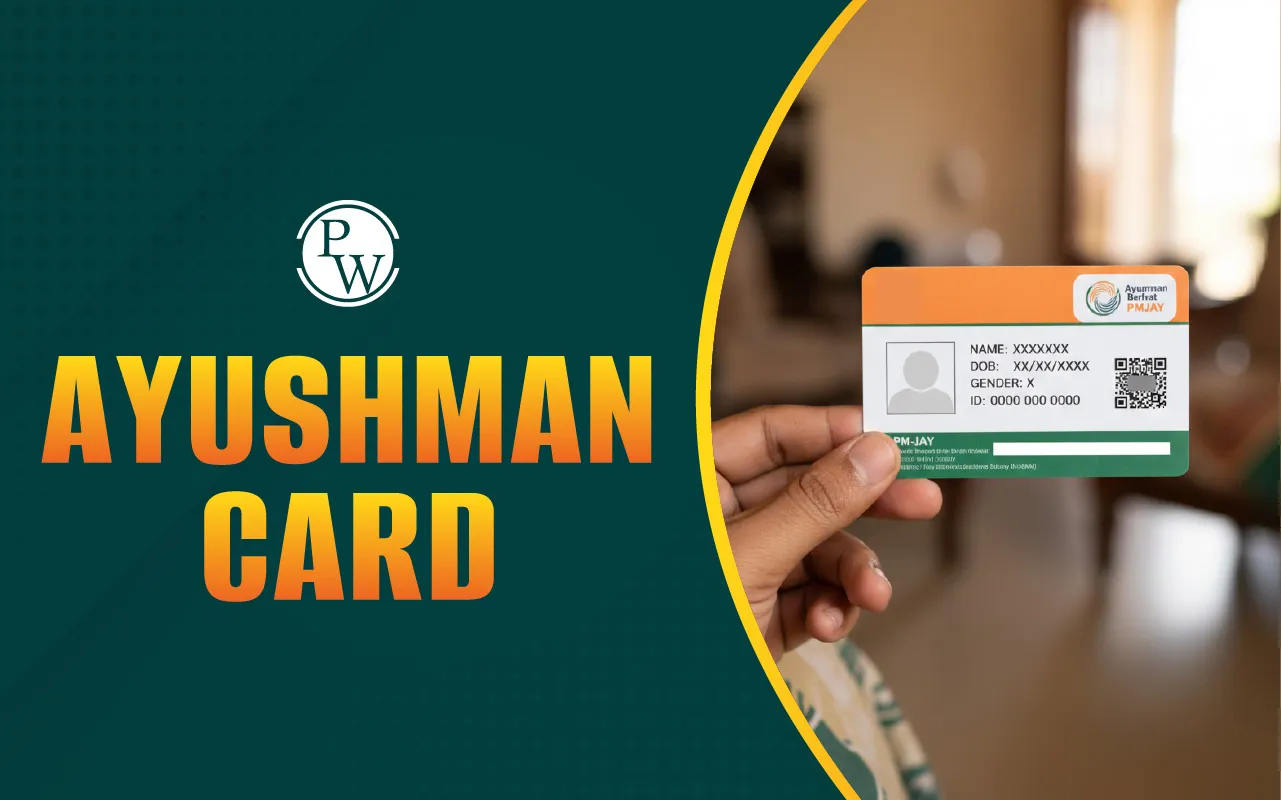
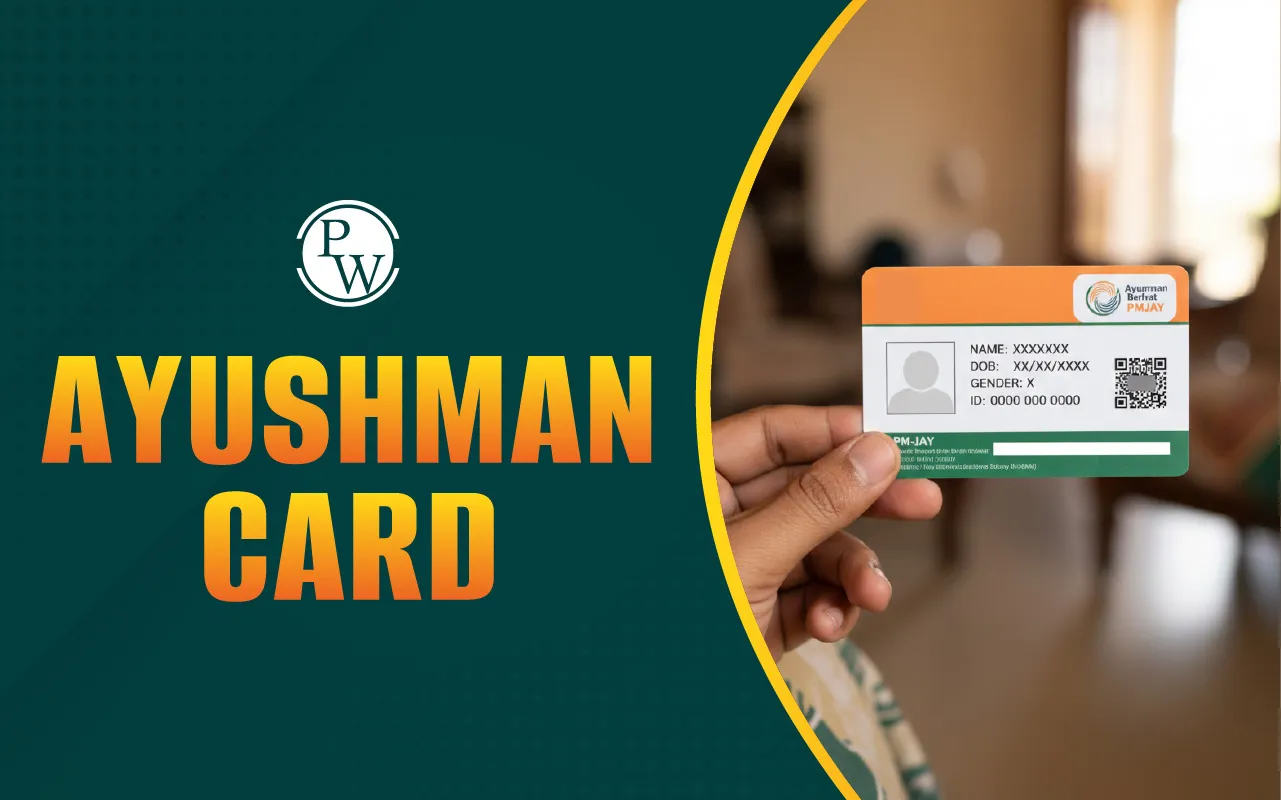
Ayushman Card facilitates cashless and paperless access to quality healthcare for more than 12 crore poor and vulnerable families in India. This revolutionary health initiative is officially known as the Ayushman Bharat Pradhan Mantri Jan Arogya Yojana. It was launched by the Government of India with the primary goal of providing health coverage at the secondary and tertiary care levels.
The scheme was launched on September 23, 2018. The aim of this scheme is to reduce catastrophic out-of-pocket expenditure on medical treatment. This expenditure has been found responsible for pushing millions of Indian families into poverty every year. The Ayushman Card ensures that beneficiaries can avail treatment for critical illnesses without worrying about hospital expenses. It makes it an important step to achieve universal health coverage.
Ayushman Bharat PM-JAY Scheme Overview
The scheme is a mission which is based on entitlement. The eligibility is determined by specific deprivation and occupational criteria that is derived from the Socio-Economic Caste Census (SECC) of 2011. Here is an overview of the scheme:
|
Ayushman Bharat PM-JAY Scheme Overview |
|
|
Category |
Detail |
|
Launched By |
Government of India |
|
Official Name |
Ayushman Bharat Pradhan Mantri Jan Arogya Yojana |
|
Year of Introduction |
September 23, 2018 |
|
Primary Goal |
To provide free, cashless health cover of ₹5 Lakh per family per year for secondary and tertiary care hospitalization. |
|
Target Beneficiaries |
Poor and vulnerable families identified by SECC 2011 data (approximately 12 Crore families). |
|
Key Feature |
Cashless and paperless treatment across all empanelled hospitals nationwide. |
What is Ayushman Card (AB PM-JAY)?
Ayushman Card is the PVC card which is issued to beneficiaries under the AB PM-JAY scheme. This card works as an important tool to access medical services. This is a health card based on a family floater. This means the annual ₹5 Lakh coverage can be utilised by any and all members of the eligible family. The scheme covers a range of medical procedures. These include diagnostics, doctor fees, pre-hospitalisation up to 3 days, post-hospitalisation up to 15 days, medicines, and more for over 1,900 medical procedures.
One of the biggest strengths of the scheme is that all pre-existing diseases are covered from the very first day of enrollment. Also, there is no restriction on the family size, age, or gender of the members covered under one Ayushman Card.
Key Benefits of Ayushman Card
Holding an Ayushman Card provides eligible families with financial protection against high medical expenses. The major benefits of the Ayushman card are as follows:
-
High Health Cover: Financial cover of up to ₹5,00,000 per family per year on a family floater basis.
-
Cashless Treatment: Beneficiaries receive completely cashless and paperless treatment. This treatment is available at any of the public or private hospitals which are empanelled under PM-JAY across the country.
-
Extensive Procedure Coverage: This procedure covers costs for over 1,900 medical procedures. These include surgery, diagnostics, intensive care services, and hospital accommodation.
-
Pre- and Post-Hospitalisation Expenses: The scheme covers up to 3 days of pre-hospitalisation expenses and 15 days of post-hospitalization expenses with diagnostics and medicines.
-
No Cap on Family Size: There are no restrictions on the size of the family or the age and gender of the members. All members of the eligible family are covered.
-
Coverage from Day One: All existing medical conditions or pre-existing diseases are covered from the first day of enrollment.
-
Portability of Benefits: An Ayushman Card beneficiary can avail treatment in any empanelled hospital in any State or Union Territory in India.
Eligibility Criteria for Ayushman Card
The ayushman card eligibility criteria are based on the Socio-Economic Caste Census (SECC) 2011 data for both rural and urban areas. There is no separate enrollment process. If a family is listed in the SECC database or under an expanded state-specific scheme, they are entitled to the benefit.
Rural Beneficiary Criteria Based on Deprivation
Specific criteria based on deprivation are used to identify and support the most vulnerable families in rural areas. These criteria help ensure that assistance reaches households who are facing severe socio-economic challenges. If a family meets at least one of the following conditions, it is generally considered eligible:
-
Households with only one room, with kucha walls and kucha roof.
-
Households with no adult member between the ages of 16 and 59.
-
Households with no adult male member between the ages of 16 and 59.
-
Disabled member and no able-bodied adult member.
-
SC/ST households.
-
Landless households derive a major part of their income from casual manual labour.
Urban Beneficiary Criteria (Based on Occupation)
In urban areas, eligibility is determined through occupation-based categories that highlight low-income and vulnerable working groups. These criteria help identify households engaged in informal, unorganised, or low-paying work who require financial and social support. Families belonging to any one of the following occupational categories are considered eligible:
|
Urban Beneficiary Criteria |
|
|
Sl. No. |
Eligible Occupational Category |
|
1 |
Rag picker, Beggar |
|
2 |
Domestic Worker |
|
3 |
Street Vendor / Cobbler / Hawker / Other street-based service providers |
|
4 |
Construction Worker / Plumber / Mason / Labour / Painter / Welder / Security Guard / Coolie / Head-load workers |
|
5 |
Sweeper / Sanitation Worker / Mali |
|
6 |
Home-based Worker / Artisan / Handicrafts Worker / Tailor |
|
7 |
Transport Worker / Driver / Conductor / Helper to Drivers & Conductors / Cart Puller / Rickshaw Puller |
|
8 |
Shop Worker / Assistant / Peon in a small establishment |
|
9 |
Electrician / Mechanic / Assembler / Repair Worker |
|
10 |
Washer-man / Chowkidar |
Recent Update: The scheme has been expanded to include all senior citizens aged 70 years and above, irrespective of their income and socio-economic status.
Documents Required for Ayushman Card
The Ayushman Bharat scheme is entitlement-based; still beneficiaries should complete a verification process to ensure accurate identification. This prevents duplication and confirms that the eligible family members receive the benefits without errors. For this purpose, applicants are required to provide certain documents during registration and e-KYC:
-
Identity and Age Proof: Aadhaar Card (mandatory for e-KYC), Voter ID, or PAN Card.
-
Proof of Eligibility: Ration Card (showing family members) or a copy of the PM Letter/CM Letter (if available).
-
Family Status Document: Document proof of the current status of the family (Joint or Nuclear).
-
Contact Details: Mobile number and address proof.
How to Apply for Ayushman Card?
The most accurate method to know your status and complete the e-KYC for your Ayushman card apply online process is through the official government portals. Here is the step-by-step process to apply for the scheme:
Step 1: Check Eligibility Status (Pre-Requisite)
It is important to verify whether your family is listed as a beneficiary under the PM-JAY scheme before starting the Ayushman Card registration process. This initial step ensures that only eligible households proceed further during document submission. Once your eligibility is confirmed, you can continue with the remaining steps smoothly.
The first step is to confirm if your family is included in the PM-JAY list.
-
Visit the official PM-JAY Beneficiary Identification System (BIS) portal: @beneficiary.nha.gov.in or the dedicated "Am I Eligible" tool on the PM-JAY website.
-
Login using your mobile number and the OTP received for verification.
-
Select your State and District.
-
Select Search By criteria (e.g., Search by Name, HHD Number, Ration Card Number, or Aadhaar Number).
-
Enter the required details and click Search.
-
The result will indicate if your family is covered under the scheme.
Step 2: e-KYC and Card Creation
Once your eligibility is confirmed, the next step is to authenticate your identity through e-KYC. This process is crucial because it verifies your personal details with Aadhaar and ensures that the Ayushman Card is issued to the correct individual. Completing e-KYC successfully allows the system to generate your Ayushman Card digitally, which can then be downloaded or printed.
If your name appears on the list, you can proceed with the e-KYC and card creation.
-
If the status shows 'Identified' but 'Card Not Generated', click on the 'Do e-KYC' link next to the family member's name.
-
Choose your authentication mode (most commonly Aadhaar OTP or Fingerprint).
-
Enter your Aadhaar number, verify the consent, and click Allow/Verify.
-
Enter the OTP received on your Aadhaar-linked mobile number to complete the e-KYC.
-
Once verified, the card details will be sent for approval by the State Health Agency (SHA).
Offline Application or Card Generation
You can also visit the nearest Common Service Center (CSC), any empanelled hospital, or a dedicated PM-JAY Kendra (Ayushman Mitra) with your documents. The Ayushman Mitra will assist you in checking your eligibility and completing the e-KYC and card generation process.
Ayushman Card Check Status and Download Process
Once your e-KYC is approved and your details are verified, the system begins generating your Ayushman Card. It is important to check the card status to ensure that all steps have been completed without errors. After confirmation, you can proceed to download the Ayushman Card for use at empaneled hospitals and healthcare centers.
After successful e-KYC and approval, you can easily check the status and initiate the Ayushman Card download.
1. Ayushman Card Check Status
You can monitor the status of your card generation by logging into the official Beneficiary Portal and following the steps in "Step 1" above. The status will typically show:
-
Identified: Your family is eligible.
-
Card Generated/Approved: The card is ready.
-
Card Not Generated: You need to complete the e-KYC process.
2. Ayushman Card Download
Once your card is approved:
-
Log in to the PM-JAY Beneficiary Portal (https://beneficiary.nha.gov.in/).
-
Select your State and the relevant authentication method (Aadhaar OTP is common).
-
Complete the authentication.
-
Navigate to the Download Card option.
-
Select the family member's name and click the download icon to save the e-card (Ayushman Card) in PDF format.
Ayushman Card Features and Advantages
The Ayushman Card offers a holistic solution to health financing, positioning itself as a core component of India's social security net.
|
Ayushman Card Features and Advantages |
|
|
Feature Type |
Advantage to Beneficiary |
|
Financial Security |
Protects family income and savings from catastrophic health expenses. |
|
Cashless Mechanism |
Eliminates the need for the beneficiary to arrange cash upfront at the hospital. |
|
All-India Portability |
Allows treatment access in any state/UT, beneficial for migrant workers. |
|
Comprehensive Coverage |
Covers all treatment costs from diagnostics to post-discharge care for 1,900+ procedures. |
|
Inclusion of Senior Citizens |
Separate health coverage of ₹5 Lakh has been introduced for all citizens aged 70 years and above (irrespective of income). |
|
Pre-Existing Diseases |
All existing medical conditions are covered immediately from day one. |
Ayushman Card FAQs
What is the Ayushman Card?
Who is eligible for the Ayushman Card?
How to check Ayushman Card eligibility?
How to apply for the Ayushman Card online?
What documents are required to get the Ayushman Card?