5 Best Videos on Fundamental Rights for UPSC Polity Preparation by PW
 Avisha Das21 Nov, 2026

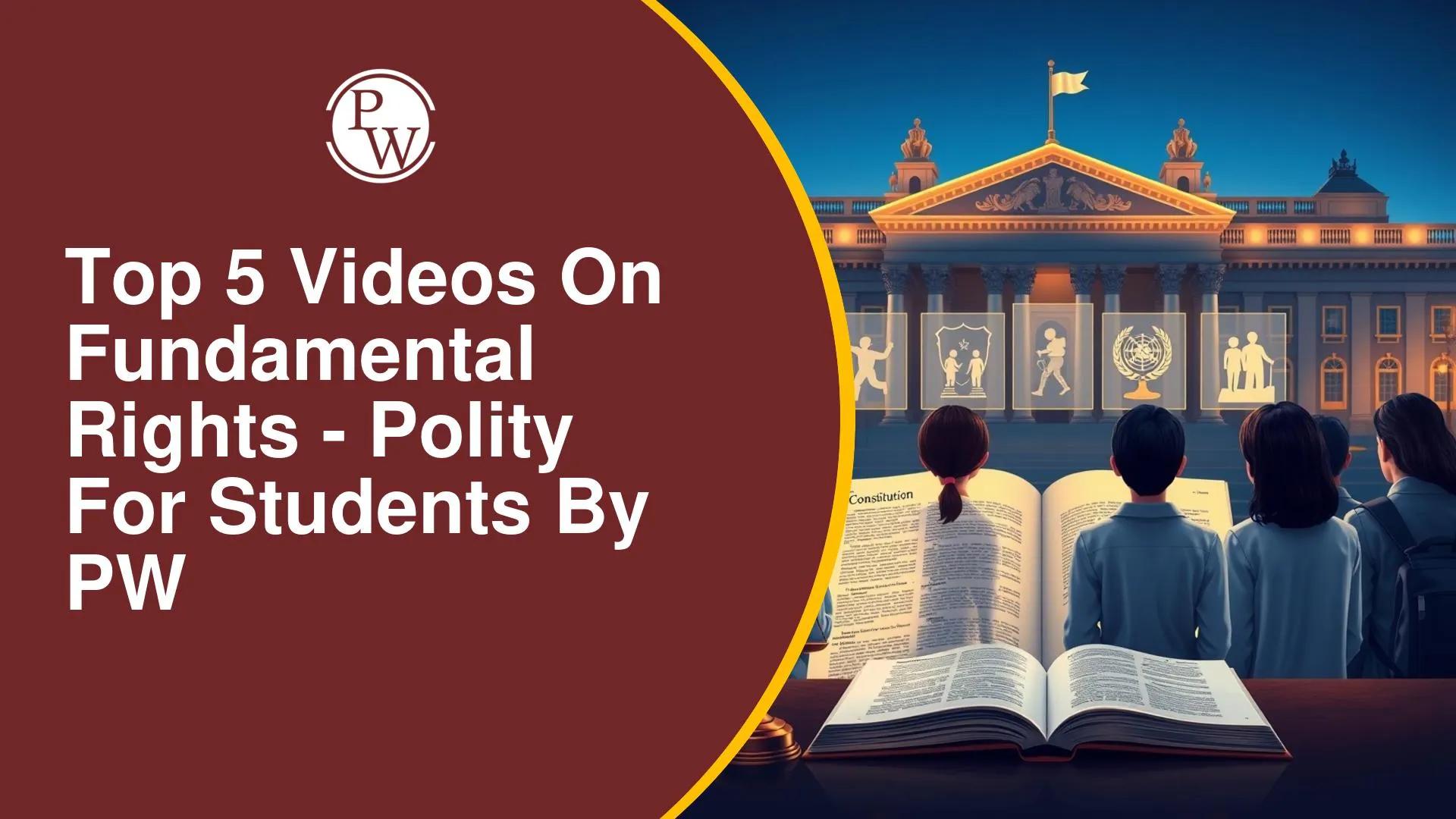
Fundamental Rights require more than memorising constitutional articles. You need to understand who can claim these rights, when reasonable restrictions apply, how constitutional remedies work, and how Supreme Court judgments have shaped their interpretation. These distinctions are important for solving statement-based Prelims questions and developing accurate Mains answers.
Physics Wallah offers video lessons that approach this topic through full-chapter explanations, one-shot revision, article-wise discussions, and landmark case studies. Watch the best PW YouTube videos that help you understand constitutional provisions, connect related concepts, and revise important aspects of Fundamental Rights.
Video 1: Explore Fundamental Rights Through Constitutional Articles and Landmark Judgments
This full-chapter video introduces Fundamental Rights through their constitutional framework, important articles, and judicial interpretations. It explains the meaning and scope of rights while connecting constitutional provisions with the judgments that have influenced their application. The lesson helps you understand not just what the Constitution guarantees, but also how courts interpret and protect these guarantees.
Choose this video if you are approaching Fundamental Rights for the first time or want to establish a clear chapter-wise understanding. Its combination of constitutional concepts and judicial reasoning can help you build a foundation for factual and analytical questions.
Video 2: Revise Articles 12–35, Six Rights, Writs, and Judicial Review Through Detailed Coverage
This full-chapter video covers the meaning, evolution, importance, and features of Fundamental Rights. It explains Articles 12 and 13, judicial review, and the relationship between Article 13 and Article 368. You also get detailed explanations of equality under Articles 14–18, freedoms under Articles 20, 21, 21A, and 22, protection against exploitation, religious freedom, and cultural and educational rights.
The video also discusses preventive detention, the right to property, constitutional remedies, exceptions, criticism, and the significance of Fundamental Rights. Its comparison of the writ jurisdiction of the Supreme Court and High Courts is particularly useful for understanding constitutional distinctions and preparing for statement-based Prelims questions.
Can you apply these provisions while solving actual examination questions? Practise with UPSC Previous Year Question Papers
Video 3: Compare Fundamental Rights With DPSPs and Understand the Six Categories of Rights
This video explains the constitutional foundations of Fundamental Rights through Articles 12–35. It introduces their origin and significance before discussing the six categories: right to equality, right to freedom, right against exploitation, right to freedom of religion, cultural and educational rights, and right to constitutional remedies. It also covers reasonable restrictions and the relationship between Fundamental Rights and Directive Principles of State Policy (DPSPs).
The lesson discusses Articles 32 and 226, the different writs issued by the Supreme Court and High Courts, and Dr B. R. Ambedkar's description of Article 32 as the heart and soul of the Constitution. Choose this video to organise Part III into conceptual groups and understand constitutional distinctions that are relevant to both objective and descriptive questions.
Video 4: Revise the Evolution of Rights and Global Human Rights Ideas in One Shot
This one-shot video begins with the idea of rights as essential entitlements for a dignified life. It explains positive and negative rights, the distinction between rights available to citizens and those available to all persons, reasonable restrictions, and the relationship between rights and duties. The discussion also traces the development of rights through the Magna Carta, natural rights, and the Universal Declaration of Human Rights.
The lesson connects these developments with Part III of the Indian Constitution and discusses democracy, liberty, equality, minority protection, religious freedom, cultural rights, and social justice. Examples, comparisons, tables, examination-oriented statements, and previous-year question practice make it useful for quick revision and understanding the broader purpose of Fundamental Rights.
Looking for more topic-wise video lessons and revision support? Visit the PW OnlyIAS YouTube channel.
Video 5: Explore Articles 19–35 Through Landmark Cases, Exceptions, and Constitutional Questions
This video focuses on Articles 19–22, including the six freedoms under Article 19, reasonable restrictions, protection against conviction, life and personal liberty, and safeguards against preventive detention. It also covers trafficking, forced labour, child labour, religious freedom, cultural and educational rights, and the property right.
The discussion extends to Articles 31A, 31B, and 31C, constitutional remedies under Article 32, writs, and Articles 33–35. Landmark judgments such as Maneka Gandhi and Kesavananda Bharati explain how judicial interpretation has shaped constitutional rights. Prelims questions and Mains-oriented discussions make this video useful for advanced revision and understanding case-law applications.
These PW videos cover Fundamental Rights through constitutional explanations, article-wise discussions, one-shot revision, and landmark judgments. Use them to strengthen conceptual clarity, revise important provisions, and understand judicial interpretations. Combine video learning with the UPSC syllabus, Polity notes, and regular PYQ practice for better Prelims and Mains preparation.