Civil Disobedience Movement (1930-1934): History, Phases, and Significance

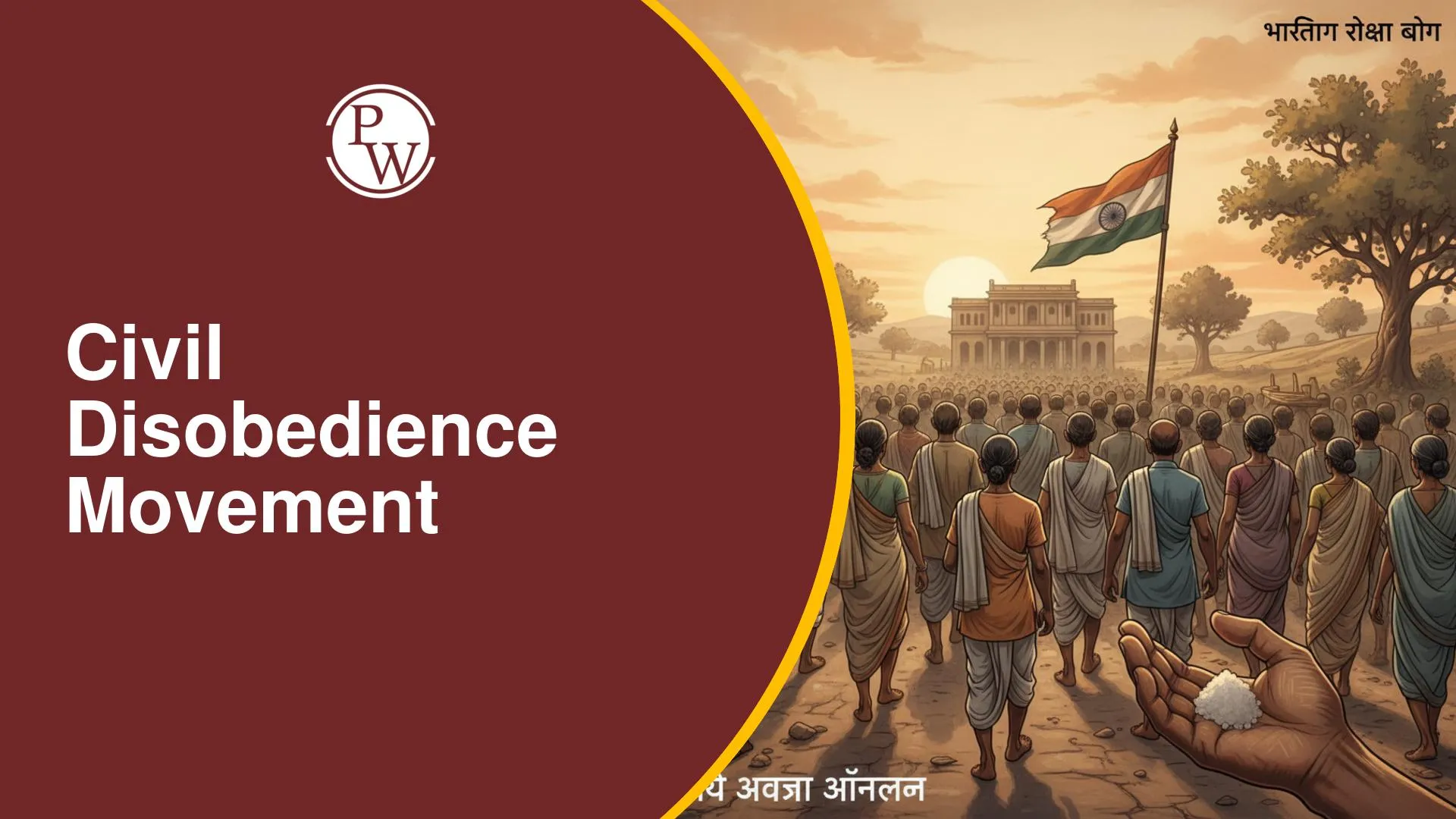
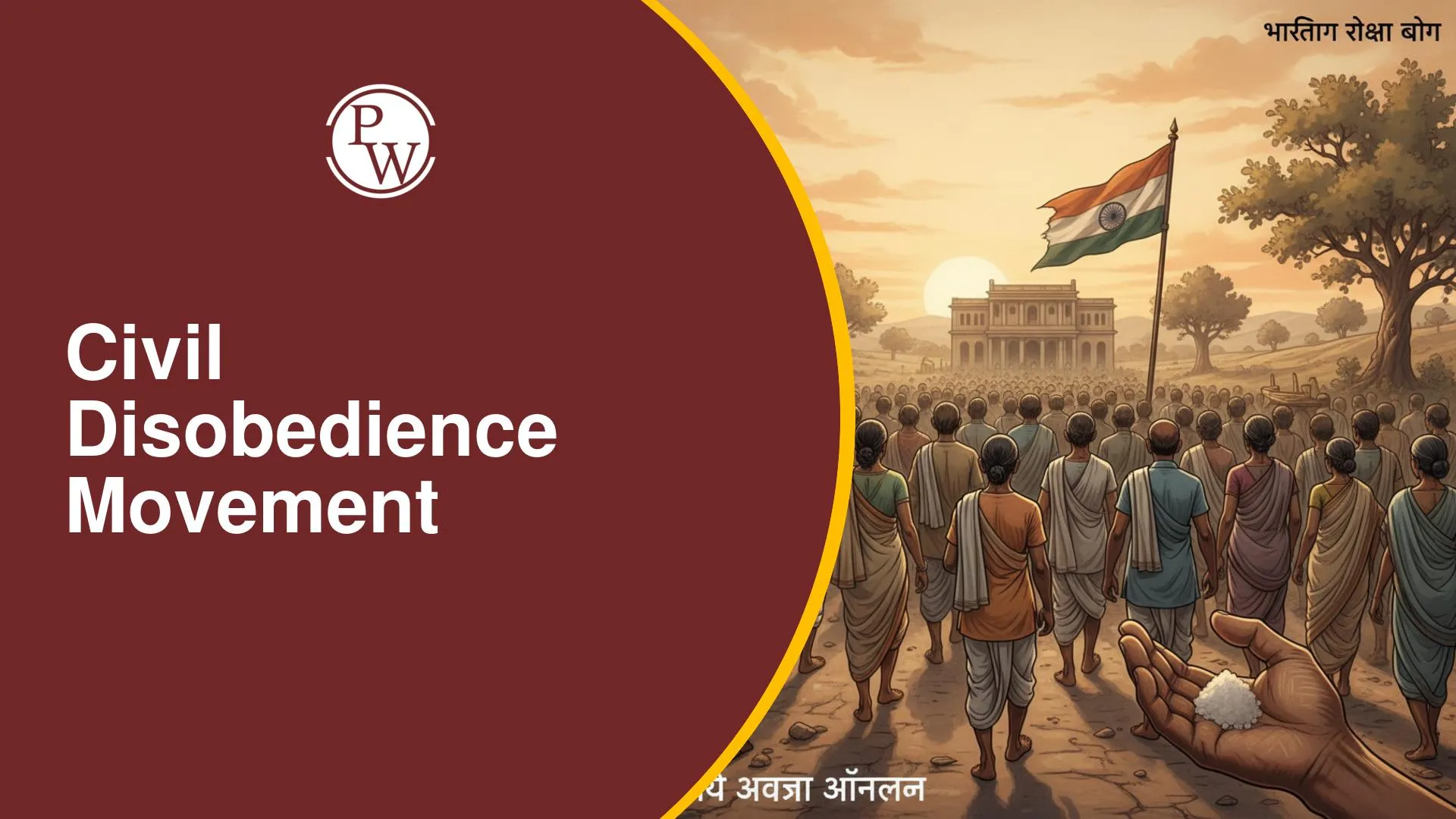
Civil Disobedience Movement remains a cornerstone of the Indian freedom struggle. Launched under the leadership of Mahatma Gandhi, this movement shifted the momentum of the national resistance from moderate constitutional demands to a mass-based struggle for "Purna Swaraj" or complete independence.
Unlike previous movements, the Gandhi Civil Disobedience Movement was defined by a deliberate, non-violent violation of colonial laws, fundamentally challenging the moral and legal authority of British rule.
Civil Disobedience Movement Overview
Civil Disobedience Movement 1930 was a massive non-violent protest against the British government's unjust laws and policies. It was the second major mass movement led by Mahatma Gandhi after the Non-Cooperation Movement. While the earlier movement focused on "non-cooperation," the 1930 movement went a step further by encouraging the active "disobedience" of specific British laws, starting with the salt tax.
Causes of Civil Disobedience Movement
Several political and economic factors converged to create the perfect environment for the causes of Civil Disobedience Movement:
-
The Simon Commission (1928): The appointment of an all-British commission to suggest constitutional reforms in India outraged Indian leaders. The lack of Indian representation led to widespread protests and the slogan "Simon Go Back."
-
The Nehru Report and Purna Swaraj: In 1928, the Nehru Report demanded dominion status. When the British failed to respond, the Lahore Session of the Congress (1929) declared "Purna Swaraj" as the goal, hoisting the tricolor flag on the banks of the Ravi.
-
Economic Depression: The Great Depression of 1929 hit Indian farmers hard. Falling crop prices and high land revenues made life unbearable for the peasantry.
-
Gandhi’s 11 Demands: Gandhi presented a list of demands to Viceroy Irwin, including the reduction of land revenue, abolition of the salt tax, and release of political prisoners. Irwin's refusal to negotiate served as the immediate trigger.
Dandi March Civil Disobedience Movement: The Spark
The movement officially commenced with the historic Dandi March Civil Disobedience Movement. On March 12, 1930, Mahatma Gandhi along with 78 chosen followers started a 240-mile trek from Sabarmati Ashram to Dandi. The Salt Satyagraha 1930 was a masterstroke of political symbolism. Salt was a commodity used by every Indian—rich or poor, Hindu or Muslim. By picking up a handful of salt on April 6, 1930, Gandhi defied the British monopoly and gave the signal for a nationwide revolt.
Civil Disobedience Movement Features and Objectives
Understanding the Civil Disobedience Movement features is essential for grasping its impact. The movement was not just about salt; it was a multi-pronged attack on colonial structures.
Civil Disobedience Movement Objectives
-
To achieve Purna Swaraj (Complete Independence).
-
To paralyze the British administration through non-violent means.
-
To protest against the salt tax and other oppressive economic policies.
-
To involve all sections of society, including women, students, and peasants.
Key Features of the Movement
-
Boycott of British goods movement: Foreign cloth was burnt in public, and people were encouraged to use Khadi.
-
No tax campaign Civil Disobedience Movement: In many regions, peasants refused to pay land revenue (Chaukidari tax) and forest laws were openly defied.
-
Picketing: Women led the way in picketing liquor shops and opium dens.
-
Mass Resignations: Indian officials resigned from British government services in large numbers.
Civil Disobedience Movement Phases
The movement was not a singular event but progressed through distinct stages:
Phase 1: The First Phase (1930–1931)
This was the most intense period. Following the Dandi March, salt laws were broken across India’s coastline. Leaders like C. Rajagopalachari in Tamil Nadu and K. Kelappan in Malabar led similar marches. The British responded with brutal repression, arresting nearly 60,000 people, including Gandhi and Nehru.
Phase 2: The Gandhi Irwin Pact Civil Disobedience Movement
To find a way out of the deadlock, the Gandhi Irwin Pact Civil Disobedience Movement was signed in March 1931. Under this pact:
-
The Congress agreed to suspend the movement.
-
The British agreed to release non-violent political prisoners.
-
Indians were allowed to make salt for personal use.
-
Gandhi agreed to attend the Round Table Conference Civil Disobedience Movement.
Phase 3: Resumption of Civil Disobedience Movement 1932
Gandhi attended the Second Round Table Conference in London, but the British refused to grant basic constitutional rights. Upon his return, he found the government had resumed its repressive tactics. This led to the resumption of Civil Disobedience Movement 1932. However, by 1934, the momentum had slowed, and the movement was officially withdrawn.
Mass Participation Civil Disobedience Movement
One of the defining characteristics was the mass participation Civil Disobedience Movement attracted across diverse demographics:
Role of Women in Civil Disobedience Movement
The role of women in Civil Disobedience Movement was transformative. Thousands of women, inspired by Gandhi, came out of their homes to join salt marches, manufacture salt, and picket shops selling foreign goods. Sarojini Naidu famously led the protest at the Dharasana Salt Works.
Role of Peasants in Civil Disobedience Movement
The role of peasants in Civil Disobedience Movement was particularly strong in Gujarat, Uttar Pradesh, and Bihar. They participated in "no-rent" and "no-revenue" campaigns, braving police lathis and the confiscation of their lands.
Civil Disobedience Movement Leaders
While Gandhi was the face of the movement, local Civil Disobedience Movement leaders played a vital role:
-
Khan Abdul Ghaffar Khan: Known as the "Frontier Gandhi," he led the "Khudai Khidmatgars" (Red Shirts) in the NWFP.
-
C. Rajagopalachari: Led the Vedaranyam Salt March in Tamil Nadu.
-
Surya Sen: Orchestrated the Chittagong Armoury Raid in Bengal.
Civil Disobedience Movement Impact and Significance
The Civil Disobedience Movement impact was felt long after the protests ceased:
-
Global Attention: The movement brought India's struggle to the front pages of international newspapers, highlighting British brutality.
-
Psychological Shift: It removed the fear of the British from the hearts of common Indians.
-
Constitutional Reforms: It directly led to the Government of India Act 1935, which introduced provincial autonomy.
-
Civil Disobedience Movement Significance: It proved that the British could not rule India without the consent of the Indians.
Civil Disobedience Movement FAQs
What was the immediate cause of the Civil Disobedience Movement?
How was the Civil Disobedience Movement different from the Non-Cooperation Movement?
What was the significance of the Dandi March?
Who led the movement in the North-West Frontier Province?