List of Coal Mines in India State-wise: Major Coal Fields, and Distribution

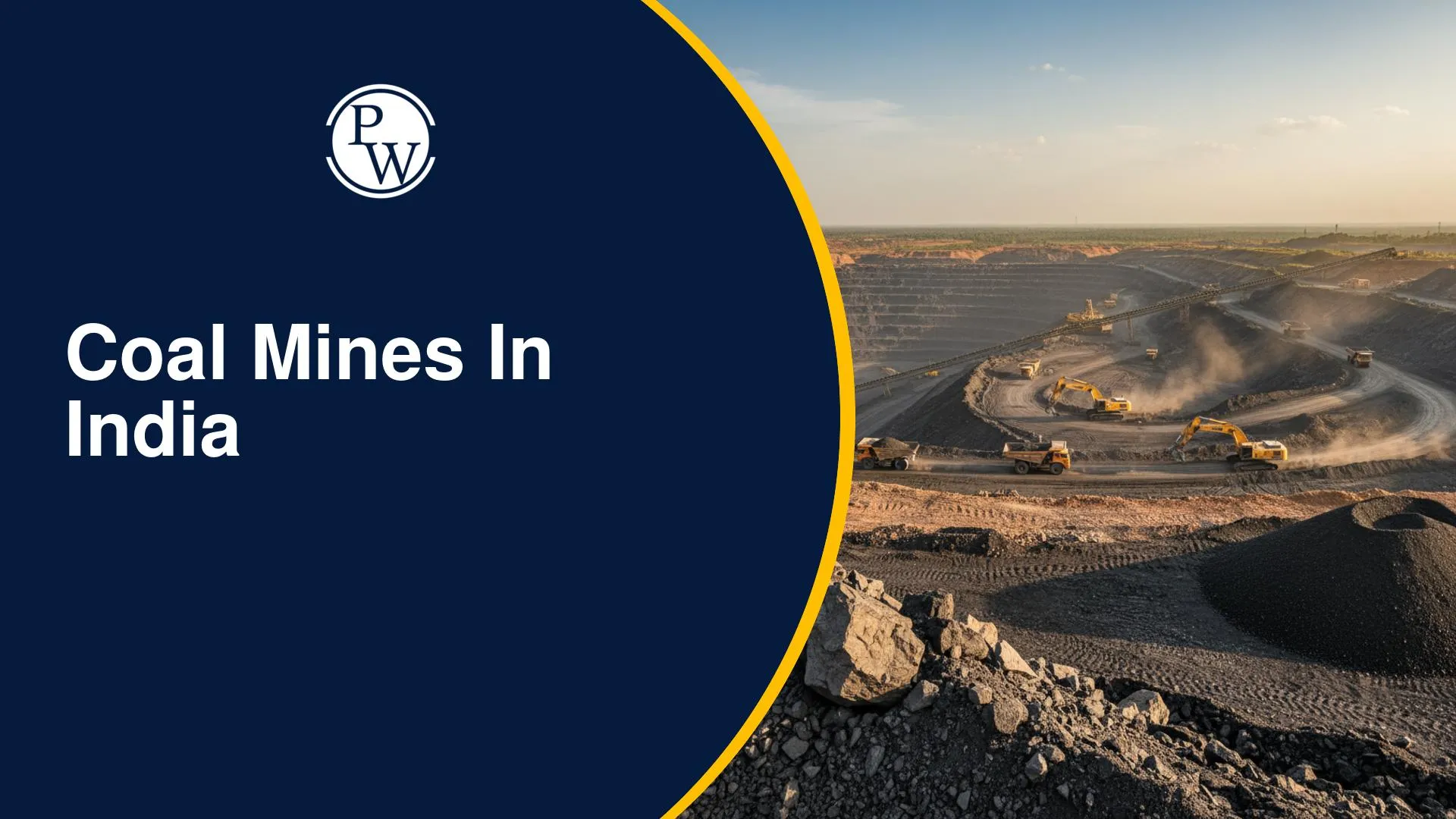
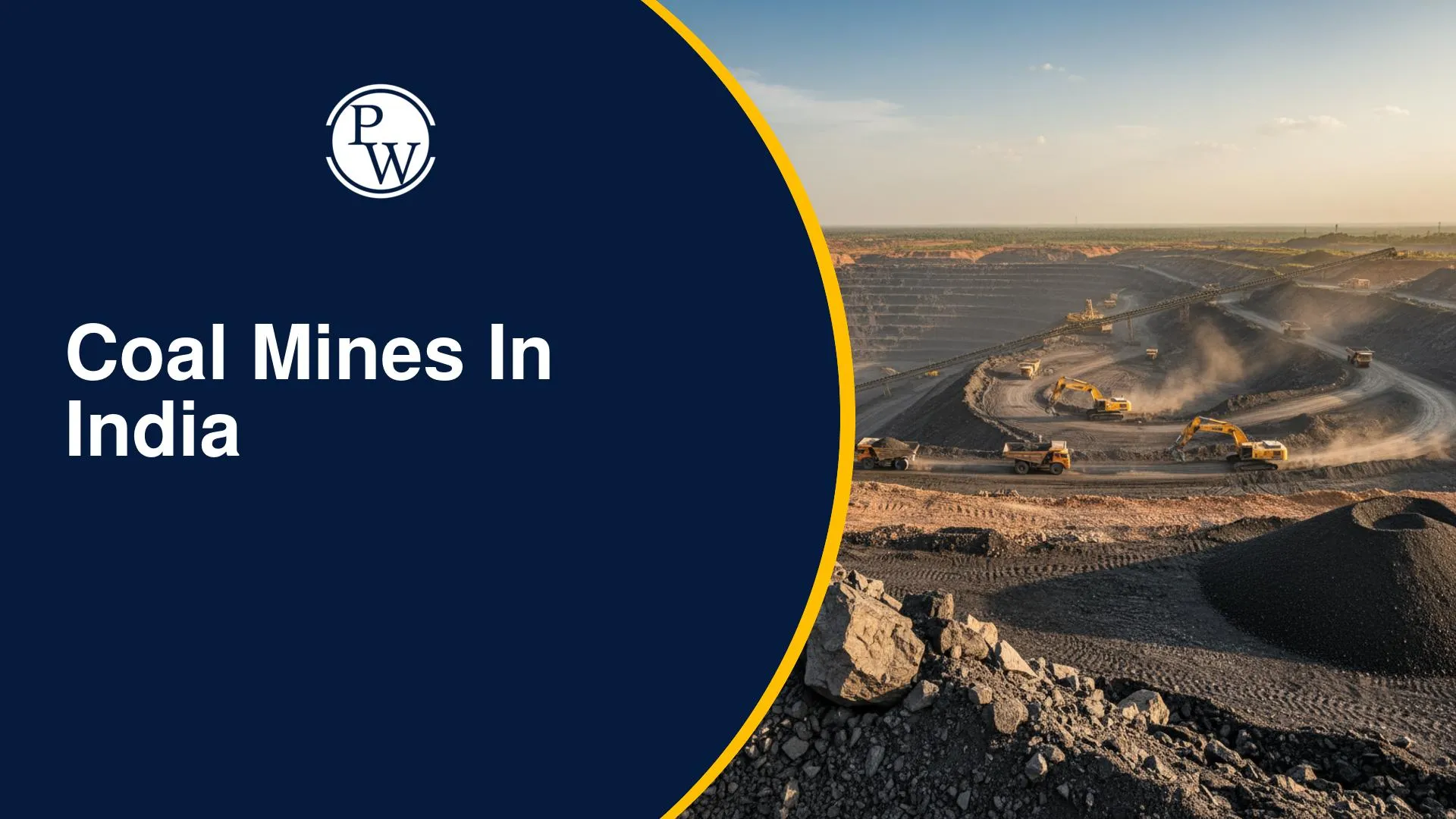
Coal remains the backbone of the Indian energy sector, contributing to over 50% of the country’s primary energy consumption. Coal mines in India are broadly categorized into two geological groups: the Gondwana coal fields and the Tertiary coal fields. Understanding the coal distribution in India is essential for students and aspirants preparing for competitive exams, as it highlights the geographical and economic significance of major coal fields in India. Here is a comprehensive list of coal mines in India, their locations, and the current status of coal production in India.
Coal Mines in India
Coal mining in India has a history spanning over two centuries, starting with the Raniganj coal field in 1774. Today, the coal sector in India is a major employer and a driver of industrial growth. Most of the coal reserves in India are of the bituminous and sub-bituminous variety, primarily used in thermal power plants.
-
Primary Regulator: Ministry of Coal.
-
Major Producer: Coal India Limited mines (CIL) account for over 80% of the domestic production.
-
Mining Methods: Both underground coal mining India and open cast coal mining India are practiced, with open cast mining being more prevalent due to its cost-effectiveness.
Major Coal Fields in India
The major coal fields in India are localized in the river valleys of the Damodar, Son, Mahanadi, and Godavari.
1. Jharia Coal Field (Jharkhand)
Located in the Dhanbad district, Jharia is the largest coal mine in India in terms of premium coking coal reserves. It is essential for India’s steel industry.
2. Raniganj Coal Field (West Bengal)
As the birthplace of coal mining in India, Raniganj remains a significant producer of high-quality non-coking coal.
3. Talcher Coal Field (Odisha)
The Talcher coal field has the highest geological reserves in the country and is a major hub for power-grade coal.
4. Korba Coal Field (Chhattisgarh)
Chhattisgarh is one of the top coal producing states in India, with the Korba field supplying massive quantities to nearby thermal power stations.
List of Coal Mines in India (State-wise)
Below is a consolidated list of coal mines in India across the most prominent coal mining regions in India:
|
List of Coal Mines in India (State-wise) |
|
|
State |
Major Coal Mines/Fields |
|
Jharkhand |
Jharia, Bokaro, Giridih, Karanpura, Ramgarh |
|
Odisha |
Talcher, Ib Valley |
|
Chhattisgarh |
Korba, Hasdeo-Arand, Tatapani-Ramkola |
|
West Bengal |
Raniganj, Birbhum |
|
Madhya Pradesh |
Singrauli, Pench-Kanhan, Sohagpur |
|
Telangana |
Singareni (Godavari Valley) |
|
Maharashtra |
Wardha Valley, Umred, Kamptee |
|
Tamil Nadu |
Neyveli (Lignite) |
Coal Distribution in India: Geological Classification
The coal distribution in India is divided into two distinct geological eras:
-
Gondwana Coal Fields India: These account for 98% of India’s coal reserves and 99% of production. These fields are roughly 250 million years old and are found in the Damodar, Mahanadi, and Godavari valleys.
-
Tertiary Coal Fields India: These are younger (15 to 60 million years old) and have high moisture and sulphur content. They are primarily located in North-Eastern states like Assam, Meghalaya, and Nagaland.
-
Lignite Deposits: Found mainly in Neyveli lignite mines (Tamil Nadu), Rajasthan, and Gujarat.
Top Coal Producing States in India
As of the latest updates for 2024-25, the following are the leading coal producing states in India:
-
Chhattisgarh: Consistently ranks first in production.
-
Odisha: Home to massive open-cast mines.
-
Jharkhand: Holds the largest total reserves in India.
Classification of Coal
Coal deposits are broadly categorized into two geological types:
-
Gondwana Coal Fields India: These ancient reserves form most of India's coal resources. They are found mainly in central India.
-
Tertiary Coal Fields: Younger deposits, found primarily in northeastern states. This coal has low carbon but high moisture and sulfur.
Coal Types
Coal is further classified by its carbon content, heating capacity, and age.
|
Coal Types |
||||
|---|---|---|---|---|
|
Type of Coal |
Carbon Content |
Properties |
Major Uses |
Major Deposits in India
|
|
Anthracite |
80-95% |
Hard, shiny, highest quality, burns cleanly |
Industrial use, domestic heating |
Jammu & Kashmir |
|
Bituminous |
60-80% |
Black, soft, high heating value |
Power generation, steel industry |
Jharkhand, Odisha, Chhattisgarh, West Bengal |
|
Sub-Bituminous |
45-60% |
Lower heat, burns cleaner than bituminous |
Electricity generation |
Madhya Pradesh, Maharashtra |
|
Lignite |
25-35% |
Brown, soft, high moisture, lowest heating |
Power generation in local plants |
Tamil Nadu (Neyveli), Rajasthan, Gujarat |
Key Challenges of Coal Mining in India
Operating Coal Mines in India faces several issues impacting efficiency and safety. Addressing these is vital for sustainable operations.
-
Environmental Impact: Mining causes deforestation, soil erosion, and pollution. Balancing energy needs with environmental protection is tough.
-
Safety Concerns: Coal mines are dangerous workplaces. Risks include collapses, explosions, and long-term worker health problems.
-
Land Acquisition and Rehabilitation: Securing land often leads to disputes and displacement. Resettling affected communities is a major task.
-
Technological Modernization: Many mines use older methods. Modern equipment and practices are needed to boost output and reduce harm.
-
Regulatory Compliance: Companies must follow complex laws and safety rules. This can slow operations if not managed well.
-
Social Impact: Displacing local people leads to lost livelihoods and social issues. Community relations are a big challenge.
-
Economic Viability: Fluctuating global coal prices and competition from renewable energy affect profitability.
-
Infrastructure Development: Moving coal from mines to power plants needs good transport. Poor infrastructure adds to difficulties.
Coal mines in India continue to be the primary source of fuel for the nation's energy needs. While the shift toward renewable energy is underway, the strategic importance of the coal sector in India remains unmatched for grid stability and industrial output. For students, mastering the coal mines map of India and the specific locations of fields like Bokaro coal field or Neyveli lignite mines is crucial for various competitive examinations.
Coal Mines in India FAQs
Q1: Which is the largest coal mine in India?
Q2: What is the difference between Gondwana and Tertiary coal?
Q3: Who manages coal mining in India?
Q4: Where are the major lignite mines located in India?
Q5: Which state has the highest coal reserves in India?