Difference Between Tropical and Temperate Cyclone

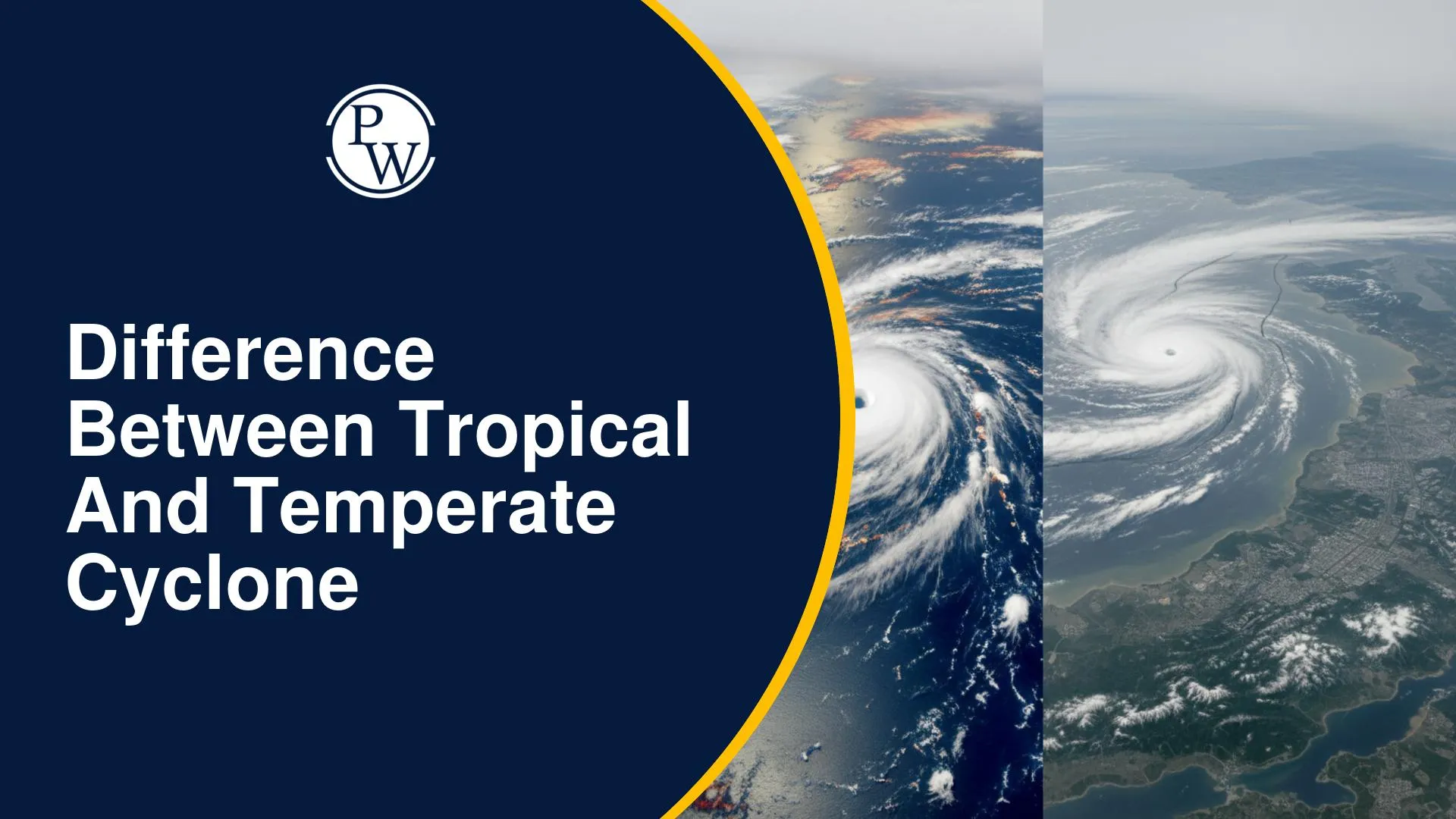
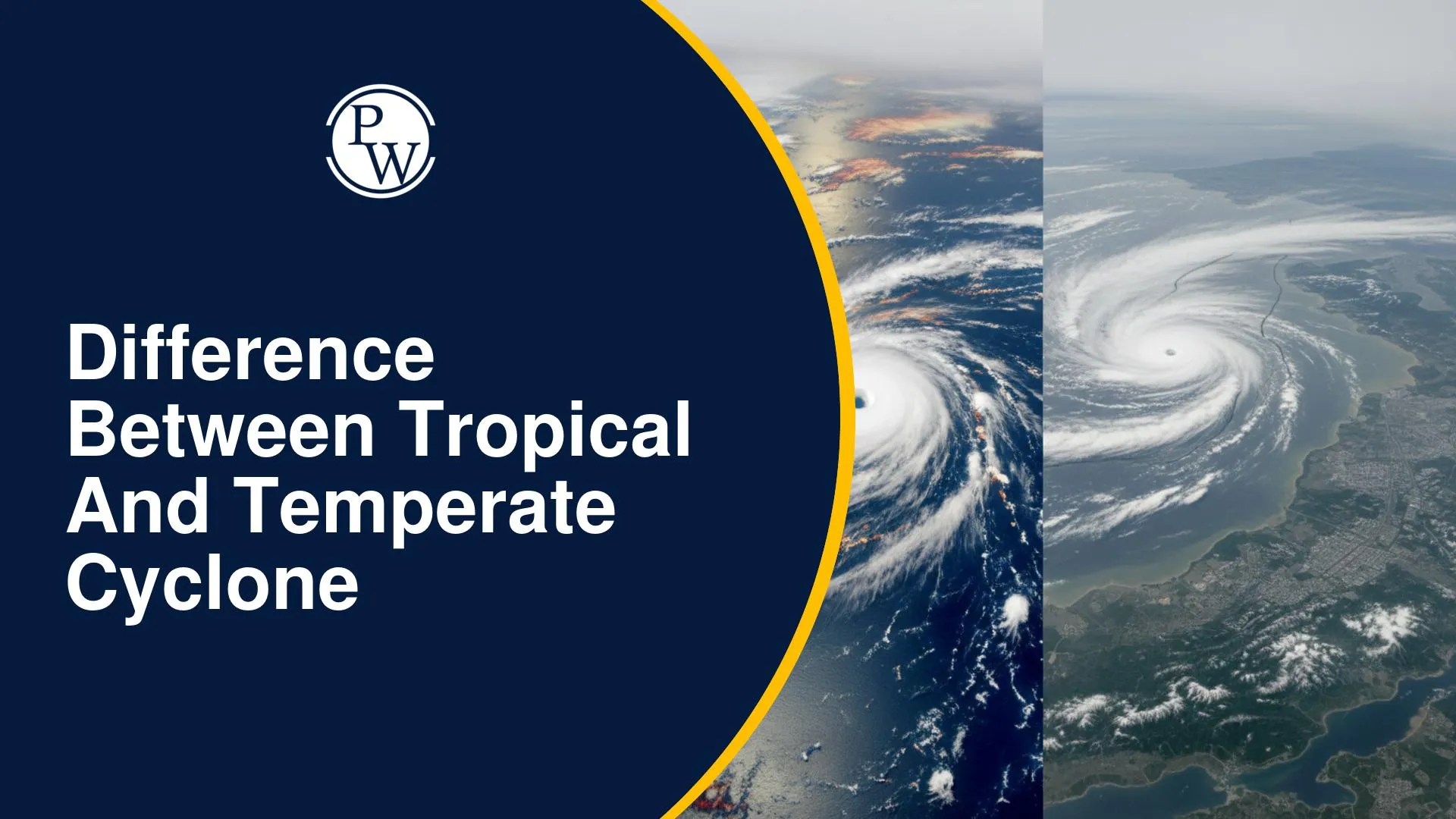
Understanding the dynamic nature of cyclones is essential for anyone diving into global geography or preparing for high-level competitive exams. These powerful atmospheric disturbances function as massive heat engines, redistributing energy across the planet and driving significant shifts in weather patterns.
By examining the structural and functional difference between tropical and temperate cyclone systems, we can better understand how varied environmental conditions—from warm tropical waters to the clashing air masses of the mid-latitudes—shape our world’s climate. Grasping these distinctions is not just a matter of academic theory; it is fundamental to recognizing how different regions experience storms, rainfall, and seasonal changes.
Key Difference between Tropical and Temperate Cyclone
Cyclones are large rotating storm systems. They have a low-pressure center. Air moves inward and spirals upwards. These systems play a major role in global weather. They impact rainfall and wind patterns. Cyclones are broadly categorised into tropical and temperate types. Their distinct formation and characteristics are important to study.
Key Distinctions of Cyclones
Understanding the primary differences between these cyclone types is important. It shows how varied atmospheric processes can be. The following table highlights the core contrasts, offering a tropical and temperate cyclone comparison.
|
Key Distinctions of Cyclones |
||
|---|---|---|
|
Aspect |
Tropical Cyclone |
Temperate Cyclone
|
|
Region of Origin |
Tropical oceans (8°-20° N/S). |
Mid-latitudes (35°-65° N/S). |
|
Nature of Origin |
Thermal origin (intense heating, evaporation). |
Dynamic origin (interacting warm and cold air masses). |
|
Energy Source |
Latent heat from condensation. |
Temperature and density contrast between air masses. |
|
Movement |
East to west (trade winds), then poleward. |
West to east (westerly winds, jet streams). |
|
Lifespan |
Shorter, few days to one week. |
Longer, 3 to 10 days, sometimes two weeks. |
|
Rainfall |
Very heavy, short period, leads to flooding. |
Widespread, moderate, long duration. |
|
Wind Speed |
Very high (100-250 kmph), highly destructive. |
Lower (30-150 kmph), less destructive. |
|
Size |
Smaller (100-500 km diameter). |
Larger (300-2000 km diameter). |
|
Frontal Systems |
Absent. |
Present (warm, cold, occluded fronts). |
|
Calm Center |
Clear 'eye' with calm winds. |
No single calm area. |
|
Occurrence |
Late summers. |
Irregular, more common in winters. |
Characteristics of Tropical Cyclone
Tropical cyclones are powerful storms. They form over warm ocean waters. These storms need sea surface temperatures above 26.5°C. They thrive on the abundant moisture and heat. The low-pressure center creates a strong inward spiral of winds. This leads to heavy rainfall and high waves. These systems often have a calm, clear 'eye' at their center. The surrounding eyewall has the most intense winds and rain. Tropical cyclones weaken quickly after moving over land or cooler waters. This happens because their energy supply is cut off.

Features of a Temperate Cyclone
Temperate cyclones, also known as extratropical or mid-latitude cyclones, are different. They form in regions where warm and cold air masses meet. This typically happens between 35° and 65° latitude. Their formation is dynamic, not purely thermal. They draw energy from the temperature contrast between air masses.
These cyclones feature distinct warm, cold, and occluded fronts. Rainfall is generally widespread but less intense than in tropical cyclones. They move from west to east due to westerly winds and jet streams. Temperate cyclones affect larger geographical areas.

Detailed Geographical Analysis of Cyclones
To further understand cyclone types in world geography, it is helpful to look at how these systems behave in specific environments. Below are additional details on the behavior of cyclones in tropical and temperate regions.
Tropical Cyclone Formation Conditions
While we know they form over water, the specific tropical cyclone formation conditions are very strict. They require a large sea surface with temperatures higher than 26.5°C. This acts as the "fuel" for the storm.
Additionally, they need the Coriolis force to be strong enough to create a vortex, which is why you won't find them at the equator. This is one of the most important tropical cyclone characteristics UPSC candidates should remember.
Temperate Cyclone Formation Process
The temperate cyclone formation process (also known as Frontogenesis) occurs when two different types of air meet—cold, dry polar air and warm, moist subtropical air. Unlike tropical storms, which are powered by heat from the ocean, temperate cyclones are powered by the "battle" between these two air masses along a front. These are key temperate cyclone features UPSC exams often test.
Structure of Tropical and Temperate Cyclones
The physical structure of tropical and temperate cyclones differs significantly:
-
Tropical Cyclones: These are compact and symmetrical. They have a clear "Eye" in the center where the air is calm, surrounded by a violent "Eyewall."
-
Temperate Cyclones: These are much larger and shaped like a comma or an inverted 'V'. They do not have an eye; instead, they have a complex system of warm and cold fronts.
Tropical Cyclone vs Mid Latitude Cyclone Differences
When comparing tropical cyclone vs mid latitude cyclone differences, the most important geographical factor is their path. Tropical cyclones are driven by trade winds and move from East to West. In contrast, mid-latitude (temperate) cyclones are driven by westerlies and move from West to East.
Key Takeaways for Students
For those studying tropical vs extratropical cyclone UPSC topics or general tropical cyclone vs temperate cyclone geography, here is the most important regional distinction:
-
Tropical Cyclone vs Western Disturbances: In India, tropical cyclones usually hit the eastern coast (like Odisha) in autumn. However, Western Disturbances (a specific type of temperate cyclone) travel from the Mediterranean and bring vital winter rain to Northern India.
Difference between Tropical and Temperate Cyclone FAQs
Q1. What is the main Difference between Tropical and Temperate Cyclone?
Q2. Which type of cyclone has a calm 'eye' at its center?
Q3. Do temperate cyclones affect India?
Q4. What powers a tropical cyclone?