Distribution of Sewing Machines at Free of Cost
 Neha Tanna8 Jan, 2026
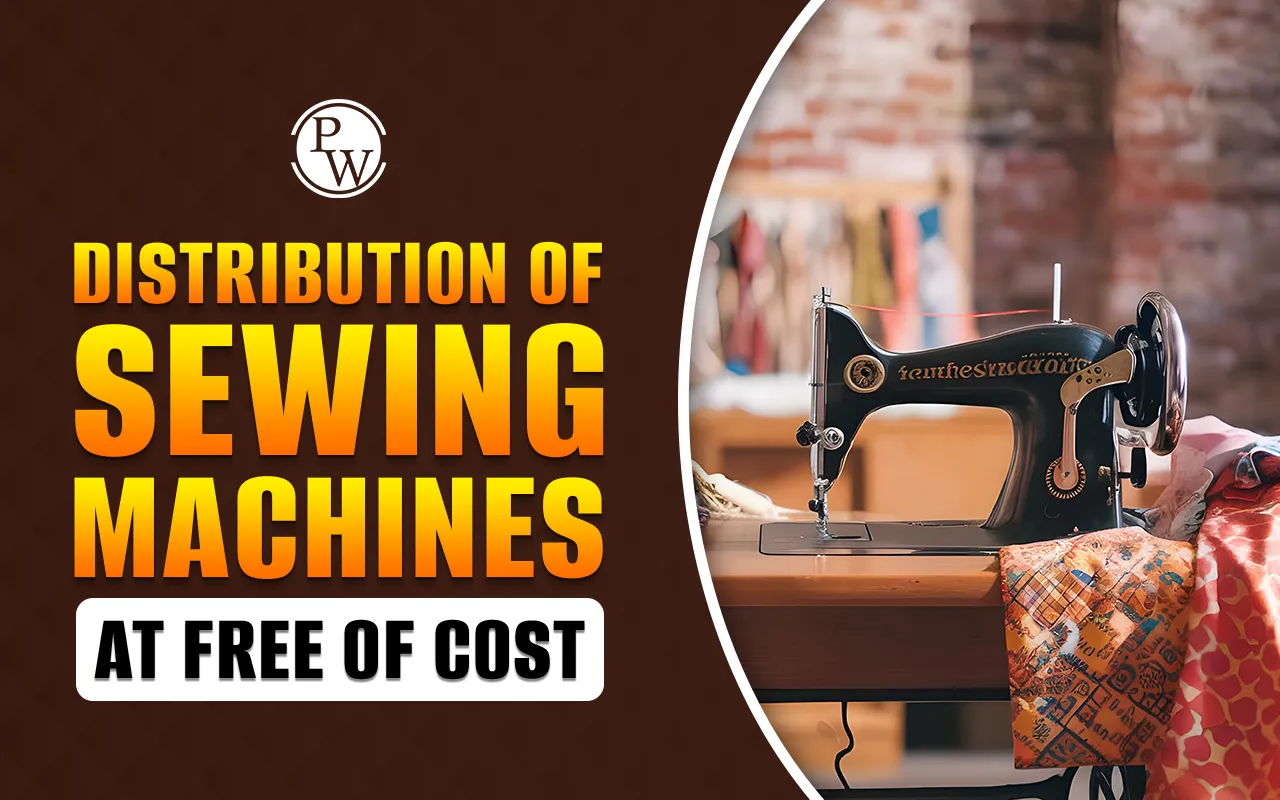
Free Sewing Machine Scheme: The "Distribution of Sewing Machines at Free of Cost" scheme, launched by the Backward Classes, Most Backward Classes, and Minorities Welfare Department of Tamil Nadu, is designed to empower individuals from the Backward Classes (BC), Most Backward Classes (MBC), and Denotified Communities (DNCs).
Under this initiative, eligible beneficiaries receive free sewing machines to promote self-employment and skill development. The scheme aims to enhance the economic opportunities for these communities, particularly women, by enabling them to start small businesses, generate income, and improve their living standards through the skill of tailoring and garment making.
Free Sewing Machine Scheme
The Free Sewing Machine Scheme is designed to support women from economically weaker backgrounds by the distribution of sewing machines at free of cost. Such schemes support vocational training and economic empowerment.
Purpose of the Free Sewing Machine Scheme
The primary purpose of the free sewing machine scheme is to uplift financially disadvantaged women by providing them with a means of livelihood. It focuses on fostering self-reliance and entrepreneurship. The scheme helps beneficiaries acquire or upgrade tailoring skills, allowing them to earn an income.
Key Features of Free Sewing Machine Scheme
Government-sponsored free sewing machine schemes typically offer several key features:
-
Free Sewing Machine Distribution: Eligible women receive sewing machines without cost. This significantly reduces the entry barrier for starting a small business.
-
Skill Training: Many schemes also include provisions for basic or advanced tailoring training. This ensures beneficiaries can effectively use the machines provided.
-
Women Self-Employment Scheme: These initiatives are integral to broader women self-employment scheme goals, promoting economic independence.
-
Local Economic Boost: By enabling women to start tailoring services, these schemes also stimulate local economies.
Sewing Machine Yojana Eligibility
To qualify for a free sewing machine scheme, applicants typically need to meet specific criteria. While exact requirements can vary by state or program, common eligibility norms include:
-
Gender: Primarily open to women.
-
Age Limit: Generally, applicants must be between 20 and 40 years of age.
-
Income Bracket: Often targeted at women from economically weaker sections. Annual family income usually falls below a specified limit.
-
Vocational Skill: Some schemes may prioritize those already possessing basic tailoring skills or willing to undergo training.
-
Residency: Applicants must be residents of the state or region where the scheme is active.
Benefits of the Free Sewing Machine Scheme
The benefits of the free silai machine scheme are far-reaching. They include:
-
Economic Independence: Women gain the ability to earn their own income, reducing financial dependency.
-
Skill Development Scheme for Women: It acts as a crucial skill development scheme for women, enhancing their vocational capabilities.
-
Poverty Alleviation: By providing sustainable livelihood options, these schemes help in reducing poverty at the household level.
-
Social Empowerment: Economic independence often leads to greater social empowerment and decision-making power for women within their families and communities.
Free Sewing Machine Scheme Application Process
The application process for the government sewing machine scheme typically involves:
-
Form Collection: Obtaining the application form from official government websites or designated offices.
-
Document Submission: Attaching necessary documents like Aadhar card, income certificate, age proof, and a passport-sized photograph.
-
Verification: Authorities verify the submitted details and documents.
-
Selection: Eligible candidates are selected, and machines are distributed.
Key Rules of Free Sewing Machine Scheme
Specific rules govern the operation and implementation of the free sewing machine scheme. These rules ensure fair distribution and proper use of resources.
-
One Machine Per Family: Typically, only one woman per family is eligible to receive a sewing machine. This ensures wider reach and prevents misuse.
-
Non-Transferable Asset: The distributed sewing machine is usually intended for the personal use of the beneficiary and is often non-transferable.
-
Adherence to Guidelines: Beneficiaries must adhere to all scheme guidelines. This may include participating in training programs or providing progress reports.
-
State-Specific Implementation: These schemes are often implemented by state governments, leading to slight variations in rules and regulations across different regions.
Free Sewing Machine Scheme FAQs
What is the primary goal of the free sewing machine scheme?
Who is eligible for the free silai machine scheme?
What documents are needed to apply for the government sewing machine scheme?
What documents are needed to apply for the government sewing machine scheme?