Who is the Father of Geography? His Contribution, Major Findings

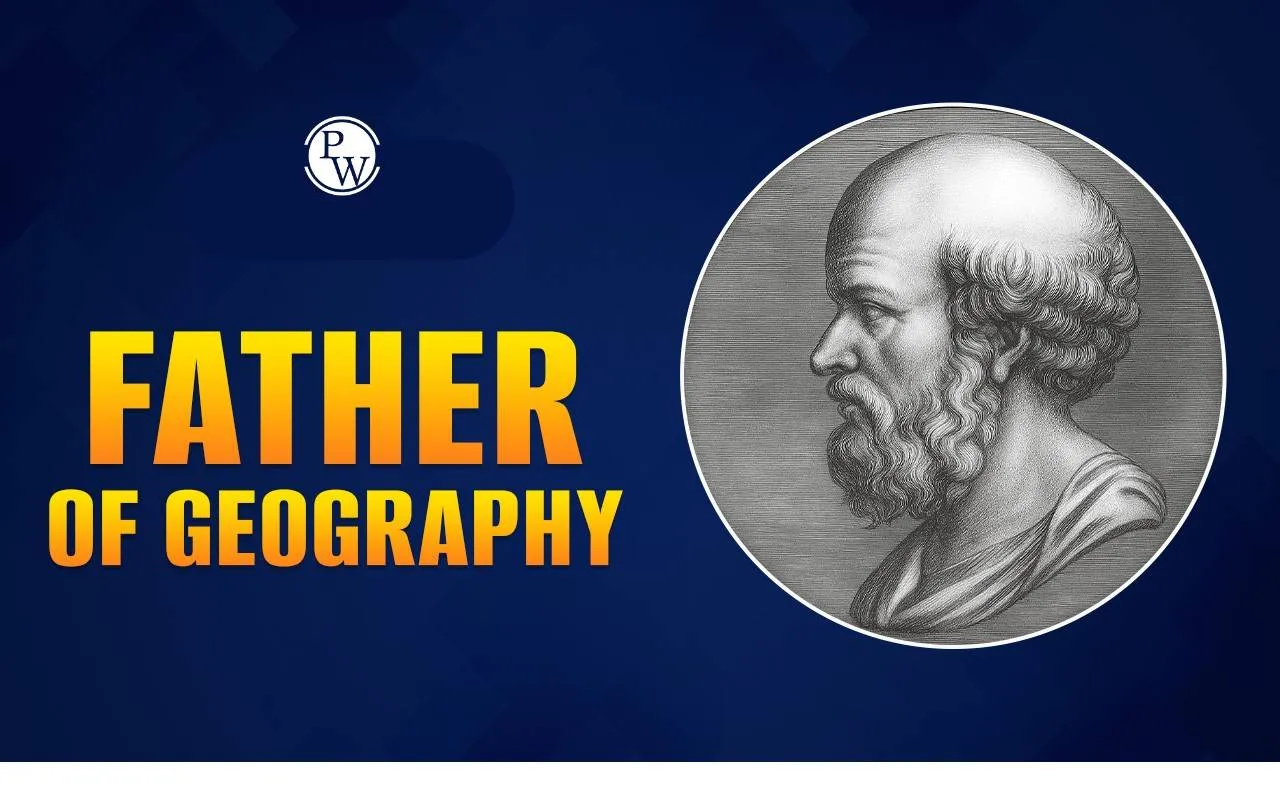
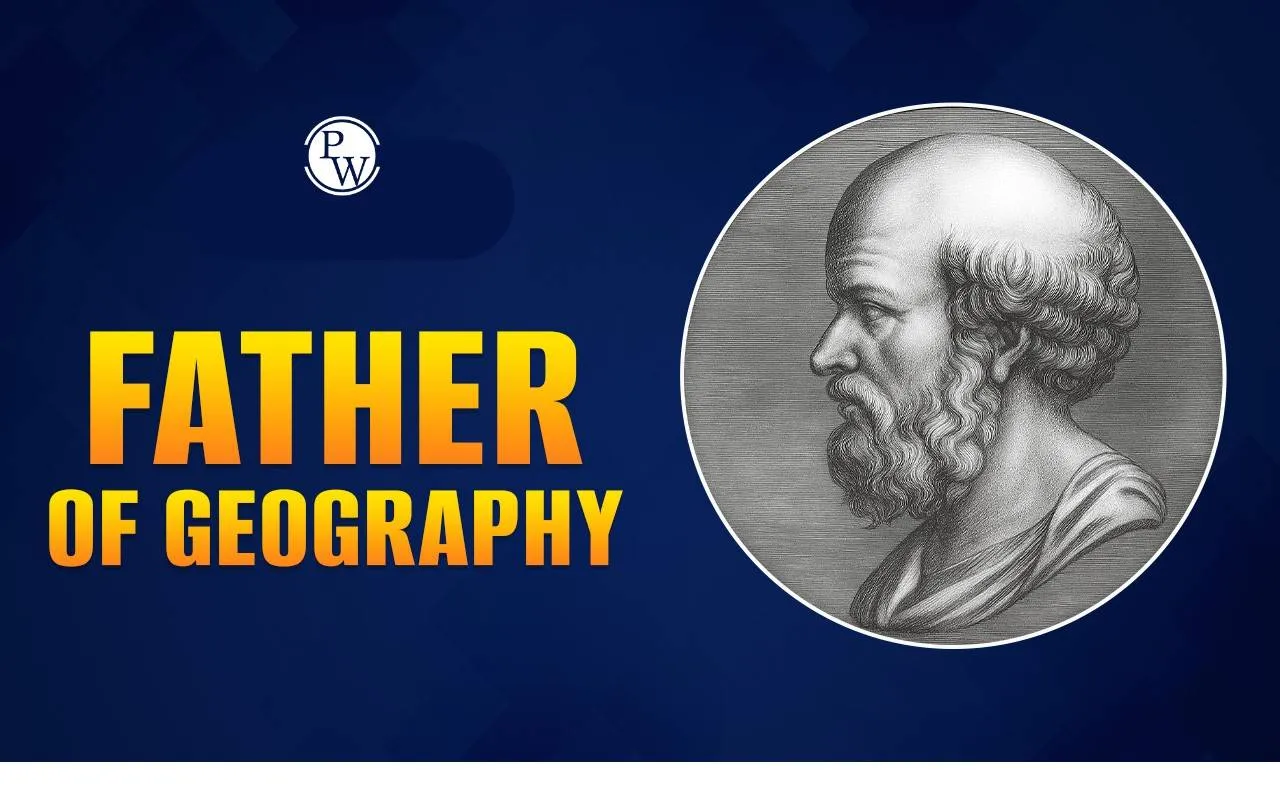
Father of Geography is one of the minute yet important questions that also appear in UPSC. This is so because Geography is highly scientific and studies the Earth from various aspects. For instance, it studies its landforms, water bodies, natural systems, and human interaction with environments.
The foundation of the subject has been laid by the father of geography, Eratosthenes. His work created an entirely unique discipline for study that still continues to be relevant. His work has guided researchers, academicians, and students across the world.
Therefore, today, here we are to cover all the details about the Father of Geography in complete detail. So keep referring to the provided information to know more.
Who Was Father of Geography?
The father of geography is Eratosthenes of Cyrene, a Greek scholar who lived between 276 BCE and 194 BCE. He was the first person to use the word geography and the first to treat it as an independent subject. His calculations, observations, and methods provided a scientific direction that shaped the study of Earth.
Many people ask, Who was father of geography and why is he important? He received this title because he:
-
Defined geography as a separate discipline
-
Measured the Earth’s circumference with surprising accuracy
-
Divided Earth into climate zones
-
Created early global maps with grid lines
-
Studied Earth’s tilt and its impact on seasons
Because of these contributions, Eratosthenes is recognised as the father of geography in world history.
About Eratosthenes
Eratosthenes was a multi-disciplinary scholar. He was a mathematician, a geographer, a poet, a music theorist, an astronomer, and a researcher. His wide range of knowledge allowed him to observe the Earth scientifically and logically.
Here is a brief background about Eratosthenes:
-
He was born in Cyrene, a Greek city located in present-day Libya.
-
He studied in Athens and gained knowledge in literature, philosophy, and science.
-
He was appointed the Chief Librarian at the Library of Alexandria, the most important library of the ancient world.
-
He had access to books, manuscripts, and scientific discussions, which helped him advance his research.
-
His learning helped him introduce scientific methods into geography.
This background explains why Eratosthenes became the father of geography, as he used his skills to form a detailed and systematic study of the Earth.
Why Is Eratosthenes Called the Father of Geography?
To understand who was father of geography, it is important to know why Eratosthenes received this title. His contributions shaped every part of geographic study that students use today.
1. Use of the Term “Geography”
Eratosthenes was the first to use the word geographia, which means “writing about the Earth.”
This laid the foundation for the modern subject.
2. Creation of Climate Zones
He divided the Earth into five climate zones:
-
Two polar zones
-
Two temperate zones
-
One torrid zone near the equator
This classification is still a key concept in geography.
3. Calculation of Earth’s Circumference
One of his most impressive achievements was measuring Earth’s circumference. He used simple observations of shadows in Syene and Alexandria to calculate the Earth’s curvature. His calculation was extremely close to modern measurements. This scientific method is one of the reasons he is called the father of geography in world academic systems.
4. Mapping the World
Eratosthenes prepared a large map of the known world. His map used grid lines, which later inspired latitudes and longitudes. This helped future geographers plot locations accurately.
5. Study of Earth’s Tilt
He studied the tilt of Earth’s axis and its effect on seasonal changes. This was a major advancement during his time.
6. Introduction of Leap Year Concept
Eratosthenes contributed to the development of the leap year calculation, which is still used in modern calendars.
Major Findings of the Father of Geography
Eratosthenes contributed several discoveries that shaped modern scientific thinking. His findings continue to be part of school and college geography courses.
| Major Findings of the Father of Geography | |
| Contribution / Finding | Description |
| 1. Accurate Map of the World | Created one of the earliest world maps that included continents, major regions, and important cities. |
| 2. Grid System | Introduced a grid-like system similar to modern latitude and longitude, improving accuracy in location mapping. |
| 3. Calculation of Earth’s Size | Used shadow angles in Syene and Alexandria to calculate Earth’s circumference with remarkable accuracy. |
| 4. Leap Year Formula | Identified the need to add an extra day every four years, contributing to the development of the leap year system. |
| 5. Earth’s Tilt and Climate | Studied Earth’s axial tilt and explained how it affects climate patterns and seasonal changes. |
Father of Geography vs Other Scholars
Many other scholars contributed to geography, but none matched the systematic approach of Eratosthenes.
| Father of Geography vs Other Scholars | |||
| Scholar | Key Work/Contribution | Relation to Geography | Why Not Considered Father of Geography |
| Aristotle | Studied natural sciences; explained Earth as a sphere | Contributed ideas about physical world | Did not define geography as an independent discipline |
| Herodotus | Wrote detailed accounts of places, people, and cultures | Provided descriptive geographical information | His work was historical, not scientific or systematic |
| Ptolemy | Developed advanced maps and contributed to cartography | Strengthened mapping and location systems | Lived centuries after Eratosthenes and built on his foundation |
| Eratosthenes | Calculated Earth’s circumference, divided climate zones, used term “geography” | Established geography as a scientific and separate subject | Recognised as the father of geography |
Legacy of Eratosthenes
Eratosthenes set the base for modern geography. His methods, ideas, and observations shaped the future study of Earth. His legacy includes:
-
Development of scientific geographic methods
-
Establishment of Earth measurement systems
-
Climate classification
-
Logical approach to understanding physical features
Even after more than 2,000 years, his work guides modern researchers. This long-lasting impact confirms why he is the father of geography in world academic history.
Father of Geography FAQs
Who is known as the father of geography?
Why is Eratosthenes called the father of geography?
What are the major contributions of the father of geography?
Who were the other scholars related to geography besides Eratosthenes?