Kol Rebellion: Causes, Feature, Impact and Significance
 Mishika Gupta24 Feb, 2026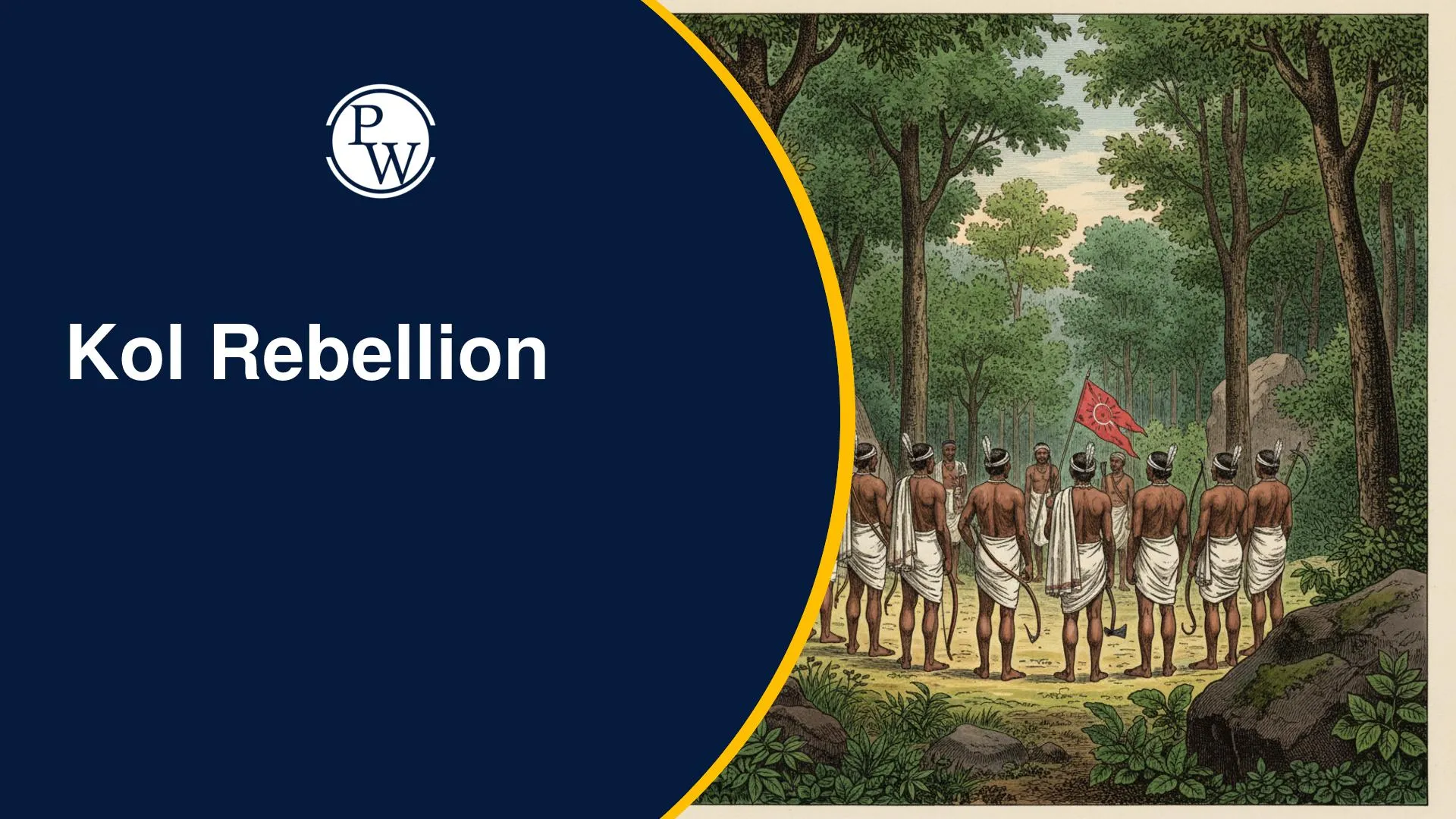
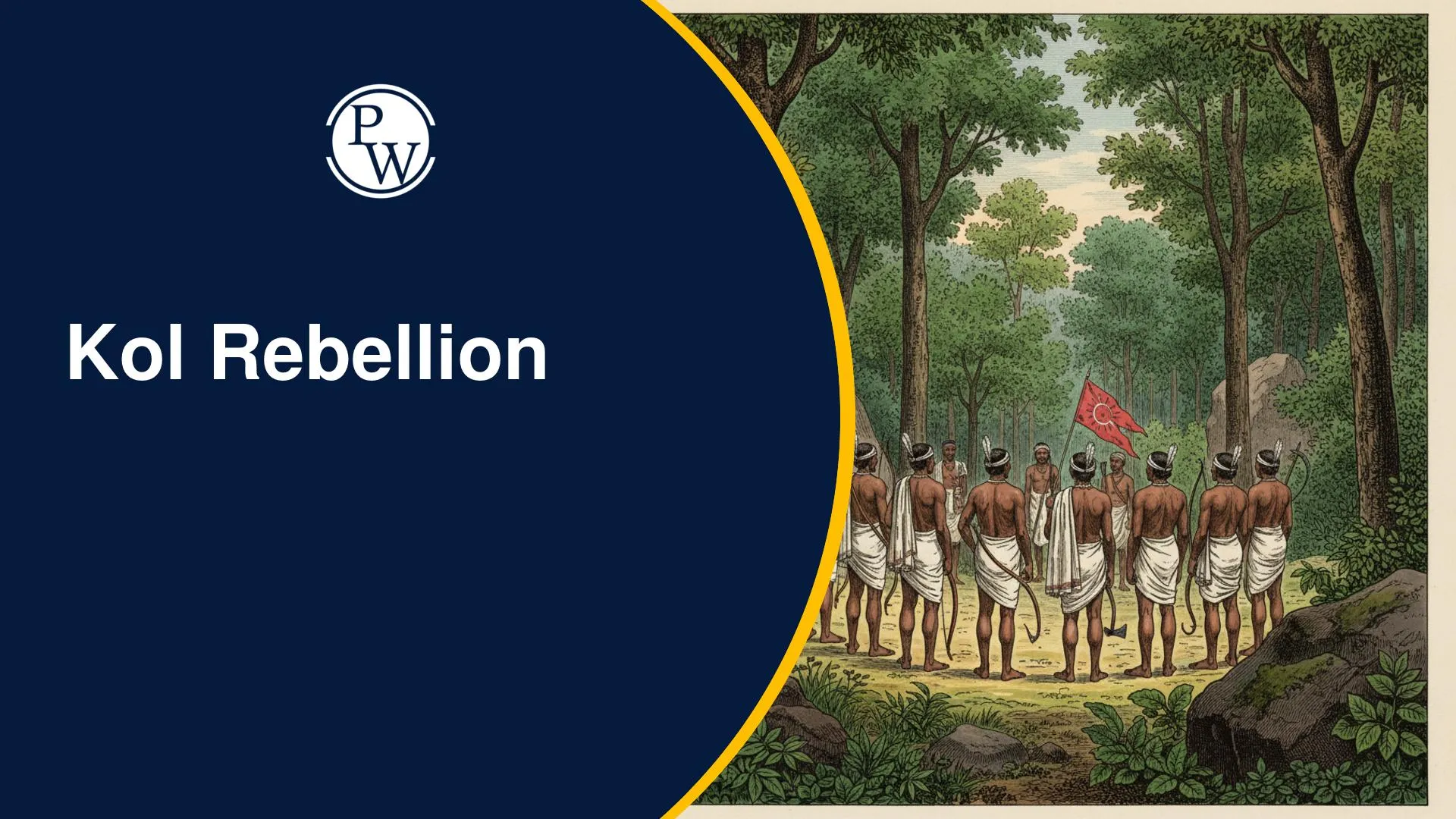
Kol Rebellion was one of the important early tribal revolts in India. It took place in 1831–32 and is also called the Kol uprising 1831- 32 or the Kol tribal revolt. This rebellion happened mainly in the Chotanagpur area, which is now part of Jharkhand. The Chotanagpur Kol rebellion started when tribal communities were unhappy with British rule and the growing control of outsiders over their land. The uprising became a strong example of tribal resistance movements in India. Students often study the Kol rebellio for exam preparation.
Where Did the Kol Rebellion Happen?
The Kol rebellion in Jharkhand region mainly took place in the Chotanagpur plateau. At that time, the Kol tribes lived there with their own customs and land system. When the British came, they changed many rules related to land and administration. These changes created problems for the tribal communities and slowly led to the Kol tribal revolt.
Causes of Kol Rebellion
There were several reasons behind the causes of the Kol rebellion. These problems made life very difficult for the tribal people.
Tribal Land Alienation Kol Rebellion
One of the biggest issues was tribal land alienation Kol rebellion. The Kol tribes started losing their land to outsiders such as landlords and traders. The land that once belonged to them was slowly taken away.
Exploitation of Kol Tribals
Another major reason was the exploitation of Kol tribals. Many tribal people were forced to work under unfair conditions. They were treated badly by landlords and officials.
British Revenue Policies and Kol Revolt
The British revenue policies and Kol revolt were closely connected. The British introduced new tax systems that required tribal farmers to pay high taxes. Many people could not afford this, which increased anger among the tribes.
Kol Revolt Against Moneylenders and Zamindars
The rebellion also became a Kol revolt against moneylenders and zamindars. Moneylenders charged very high interest on loans. When tribes could not repay the money, their land was taken away.
All these causes together led to the start of the Kol uprising 1831 32.
Kol Rebellion Leaders Budhu Bhagat
One of the most important figures in the Kol Rebellion (1831–32) was Kol rebellion leaders Budhu Bhagat. He was a brave tribal leader who played a major role in organising the Kol tribal revolt in the Chotanagpur region. Budhu Bhagat encouraged the Kol tribes to stand together against injustice. At that time, tribal communities were suffering because of land loss, heavy taxes, and exploitation by moneylenders and zamindars. Budhu Bhagat helped unite the people and guided them in the fight against British rule and outsiders who were taking control of tribal land. Under his leadership, many villages joined the uprising. The rebels attacked symbols of British authority and those who were exploiting the tribal population. His leadership made the rebellion stronger and helped spread the movement across the region.
Kol Rebellion Features
There were many important Kol rebellion features that make this uprising special in Indian history:
-
It was a major tribal uprising in the Chotanagpur area.
-
The revolt involved many tribal communities.
-
It was organised against British officials and local landlords.
-
The movement spread quickly across villages.
-
It showed unity among the Kol tribes.
Because of these features, the Kol tribal revolt became an important part of India's history.
Kol Revolt Against British
The Kol tribes were angry because the British had changed their traditional land system and allowed outsiders to control tribal areas. These changes made life very difficult for the tribal communities living in the Chotanagpur region of Jharkhand. The British administration supported landlords, traders, and moneylenders who often treated the tribal people unfairly. Because of this, the Kol tribes felt that their rights, land, and culture were under threat. The revolt became a way for them to protect their homes and traditional way of life. During the uprising, the Kol people attacked government offices, police stations, and places connected to the British East India Company. They also targeted the houses of those who were exploiting them. This showed that the revolt was not only against taxes but also against injustice and exploitation.
Kol Rebellion Suppression
The Kol rebellion suppression took place when the British authorities decided to stop the uprising by using military force. As the Kol Rebellion (1831–32) spread across the Chotanagpur region, the British administration became worried about losing control of the area, which is now part of Jharkhand. To control the situation, the British sent a large number of soldiers and officers to the region. These forces worked under the rule of the British East India Company, which governed many parts of India at that time. The army carried out strict actions against the tribal fighters and tried to restore order. There were several clashes between the British troops and the Kol rebels. The tribal fighters resisted strongly, but they did not have modern weapons like the British army. Because of this, the British were able to slowly control the rebellion. By 1832, the Kol rebellion suppression was complete.
Kol Rebellion Impact
Even though the rebellion was suppressed, the Kol rebellion's impact was very important.
-
It showed the courage of tribal communities.
-
It made the British aware of the problems faced by tribal people.
-
It inspired other revolts and movements in different regions.
Because of this, the Kol uprising became a strong example of tribal resistance movements in India.
Kol Rebellion Significance
The Kol rebellion significance is that it was one of the first organised tribal movements against British rule.
This revolt:
-
Highlighted the problems of tribal land loss.
-
Showed unity among tribal communities.
-
It became an important event in the history of India.
The Chotanagpur Kol rebellion is still studied by students today because it explains how tribal people fought to protect their rights.
Kol Rebellion Outcome
The Kol rebellion outcome was that the British were able to stop the revolt, but the issues raised by the tribal people could not be ignored.
After the rebellion:
-
The British started paying more attention to tribal areas.
-
Some administrative changes were made.
-
The revolt became a lesson about the dangers of exploitation.
Even though the uprising ended, the Kol Rebellion remained an important moment in Indian history.
Kol Rebellion UPSC Notes (Quick Revision)
Here are simple Kol rebellion UPSC notes for students:
-
The Kol rebellion happened in 1831–32.
-
It is also called the Kol uprising 1831 32.
-
The revolt took place in the Chotanagpur region.
-
It was a Kol revolt against the British, moneylenders, and zamindars.
-
Main reason: land alienation and exploitation of tribal people.
-
Important leader: Budhu Bhagat.
-
The British finally suppressed the revolt in 1832.
Kol Rebellion FAQs
When did the Kol Rebellion occur?
Where did the Kol Rebellion take place?
Who were the main leaders of the Kol Rebellion?
What were the primary causes of the Kol Rebellion?