National Census 2027: Dates, Digital Portal and New Rules
 Ekta Rakesh singh9 Apr, 2026
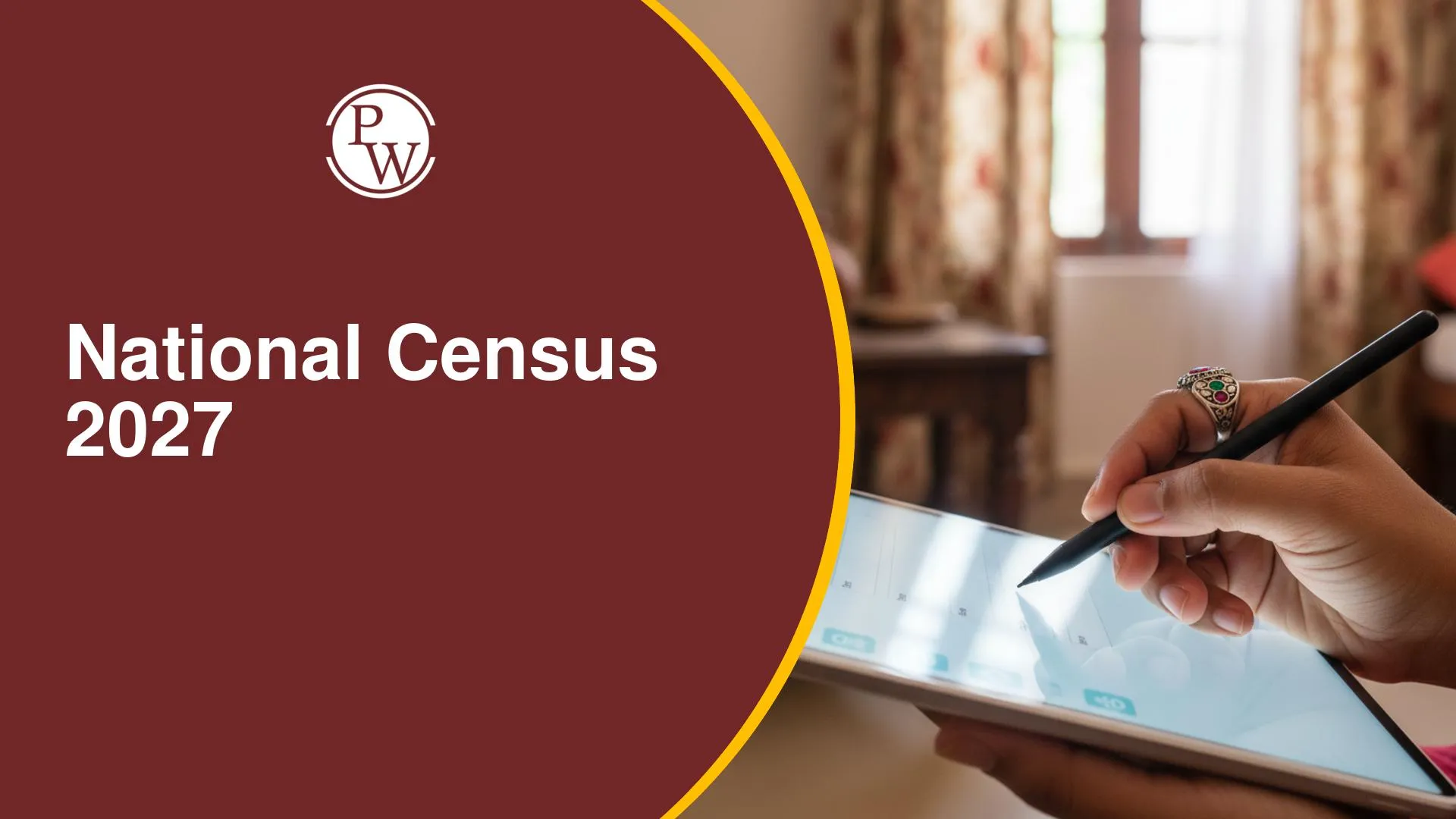
National Census 2027 is set to bring a major transformation in how population data is collected in India. After being delayed from 2021 due to the COVID-19 pandemic, this census will begin its fieldwork in 2026, with the main population enumeration scheduled for February 2027.
For the first time, India will conduct a fully digital census, allowing citizens to participate through an online self-enumeration portal. With updated data long overdue since 2011, the Census 2027 India will play a crucial role in shaping future policies, welfare schemes, and political representation across the country.
National Census 2027 Overview
The National Census 2027 will be conducted in two distinct phases to ensure comprehensive data collection across 1.4 billion people.
|
National Census 2027 Overview |
||
|
Phase |
Activity |
Timeline |
|
Phase I |
House Listing & Housing Census (HLO) |
April – September 2026 |
|
Phase II |
Population Enumeration (PE) |
February 2027 |
The national reference date for the census is March 1, 2027, except for snow-bound regions like Ladakh and parts of Himachal Pradesh, where the reference date is October 1, 2026.
Digital Census India: The Self-Enumeration Portal
For the first time, the government has introduced a digital census India platform, allowing citizens to participate through self-enumeration. This move aims to make citizen data collection India faster, more accurate, and less intrusive.
Online Census Registration India Process
Residents can use the census online portal India (se.census.gov.in) to fill in their details before an enumerator visits their home.
-
Login: Access the portal using a valid mobile number and verify via OTP.
-
Location Mapping: Use the interactive map to drag a pointer to your exact residential building.
-
Fill Questionnaire: Complete the 33-question survey covering housing conditions, household assets, and digital connectivity.
-
Receive SE ID: Upon submission, a unique Self-Enumeration ID (SE ID) is generated and sent via SMS or email.
-
Verification: Share this SE ID with the census official during their field visit to freeze your data.
Key Changes in Census 2027 India
The Census 2027 India introduces several important reforms to modernize the way population data is collected and used. These changes focus on improving accuracy, transparency, and efficiency through digital technology.
-
Caste Enumeration: In a significant policy shift, the 2027 census will include caste data for the first time since 1931. This is intended to provide evidence-based data for welfare and reservation policies.
-
Digital Infrastructure: Over 3 million officials will use mobile apps for population data collection India, ensuring near real-time data validation.
-
33 Parameters: The census survey India will capture detailed info on internet access, cereal consumption, and housing materials (floor, wall, roof).
-
Delimitation Basis: The India census 2027 data will serve as the foundation for the upcoming delimitation exercise to redistribute Lok Sabha seats.
India Population Enumeration: Important Deadlines
The household data collection India timeline varies by state. For instance, the first batch of self-enumeration for Delhi (NDMC and Cantonment) and states like Goa, Karnataka, and Odisha is scheduled for April 1 to April 15, 2026, followed by physical house listing from April 16 to May 15, 2026.
Physics Wallah offers structured UPSC Online Coaching 2026 with dedicated faculty, live classes, mentorship, and regular test practice to support effective preparation. The courses cover Prelims, Mains, and Optional subjects in multiple languages, ensuring flexible and complete learning.
National Census 2027 FAQs
Is it mandatory to use the Digital Census India portal?
Can I change my details after submitting them on the online portal?
What documents are needed for census registration process India?
Why was the 2021 census delayed to 2027?