Navratna of Akbar: Names, Works, Significance of the Nine Gems of Akbar’s Court
Navratna of Akbar were nine talented individuals who served in Emperor Akbar’s court. The Navratna of Akbar included Abul Fazl, Faizi, Birbal, Raja Todar Mal, Raja Man Singh, Abdul Rahim, Tansen, Fakir Aziao-Din, and Mulla Do-Piyaza. They contributed to administration, music, literature, art, and military excellence during Akbar’s reign.

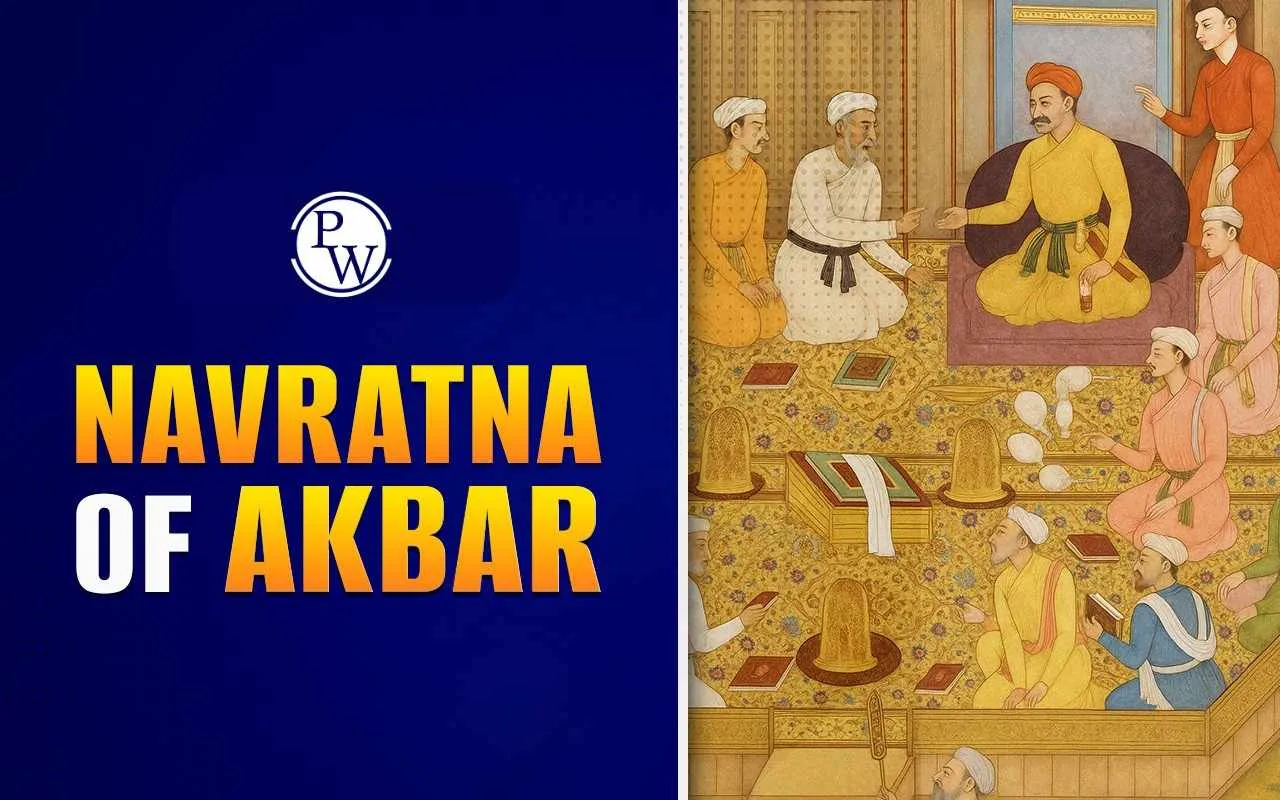
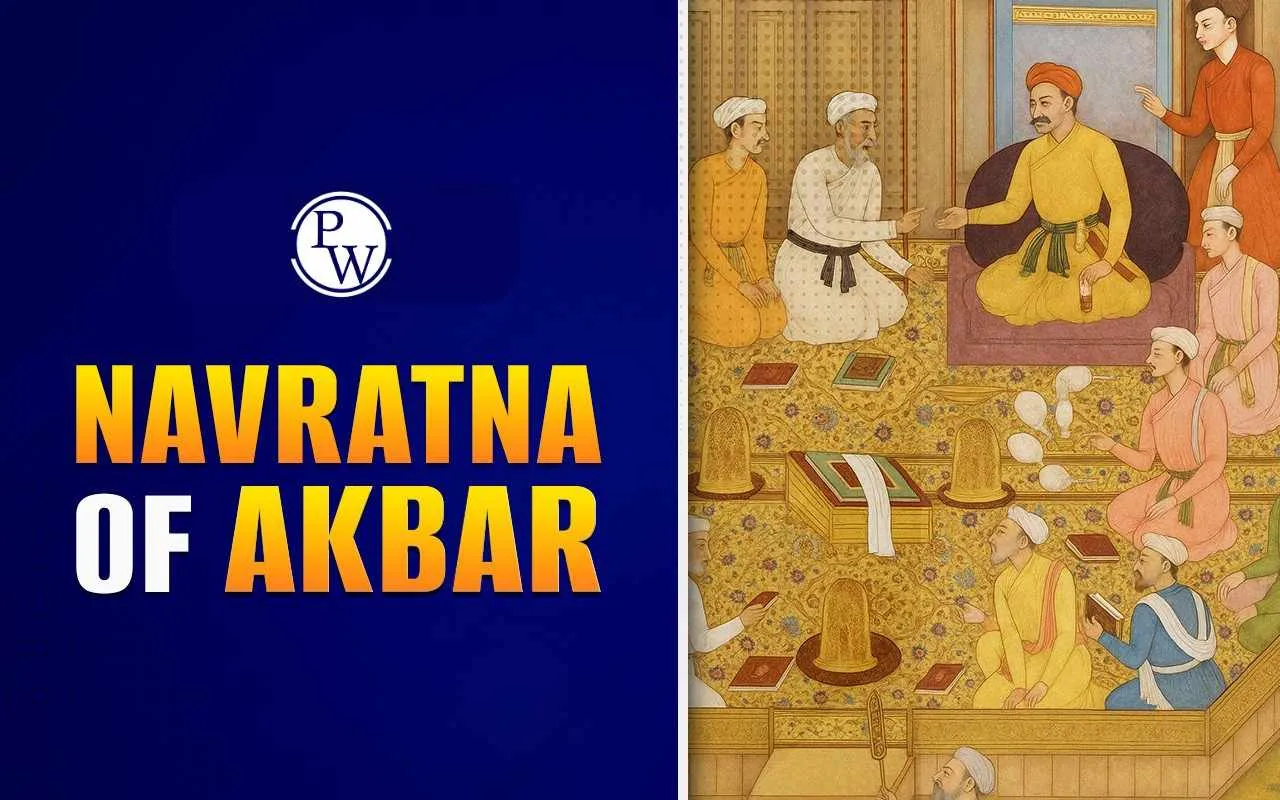
Navratna of Akbar were nine brilliant and talented people who served in Emperor Akbar’s royal court. They were known as the Nine Gems of Akbar because of their wisdom, intelligence, and contributions in various fields like music, literature, art, administration, and military. The Navratna of Akbar helped shape the Mughal Empire and made Akbar’s reign one of the most memorable in Indian history.
Emperor Akbar and His Court
Emperor Akbar ruled India from 1556 to 1605. He was the third ruler of the Mughal dynasty and is remembered for his courage, wisdom, and sense of justice. Akbar believed that good governance could only be achieved through knowledge, talent, and unity.
To strengthen his empire, he gathered brilliant minds from different backgrounds. This group became famous as the Navratna of Akbar court. Akbar valued art, music, philosophy, and education. His palace became a centre of learning and culture. Paintings, poetry, and discussions on religion were common at his court. The nine gems of Akbar picture often shows the emperor surrounded by these nine wise men, reflecting the cultural richness of that era.
Who were the 9 Navratans of Akbar?
Navratna of Akbar included nine distinguished men who excelled in their fields. Each one was chosen for his intelligence, skill, and service to the empire. Below, we’ve mentioned a list of who were 9 navratnas and their works in short:
-
Abul Fazl: Historian and author of Akbarnama and Ain-i-Akbari.
-
Faizi: Great poet and scholar.
-
Raja Todar Mal: Finance minister and revenue reformer.
-
Birbal: Akbar’s witty advisor and friend.
-
Raja Man Singh: Chief commander of the Mughal army.
-
Abdul Rahim Khan-i-Khana: Poet and military leader.
-
Tansen: Renowned classical musician.
-
Fakir Aziao-Din: Spiritual advisor.
-
Mulla Do-Piyaza: Intelligent courtier known for humor and logic.
Contribution of Each Navratna of Akbar
Abul Fazl: The Historian and Advisor

Abul Fazl was one of the most trusted members of the Navratna of Akbar. He wrote Akbarnama and Ain-i-Akbari, which give detailed information about Akbar’s rule and policies. He also introduced the idea that the emperor’s power came from divine will. Abul Fazl’s writings helped future historians understand the Mughal administration.
Faizi: The Court Poet and Scholar

Faizi was Abul Fazl’s elder brother and a gifted Persian poet. He translated many Sanskrit works into Persian, including Lilavati, a famous mathematical text. His poems reflected peace, beauty, and learning. Faizi also worked as a tutor to Akbar’s sons, showing his role as a scholar and guide.
Raja Todar Mal: The Finance Reformer

Raja Todar Mal played an important role in improving the Mughal revenue system. He introduced land measurement, survey systems, and a fair tax collection method known as Todarmal’s Bandobast. This system became the base of future revenue administration. His reforms made the Navratna of Akbar court strong in finance and management.
Birbal: The Wise and Witty Minister

Birbal, whose real name was Mahesh Das, was known for his cleverness and sense of humor. Akbar trusted him deeply and often consulted him in matters of the state. Many folk tales still tell stories of Birbal’s wisdom. He also followed Akbar’s religion, Din-i-Ilahi, showing his faith in unity and understanding.
Raja Man Singh: The Brave Military Leader

Raja Man Singh, the ruler of Amber, was a brave general in Akbar’s army. He led several successful battles in Bihar, Bengal, and Orissa. His courage helped expand the Mughal Empire. Man Singh also built temples and forts, contributing to both cultural and military development.
Abdul Rahim Khan-i-Khana: The Poet and Warrior

Rahim was the son of Bairam Khan, Akbar’s mentor. He was both a warrior and a poet. His Hindi couplets or dohas are famous even today. Rahim’s works reflect kindness, humanity, and devotion. He also translated Baburnama from Chagatai to Persian.
Tansen: The Legendary Musician

Tansen was one of India’s greatest musicians. He joined Akbar’s court after serving in Rewa. Akbar gave him the title “Mian” for his mastery of music. Tansen created many new ragas and inspired generations of musicians. He was truly a shining jewel among the 9 jewels of Akbar court.
Fakir Aziao-Din: The Spiritual Guide

Fakir Aziao-Din was Akbar’s spiritual advisor. His teachings influenced Akbar’s policies of religious tolerance and equality. He helped Akbar promote peace among different faiths, which was a key idea behind Din-i-Ilahi.
Mulla Do-Piyaza: The Clever Courtier

Mulla Do-Piyaza was known for his intelligence and humor. He often debated with Birbal, making the court lively and engaging. Though their stories are part of legends, Mulla is remembered as one of the sharp minds of the Navratna of Akbar.
Significance of the Navratna of Akbar Court
Navratna of Akbar were very important in building a strong and peaceful empire. Their ideas helped Akbar in administration, art, and culture. The Navratna of Akbar court became symbols of talent, intelligence, and loyalty.
-
Cultural Growth: Tansen and Faizi encouraged music and poetry, enriching Indian art and culture.
-
Administrative Reforms: Todar Mal and Abul Fazl improved the revenue and record-keeping systems.
-
Religious Tolerance: Fakir Aziao-Din and Birbal helped Akbar promote peace among people of different faiths.
-
Military Strength: Man Singh and Rahim expanded Akbar’s empire and protected it from enemies.
-
Intellectual Brilliance: The 9 gems of Akbar with their names were respected for their ideas and wisdom.
Interesting Facts About the Nine Gems of Akbar
Navratna of Akbar is famous even today. Here are some interesting facts about them that show their uniqueness and talent.
- Akbar called them his Nine Jewels because each one had a special talent.
- Tansen could light lamps and bring rain by singing certain ragas, according to legends.
- Birbal was the only Hindu who accepted Akbar’s religion, Din-i-Ilahi.
- Raja Todar Mal’s revenue system was later used by the British.
- Abul Fazl’s books are still studied by historians today.
- The Nine Gems of Akbar picture and who were 9 navratnas photos with names are often shown in history books.
- There is even a 9 gems of Akbar trick used by students to remember their names easily. One such trick is:
“To Fight Brave Men Are Fully Able” –
(T - Tansen, F - Faizi, B - Birbal, M - Man Singh, A - Abul Fazl, F - Fakir Aziao-Din, A - Abdul Rahim, T - Todar Mal, M - Mulla Do Piaza). - The 9 gems of Akbar trick helps students recall the names quickly during exams.
Navratna of Akbar were the heart of the Mughal court. Their combined talents helped Akbar become one of the greatest rulers of India. From art and music to administration and military, they worked together to make the Mughal Empire prosperous and peaceful. The Navratna of Akbar still inspires people to value knowledge, creativity, and wisdom. The stories of the nine gems of Akbar continue to be remembered as a shining example of teamwork and excellence in Indian history.
Navratna of Akbar FAQs
Who were the Navratnas in Akbars court?
Who typically benefits from these training schemes?
Who was the musician among the Navratnas?
What was Raja Todar Mal known for?