
Paramparagat Krishi Vikas Yojana (PKVY): Eligibility, Objectives, Features
Paramparagat Krishi Vikas Yojana (PKVY) promotes organic farming through farmer clusters, offering ₹31,500 per hectare over 3 years. Launched in 2015 under NMSA, it supports certification, training, organic inputs, and market linkages via PGS-India.

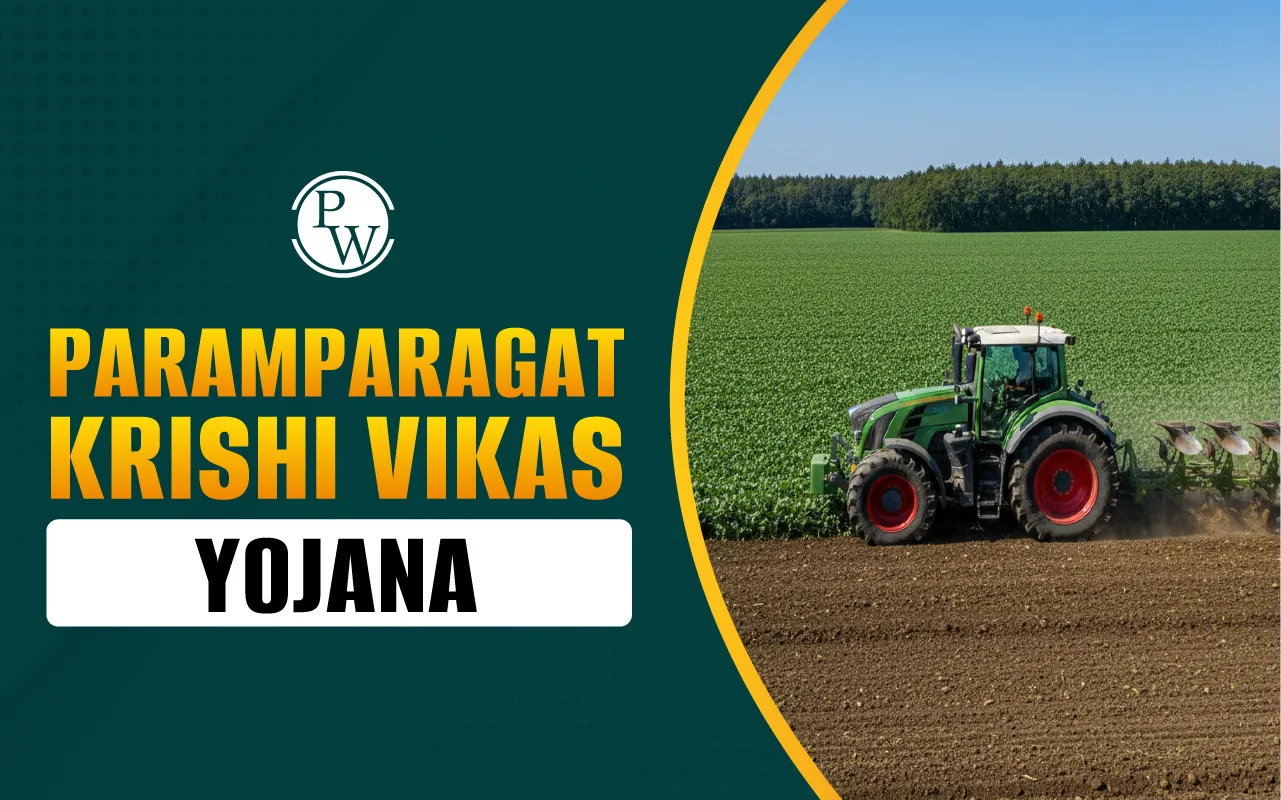
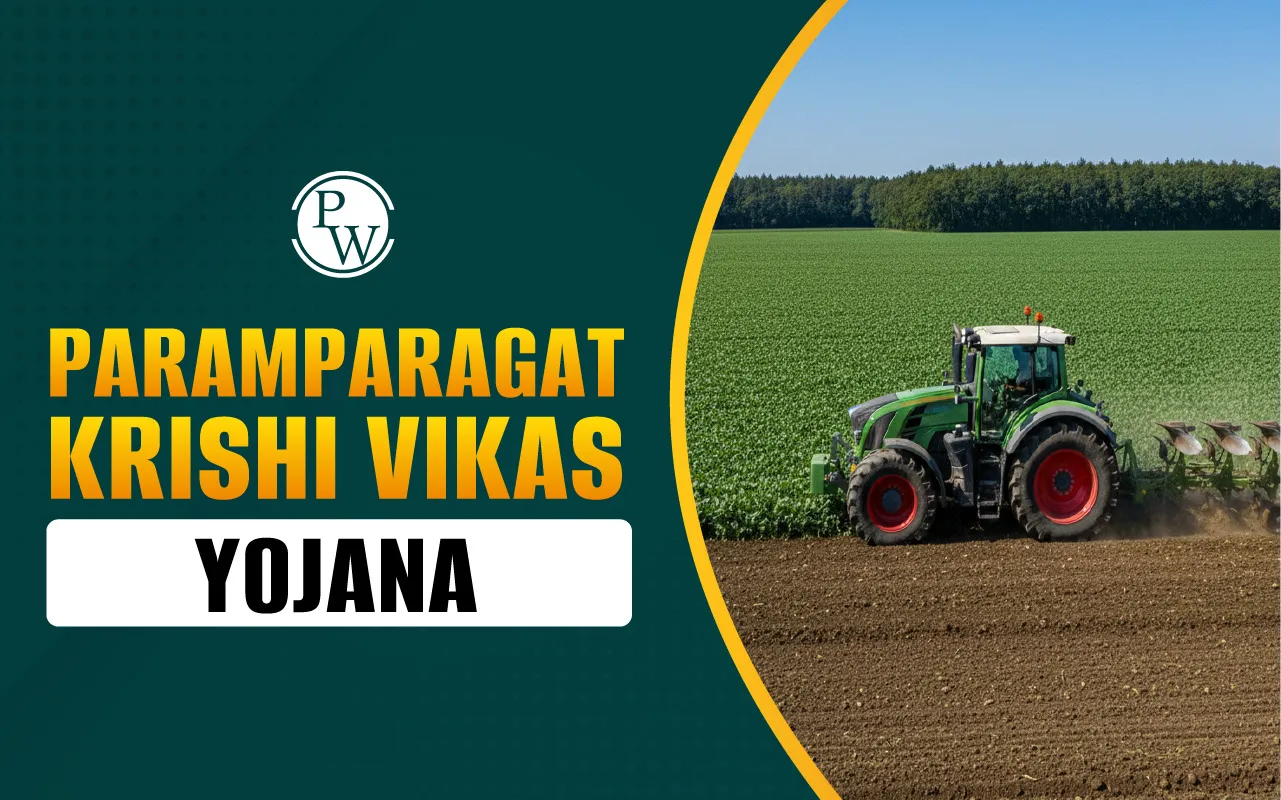
Paramparagat Krishi Vikas Yojana is a flagship organic farming scheme launched by the Government of India to promote sustainable and chemical-free agriculture. Introduced in 2015 under the National Mission on Sustainable Agriculture (NMSA), PKVY focuses on improving soil health, reducing farming costs, and increasing farmers’ income through organic practices. Just as social welfare schemes like the disabled pension scheme and disability financial aid support vulnerable citizens, the Paramparagat Krishi Vikas Yojana provides crucial financial aid to farmers transitioning to eco-friendly farming methods.
What is Paramparagat Krishi Vikas Yojana (PKVY)?
Paramparagat Krishi Vikas Yojana is a centrally sponsored scheme that promotes organic farming through a cluster-based approach. Farmers are encouraged to adopt traditional, low-cost, and sustainable agricultural practices that eliminate chemical fertilisers and pesticides.
Unlike individual benefit schemes such as handicapped pension or disability financial aid, PKVY works collectively by forming farmer clusters, ensuring shared resources, certification support, and market access. Organic certification is carried out through the Participatory Guarantee System (PGS-India), making the process affordable and farmer-friendly.
Objectives of Paramparagat Krishi Vikas Yojana
The PKVY scheme is guided by multiple interconnected objectives aimed at creating a sustainable and profitable agricultural system:
-
Produce Chemical-Free Food: The primary aim is to ensure the production of agricultural products free from chemicals and pesticides by adopting eco-friendly, low-cost technologies.
-
Improve Soil Health: The scheme supports and promotes organic farming to fundamentally improve the health and fertility of the soil for long-term sustainability.
-
Reduce Farming Costs: By encouraging on-farm nutrient recycling and reducing the dependence on expensive external chemical inputs, the scheme significantly lowers the cost of agriculture for farmers.
-
Enhance Farmers' Income: Lower input costs combined with the premium price fetched by organic produce help enhance the net income of the farmers per unit of land.
-
Empower Farmer Groups: It empowers farmers through the institutional development of clusters and groups, enabling them to manage production, processing, value addition, and certification collectively.
Financial Assistance and Benefits under PKVY (Financial Aid for Farmers)
The scheme is a major source of financial aid and support for farmers transitioning from conventional to organic farming. The support is provided over a period of three years, covering the conversion time required for land to be certified organic.
Under PKVY, financial assistance of ₹31,500 per hectare is provided to States/UTs over a period of three years in the organic clusters. This assistance covers various components, which are often provided to farmers through Direct Benefit Transfer (DBT):
|
Financial Assistance and Benefits under PKVY (Financial Aid for Farmers) |
||
|
Component |
Amount per Hectare (for 3 Years) |
Purpose |
|
Organic Inputs |
₹15,000 |
For the procurement of organic inputs, bio-fertilisers, bio-pesticides, seeds, and on-farm input infrastructure. |
|
Training & Capacity Building |
₹9,000 |
For training, capacity building, and exposure visits for the farmers. |
|
Certification & Residue Analysis |
₹3,000 |
For PGS Certification and residue analysis. |
|
Marketing & Value Addition |
₹4,500 |
For marketing, packaging, branding, and post-harvest management. |
Total Financial Assistance: ₹31,500 per hectare for 3 years.
Features and Implementation of Paramparagat Krishi Vikas Yojana
The implementation strategy of PKVY is designed to facilitate a smooth and comprehensive shift to organic farming.
Cluster-Based Approach
PKVY promotes organic farming through a cluster approach.
-
A cluster is formed by 50 or more farmers, jointly farming on an area of 50 acres (20 hectares) or more.
-
This collective approach enables shared resources, standardised organic practices, and reduces the overall cost for the farmers.
Certification through PGS-India
The scheme promotes the Participatory Guarantee System (PGS-India).
-
PGS is a locally relevant, affordable, and community-based certification process where farmers collectively verify the organic practices of other farmers in their cluster.
-
This system ensures quality assurance for the domestic market.
Digital and Market Linkages
To support farmer entrepreneurship, PKVY encourages direct market linkages.
-
The dedicated Jaivik Kheti Portal has been developed as an online platform to promote the direct sale of organic products from farmers to consumers, helping organic produce fetch better prices in the market.
Implementation Structure
At the Central level, the scheme is implemented by the Organic Farming cell under the Department of Agriculture, Cooperation and Farmers Welfare (DAC&FW). At the State level, the scheme is implemented by the State Department of Agriculture and Cooperation, with the support of Regional Councils (RCs) registered under the PGS-India certification programme.
Eligibility Criteria for PKVY Scheme
The scheme is designed to support a wide range of farmers and institutions committed to organic farming. The key eligibility requirements include:
-
Applicant Type: Individual farmers or institutions are eligible to apply.
-
Cluster Membership: Farmers must be part of an organised cluster, which should consist of at least 50 farmers collectively cultivating a minimum of 50 acres of land.
-
Land Holding: While all farmers are eligible, the maximum landholding for which a farmer can receive a subsidy under the scheme is 2 hectares.
-
Farming Practice: Farmers must be willing to practice 100% organic farming, abiding by the standards set by PGS-India.
How to Apply for Paramparagat Krishi Vikas Yojana?
Since PKVY operates on a cluster-based approach, the application process is generally initiated at the local level through the state agriculture machinery. Individual farmers cannot apply alone but must join or form a cluster.
The typical process involves the following steps:
-
Contact the Local Authority: Interested farmers should first contact their nearest Agriculture Department office or the State Agriculture Portal/PKVY Nodal Officer.
-
Form or Join a Cluster: Farmers are motivated to form or join an organic farming cluster of 50 or more farmers.
-
Regional Council Involvement: The cluster is registered under a Regional Council (RC). The RC is responsible for the mobilisation, training, and certification process using the PGS-India system.
-
Action Plan Submission: The Regional Council consolidates all applications and develops an Annual Action Plan, which is then submitted to the Ministry of Agriculture & Farmers Welfare for approval and fund release.
The financial assistance is then released to the farmer's bank account through the Direct Benefit Transfer (DBT) system.
Paramparagat Krishi Vikas Yojana FAQs
What is the main aim of the Paramparagat Krishi Vikas Yojana?
How much financial aid is provided to farmers under PKVY?
Is PKVY similar to disability financial aid schemes?
What is the Participatory Guarantee System (PGS) under PKVY?