






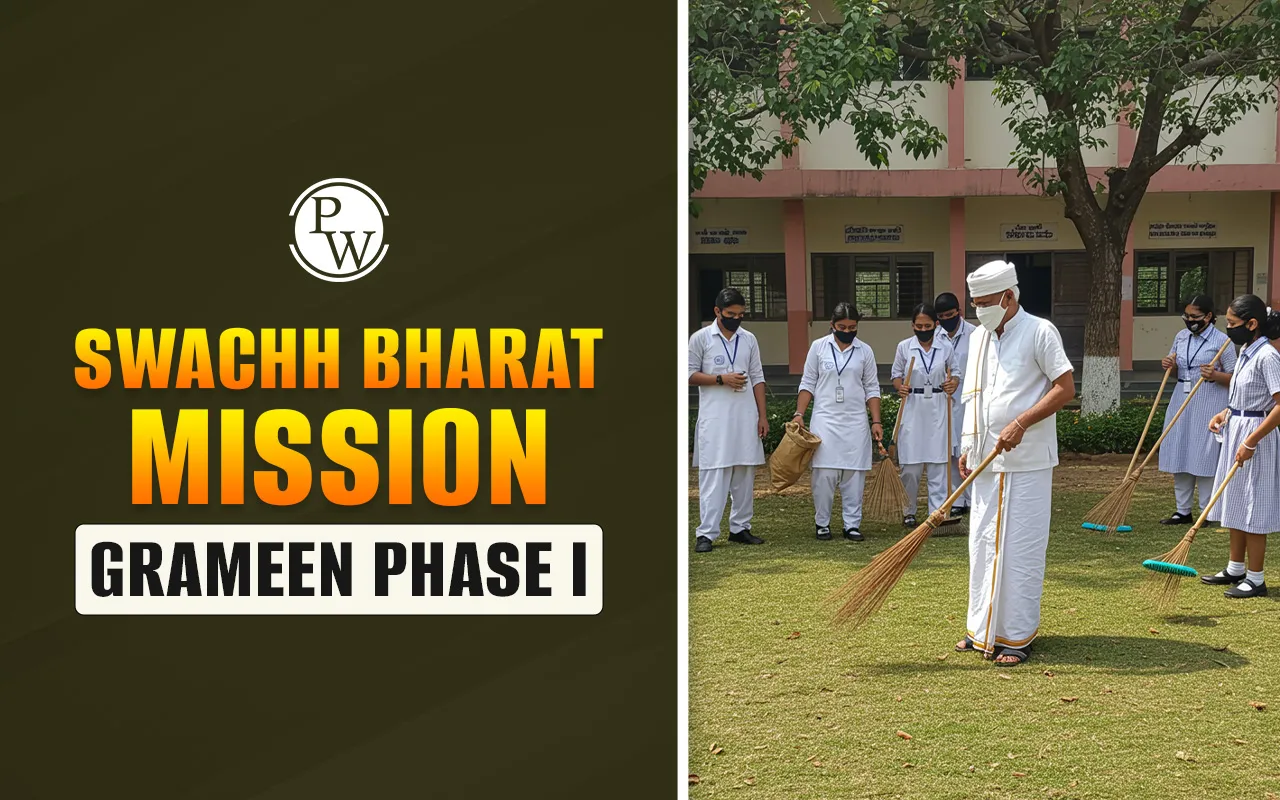
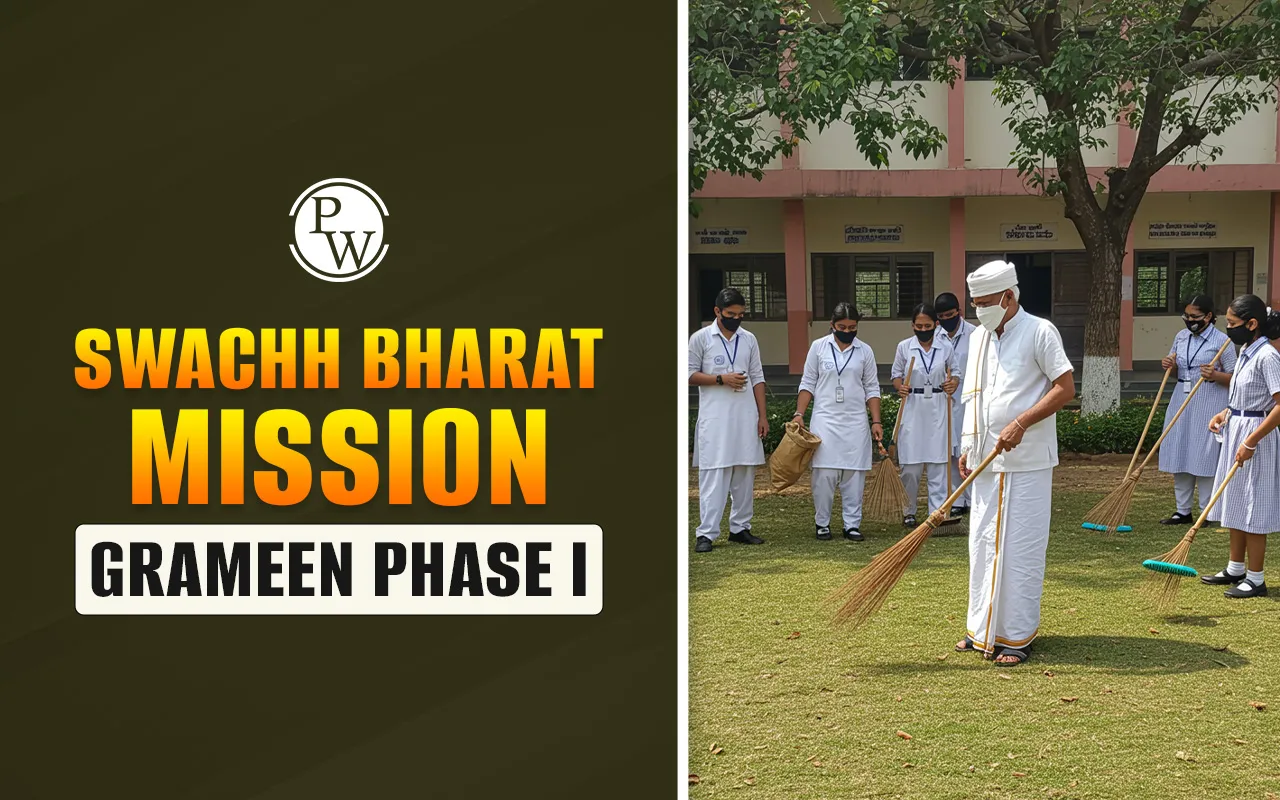
Swachh Bharat Mission Grameen Phase I was launched in 2014 by the Department of Drinking Water and Sanitation, Ministry of Jal Shakti, Government of India. The main aim was to end open defecation in rural India by building toilets and changing people’s behavior.
It provided financial assistance and awareness to the poor and socially disadvantaged families for toilet construction. More than 10 crore toilets were constructed, and by 2019, all villages of India were declared Open Defecation Free (ODF).
The mission was also aimed at putting an end to manual scavenging and inculcating good sanitation habits among people. It also resulted in a better health status, mainly among women and children, and saved money for the families by reducing diseases. Millions changed their habit of using toilets regularly. It made rural India cleaner and healthier for all.
What is Swachh Bharat Mission Grameen Phase I?
Swachh Bharat Mission Grameen Phase I essentially became a national campaign initiated by the Government of India in 2014, with the key goal of eradicating open defecation conditions in rural areas of the country.
This phase predominantly dealt with access to and the usage of toilets and also promoted safer sanitation practices. It is important to understand SBM-G Phase I in order to comprehend the progress of India in rural sanitation and public health.
Launch and Vision of Swachh Bharat Mission Grameen Phase I
Swachh Bharat Mission Grameen Phase I was launched on 2nd October 2014 with the vision of a clean India by the 150th birth anniversary of Mahatma Gandhi. The mission aimed at enhancing the quality of life in rural areas.
Core Objective of the Swachh Bharat Mission Grameen Phase I
The main goal was for all villages in India to attain ODF status, and this included ensuring access and continued utilization of toilets in all rural households.
Key Components of Swachh Bharat Mission Grameen Phase
The mission focused on several critical areas:
-
Individual Household Latrines (IHHLs): Promoted and incentivised the construction of toilets in households.
-
Community Sanitary Complexes: Facilitated shared toilet facilities within communities, particularly in public areas.
-
Solid and Liquid Waste Management (SLWM): Implemented systems to manage waste in rural areas.
-
Information, Education, and Communication (IEC): Undertook large-scale campaigns to raise the behavioral change for sanitation.
Implementation of Swachh Bharat Mission Grameen Phase I
In SBM-G Phase I, a demand-driven and people-centered approach was adopted. Financial incentive was provided for the construction of IHHLs, and planning and implementation of sanitation activities were done at the local community level.
How to Apply for Swachh Bharat Mission Grameen Phase I?
To apply for financial assistance for toilet construction, follow these simple steps:
Step 1: Contact the local Gram Panchayat or Swachhagrahi.
Step 2: Submit the required documents as listed.
Step 3: The toilet is constructed with the provided financial assistance.
Step 4: The toilet is geo-tagged and verified through the MIS portal.
Step 5: The incentive amount is directly credited to the beneficiary’s bank account.
Outcomes of Swachh Bharat Mission Grameen Phase I
On October 2, 2019, Rural India was declared ODF successfully. Sanitation coverage in SBM Gramen saw a massive increase. This rural toilet scheme transformed the public health outcomes completely. Swachh Bharat Mission Grameen Phase I brought massive social change. The Swachh Bharat Rural Drive was really very effective.
Benefits of Swachh Bharat Mission Grameen Phase I
The Swachh Bharat Mission Grameen Phase I brought major improvements in rural sanitation. It helped build toilets, reduce open defecation, and improve health and safety for rural families.
-
₹12,000 financial help for each toilet built in rural households.
-
Improved sanitation through individual and community toilets.
-
Major reduction in open defecation across India.
-
Better health and safety, especially for women and children.
-
Increased dignity and privacy for rural families