Swachh Bharat Mission (Grameen) Phase II: Guidelines, Benefits
Swachh Bharat Mission (Grameen) Phase II focuses on sustaining ODF status and creating ODF Plus villages through solid and liquid waste management systems. Running from 2020–2025 with an outlay of ₹1.41 lakh crore, it supports rural households and Gram Panchayats with compost pits, soak pits, biogas units, and plastic waste systems. Registration, verification, and incentive disbursal happen online through the SBM portal.
 Swati Kumar1 Dec, 2025
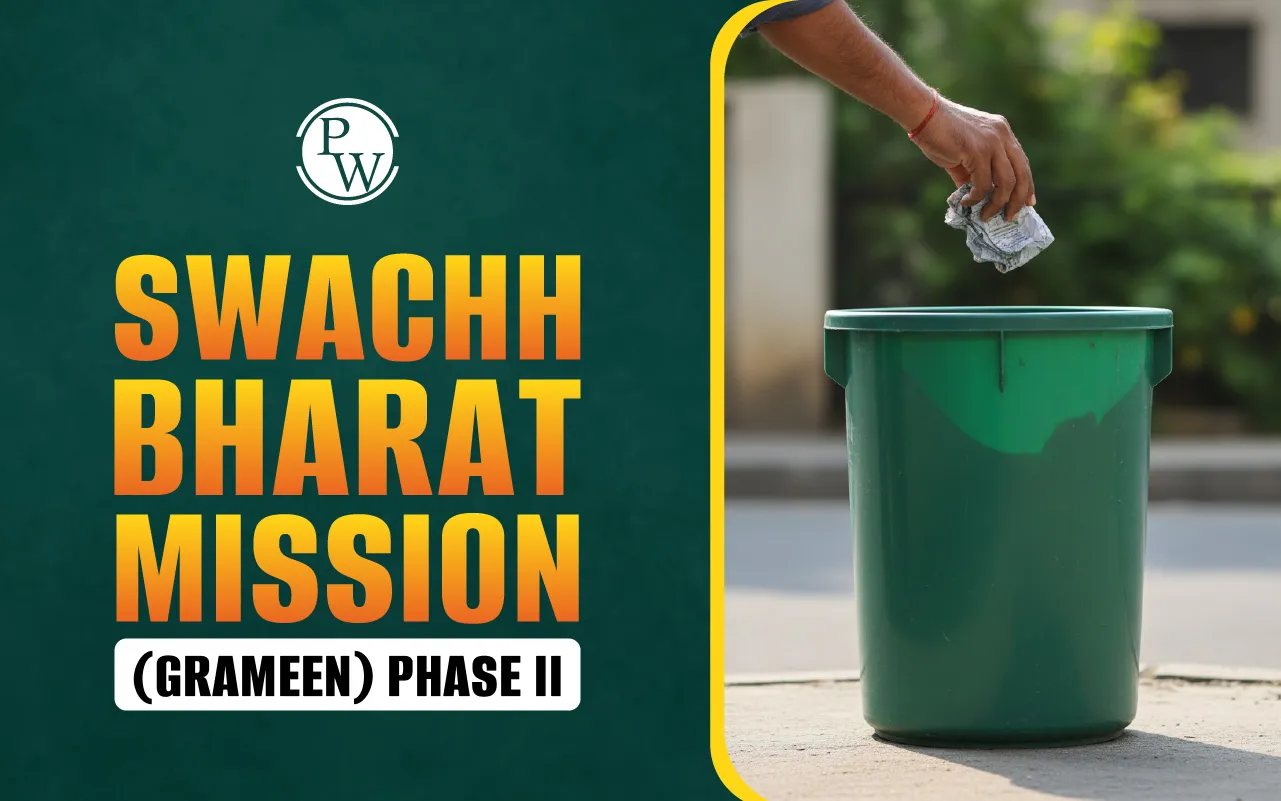
Swachh Bharat Mission (Grameen) Phase II: In February 2020, the Swachh Bharat Mission (Grameen) Phase II was approved by the Ministry of Jal Shakti. It builds on the gains of Phase I, which successfully declared India ODF and aims to achieve a sustained open defecation-free status, along with solid and liquid waste management. This is a Centrally Sponsored Scheme that aims to achieve ODF Plus villages through composting, biogas plants, soak pits, and plastic waste units, ending in 2024-25 with an outlay of ₹1.41 lakh crore.
It enables behavioural change, community participation, and visual cleanliness through shramdaan activities and safai mitra health camps, ensuring nobody is left behind. Over 1,249 villages have turned ODF Plus despite impediments like COVID-19, thereby bringing benefits to the enhancement of rural health.
Swachh Bharat Mission (Grameen) Phase II Overview
Swachh Bharat Mission Phase-II scales up the successes of Phase I, and reorients the focus from the construction of toilets to usage and waste management in a sustainable manner. Following is an overview of Swachh Bharat Mission Phase II, highlighting key aspects:
| Swachh Bharat Mission (Grameen) Phase II Overview | |
| Particulars | Details |
| Scheme Name | Swachh Bharat Mission (G) Phase II |
| Launched By | Government of India |
| Ministry in Practice | Ministry of Jal Shakti, Department of Drinking Water & Sanitation |
| Phase II Duration | 2020–2025 |
| Objective | To maintain ODF status and achieve ODF Plus villages by ensuring solid and liquid waste management systems. |
| Target | Convert all villages to ODF Plus-Aspiring, Rising and Model categories. |
| Beneficiaries | Rural households and Gram Panchayats throughout the country |
| Official Portal | sbm.gov.in |
Swachh Bharat Mission (Grameen) Phase II Eligibility Criteria
Incentives for toilets under the Swachh Bharat Mission Grameen phase II are accorded priority with BPL families at the top, followed by APL groups like SC/ST, persons with disabilities, landless labourers, and women-headed households.
- Eligible villages must sustain ODF status and commit to managing solid/liquid waste through Gram Panchayat resolutions for ODF Plus categories -Aspiring, Rising, Model.
- The applicant must have an Aadhaar-linked bank account and verification by the Gram Sabhas. Priority is accorded to newly emerged or left-out households without functional toilets.
- The community sanitary complexes are eligible, provided Gram Panchayats contribute 30% from 15th Finance Commission grants, so that O&M responsibility rests with the local bodies.
Key Components of SLWM
Effective waste management will be accomplished through several different integrated approaches:
1. Biodegradable Waste Management:
- Compost pits: These are intended for organic waste decomposition into compost, which is invaluable in agriculture.
- Biogas Plants: Organic waste-to-biogas conversion provides a new source of energy while treating organic waste.
2. Plastic Waste Management:
- Collection and Segregation: Establishment of collection and segregation mechanisms for plastic waste at the household level.
- Storage and Recycling: This will involve the provision of appropriate storage facilities in addition to encouraging recycling programs wherever possible. Plastic is subsequently often put to use in road construction, among other uses.
3. Greywater Management:
- Soak Pits: Simple structures allowing grey water from bathing and washing to percolate into the ground safely.
- Leach Pits: Like soak pits, these serve to deal with wastewater from various sources.
- Waste Stabilisation Ponds: Larger systems treating larger greywater volumes in a natural, low-cost way.
4. Faecal Sludge Management (FSM):
- Collection and Transportation: The safe collection and transportation of faecal sludge from septic tanks or pits.
- Treatment and Disposal: Creation of facilities for the treatment of faecal sludge, turning it into safe by-products that can be disposed of or reused properly.
5. ODF Sustainability:
- Ongoing efforts to ensure no one returns to open defecation.
- Encouraging regular cleaning and maintenance of individual and community toilets.
SBM Gramin Phase 2 Guidelines
Detailed procedures regarding planning, implementation, and monitoring of SLWM activities have been listed in the guidelines of SBM Gramin Phase 2.
- Aims at community participation, capacity building at the level of lower-tier institutions, and long-term operability of the created infrastructure.
- The Gram Panchayats have a central role in implementation and allow local-level decision-making.
Registration Process for SBM Rural Sanitation Scheme
The registration process for the SBM Rural Sanitation Scheme allows rural households and Gram Panchayats to apply for sanitation facilities and waste-management support under the Swachh Bharat Mission–Grameen. The following are the detailed steps for the SBM toilet apply phase 2:
- The citizen registration may be done with mobile number as a login ID and OTP verification on the official portal, sbm.gov.in or services.india.gov.in.
- Provide personal details, Aadhaar number, bank account details, a scanned photo, and the first page of the passbook at the time of application.
- Submit applications for incentives for Individual Household Latrine (IHHL).
- Monitor status online through login or locally at the Gram Panchayat/ SWM office.
- Verification is done through Gram Sabha meetings, and the funds are disbursed through DBT to the eligible rural households upon approval.
Swachh Bharat Mission Phase 2 Benefits
Swachh Bharat Mission Phase II aims at sustaining gains made in rural sanitation and improving waste management systems in villages. This enhances cleanliness, hygiene, and environmental health across rural India.
The main benefits of the SBM Rural Sanitation scheme phase 2 include:
- Ensures that villages maintain ODF+ status through better management of both solid and liquid waste.
- Supports sanitation infrastructure at the household and community level, including soak pits and composting units.
- Promotes cleaner, healthier rural environments by reducing open dumping and untreated wastewater.
- It brings about behavioural change through community-driven sanitation awareness and hygiene practices.
- Gram Panchayat capacity is enhanced to manage waste systems and sustain long-term sanitation standards.
Swachh Bharat Mission (Grameen) Phase II FAQs
What is meant by 'ODF Plus' under SBM (G) Phase II?
What are the major components of SLWM in this stage?
What is the funding structure of Swachh Bharat Mission (Grameen) Phase-II?
What are the main benefits expected from SBM (G) Phase II?