Telangana Peasant Revolt: Features, Causes, Leaders
 Aarti .26 Feb, 2026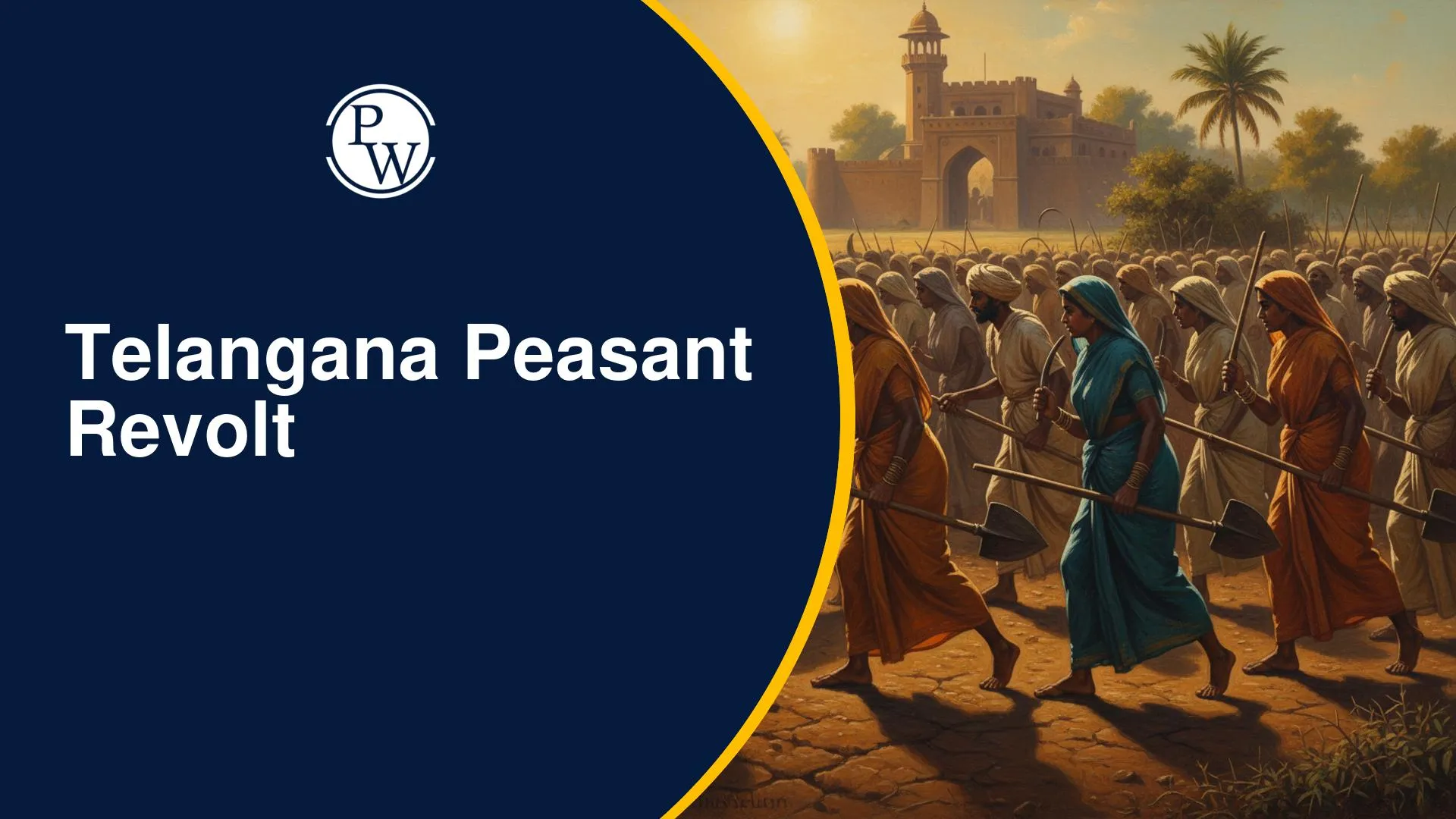
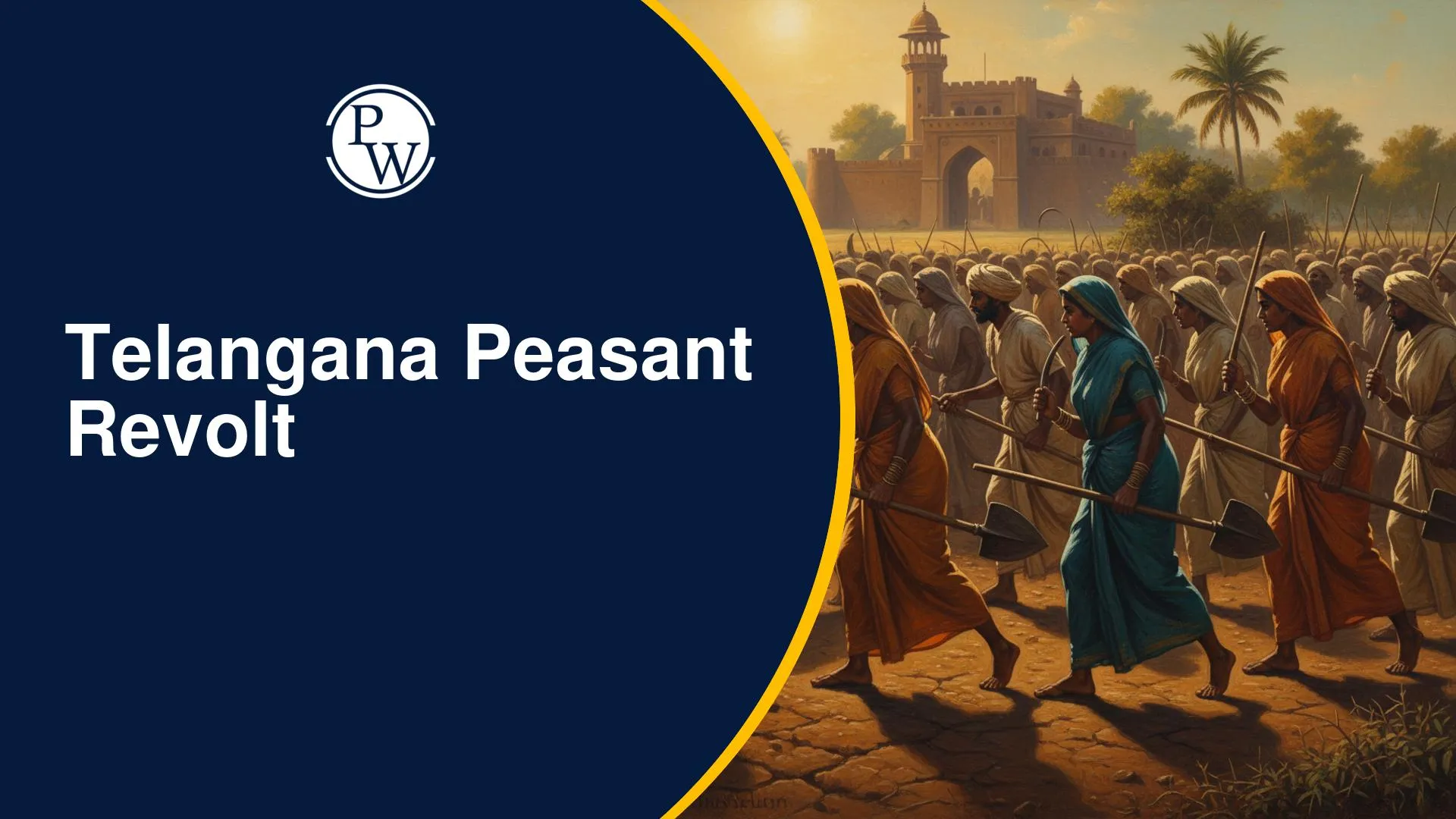
Telangana Peasant Revolt was one of the most significant agrarian struggles in modern Indian history. It emerged as a mass resistance by peasants against exploitative landlords and autocratic rule in the princely state of Hyderabad. The uprising reflected deep socio-economic inequalities and became a defining example of organised rural resistance in pre- and post-independence India.
Between 1946 and 1951, peasants across Telangana villages mobilised against forced labour, illegal exactions, and feudal dominance. The revolt not only challenged local landlords but also questioned the authority of the Nizam’s administration. It played a crucial role in shaping debates on land reforms, peasant rights, and the integration of princely states into independent India.
Telangana Revolt Features
The Telangana armed struggle combined social reform, agrarian resistance, and political mobilisation.
-
Village-level organisations (sanghams) coordinated protests, redistributed land in some regions, and resisted landlord authority.
-
The movement also witnessed guerrilla tactics, parallel village administrations, and the active participation of women and marginalised communities.
-
Another defining feature was its ideological direction. Under communist leadership, the struggle linked local grievances with broader anti-feudal and anti-colonial objectives.
-
It transformed from isolated protests into a widespread agrarian movement demanding structural change in rural society.
Causes of Telangana Peasant Revolt
The causes of Telangana peasant revolt were deeply rooted in social, economic, and political exploitation prevalent in Hyderabad state. Peasants endured severe hardship under the Nizam's rule and oppressive landlords. This created a fertile ground for rebellion.
Social and Economic Factors
Peasants in Telangana faced extreme social and economic exploitation. Land ownership was highly concentrated. About 40% of the land was directly controlled by the Nizam or granted to elites as jagirs (special land tenures). The remaining land was under powerful landlords who offered no legal protection to cultivators.
-
Vetti System: This was forced, unpaid labour that lower caste families had to perform for landlords. Families sent a male member daily for household and agricultural tasks without pay. This system caused deep resentment.
-
Land Exploitation: Powerful landowners known as durras controlled vast cultivable land. They extracted heavy revenue from peasants. Many lost their lands due to debt or force, becoming tenants-at-will.
-
Social Abuse: Girls from poor families were often kept as slaves and concubines in landlords' homes. This was a severe form of social exploitation.
Political Landscape
Political grievances also fueled the Telangana peasant uprising 1946. The Hyderabad state was governed by the Asaf Jahi Nizams. A small Urdu-speaking Muslim elite held power, while the majority were Telugu, Marathi, and Kannada-speaking Hindus.
-
Cultural Suppression: Resistance began in the 1920s against the suppression of local languages and cultures. This led to the formation of the Andhra Jan Sangham in 1922.
-
Andhra Mahasabha: This organisation evolved from Andhra Jan Sangham in 1928. Initially, it sought administrative reforms. Later, under leaders like Ravi Narayan Reddy, it shifted focus to land reforms and ending vetti.
-
Communist Influence: The role of Communist Party in Telangana movement grew significantly during the 1940s. The Communist Party of India (CPI) joined forces with Andhra Mahasabha. They mobilised peasants against feudal oppression, forming village committees (sanghams).
Key Events and Stages of the Telangana Revolt
The Telangana armed struggle unfolded in several key stages, marked by escalating violence and resistance.
Initial Uprising
The revolt intensified in 1946. A hereditary tax collector tried to seize land from a village sangam member. Local leaders resisted. On July 4, 1946, a protest against landlord violence turned tragic when Doddi Komarayya, a sangam leader, was killed. His death sparked widespread anger. Villagers burned down the landlord’s house and declared an end to forced labour. By July 1946, the Telangana peasant uprising 1946 spread to hundreds of villages. The CPI declared villages under peasant control.
Razakar Violence
The role of Razakars in Telangana revolt was significant in escalating the conflict. In 1947, a private militia loyal to the Nizam, called the Razakars, emerged. Led by Kasim Razvi, they used extreme violence and communal tensions to suppress the movement. They attacked villages, looted property, and killed suspected agitators. This terror further hardened peasant resistance. In response, the CPI introduced a guerrilla warfare policy in February 1948. Village republics redistributed land to the landless.
Integration of Hyderabad and Telangana Revolt
The escalating violence led to external intervention and a new phase in the Hyderabad state peasant movement.
Indian Army Intervention
On September 13, 1948, the Indian Army launched a 'police action' to end the violence in Hyderabad. Within a week, the Nizam and Razakars surrendered. This integration of Hyderabad and Telangana revolt led to the abolition of the jagirdari system Hyderabad and calls for land reforms. However, the Indian Army also aimed to suppress the communist-led peasant movement.
Telangana Revolt Impact
The revolt significantly altered rural power relations. It weakened landlord dominance, reduced forced labour practices, and pushed land reform to the forefront of national policy debates. The demand for “land to the tiller” became a central principle in agrarian reform discussions.
The movement also inspired later peasant struggles across India, demonstrating the power of organised rural resistance in shaping socio-economic policy.
Telangana Revolt Significance
Historically, the Telangana uprising represents a critical transition from feudal agrarian relations to modern land reform frameworks. It highlighted the link between political freedom and socio-economic justice. The revolt also showcased the role of ideology, organisation, and mass participation in achieving structural change.
Telangana Peasant Revolt Leaders
Key leaders emerged from grassroots mobilisation and political activism. Figures such as Ravi Narayan Reddy and other communist organisers coordinated village movements, mobilised peasants, and provided strategic direction to the struggle.
Role of Women in Telangana Struggle
Women played a transformative role in the uprising. They participated in protests, supported guerrilla groups, protected villages, and challenged social hierarchies. Their involvement expanded the movement beyond agrarian demands to include social emancipation and gender participation in political resistance.
Telangana Peasant Revolt FAQs
Q1: What was the primary cause of the Telangana Peasant Revolt?
Q2: When did the Telangana Peasant Revolt take place?
Q3: What was the role of the Communist Party in the Telangana Movement?
Q4: Who were the Razakars in the context of the Telangana Revolt?
Q5: What was the long-term impact of the Telangana Peasant Revolt?