








Top 3 Videos on the Simon Commission and the Nehru Report for Modern History by PW

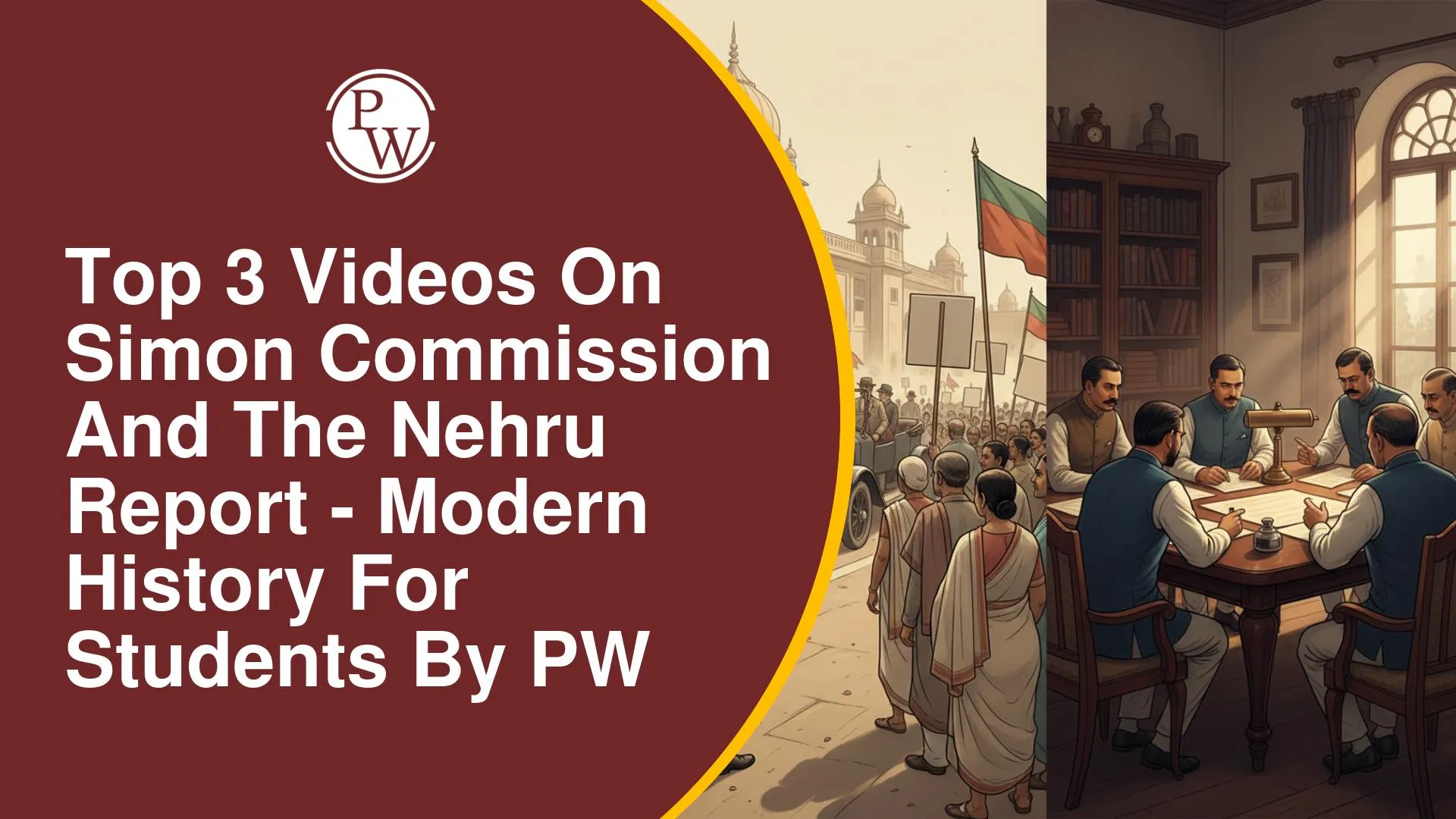
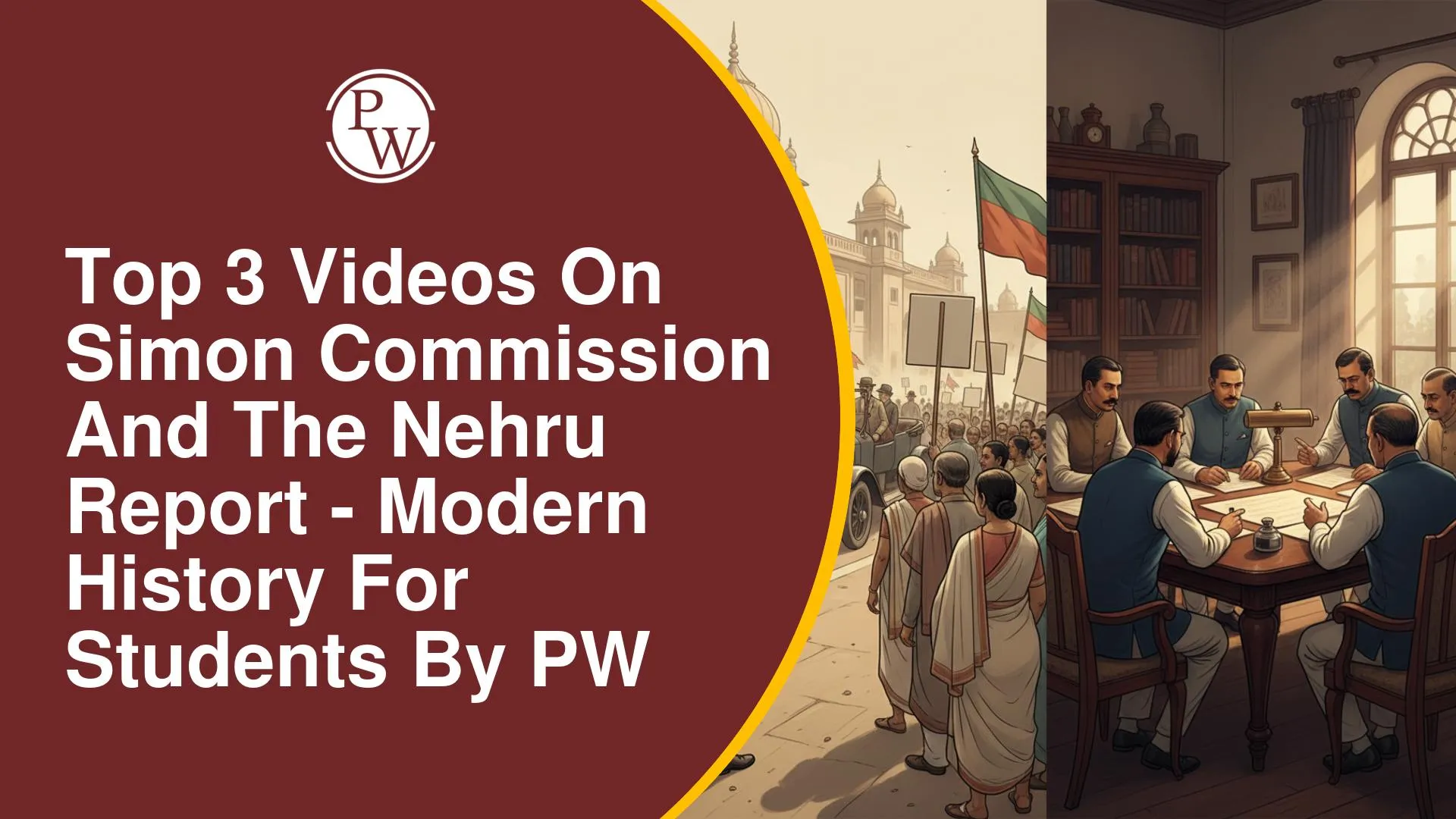
The Simon Commission and the Nehru Report are closely connected developments in India’s constitutional history. Understanding why the commission was appointed, why Indians opposed it, and how the Nehru Report proposed constitutional reforms requires you to connect dates, recommendations, and political responses.
These developments can be difficult to revise together, particularly when you need to distinguish the positions of the Congress, the Muslim League, and other political groups. PW OnlyIAS YouTube videos explain these events through a detailed Spectrum Chapter 18 lesson, a Hindi session on opposition to the Simon Commission, and a focused revision of both topics.
Video 1: Study the Simon Commission and Nehru Report With Detailed Chapter Coverage and PYQs
This full-chapter lesson follows Spectrum Chapter 18, covering the Lee Commission, Linlithgow Commission, Muddiman Committee, and the formation, impact, and recommendations of the Simon Commission. It then examines the Nehru Report, its main proposals, communal responses, Jinnah’s amendments, and its limitations. Previous-year questions at the end help you connect these historical developments with examination question patterns.
Choose this YouTube video to understand both topics in detail or revise them together before a test. Prepare separate notes on the Simon Commission’s recommendations and the Nehru Report’s constitutional proposals. Comparing their objectives and the responses they received can help you distinguish the two developments during Prelims revision and while preparing analytical answers for Mains.
Video 2: Understand Opposition to the Simon Commission Through a Chronological Hindi Lesson
This Hindi-language lesson traces the constitutional background to the Simon Commission and the circumstances surrounding its formation. It explains the seven-member all-British commission, John Simon’s role, its objectives and recommendations, and the opposition it faced in India. This video covers protests, black flags, the “Simon Go Back” slogan, police action, Lala Lajpat Rai’s death, and the political developments that contributed to the background of the Nehru Report.
Use this YouTube video if you prefer studying the events in Hindi or need to clarify the sequence of protests and political responses. Focus on why Indians opposed the commission, how the protests developed, and how the controversy influenced subsequent constitutional discussions. Connecting these events through a timeline can make the causes and consequences easier to recall during UPSC revision.
Video 3: Revise the Simon Commission and Nehru Report for UPSC Prelims and Mains
This Chapter 18 lecture brings the Simon Commission and the Nehru Report together as connected developments in the Indian freedom struggle. It covers the commission’s appointment, opposition in India, and political impact before outlining the Nehru Report’s main recommendations and historical significance. Reviewing both topics in one session helps you connect factual details with the wider constitutional debates and political changes of the period.
Use this YouTube video after studying the chapter or when revising before a mock test. For UPSC Prelims, focus on dates, recommendations, and key events. For Mains, consider why the exclusion of Indian members from the Simon Commission prompted opposition and how the Nehru Report represented an Indian attempt to formulate constitutional proposals.
These three PW YouTube videos cover the Simon Commission and the Nehru Report through detailed chapter teaching, a chronological Hindi explanation, and a focused revision session. Start with the full-chapter lesson to understand the recommendations and political context, then use the other videos to reinforce the sequence of events and revisit important points.





 Live & recorded classes available at easeDashboard for progress trackingLakhs of practice questions



