








Top 4 Videos on the Era of Militant Nationalism (1905–1909) for Modern History by PW

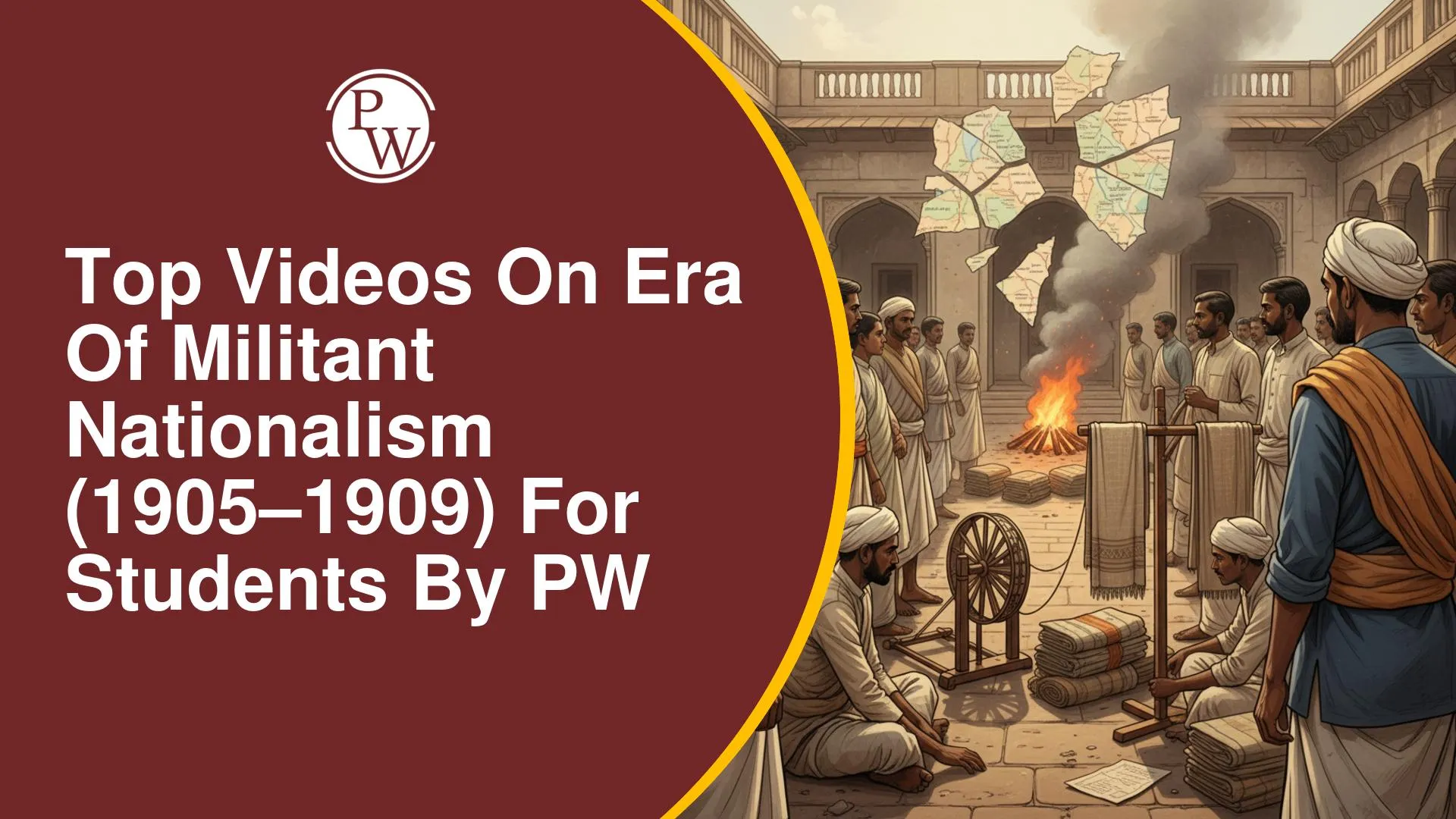
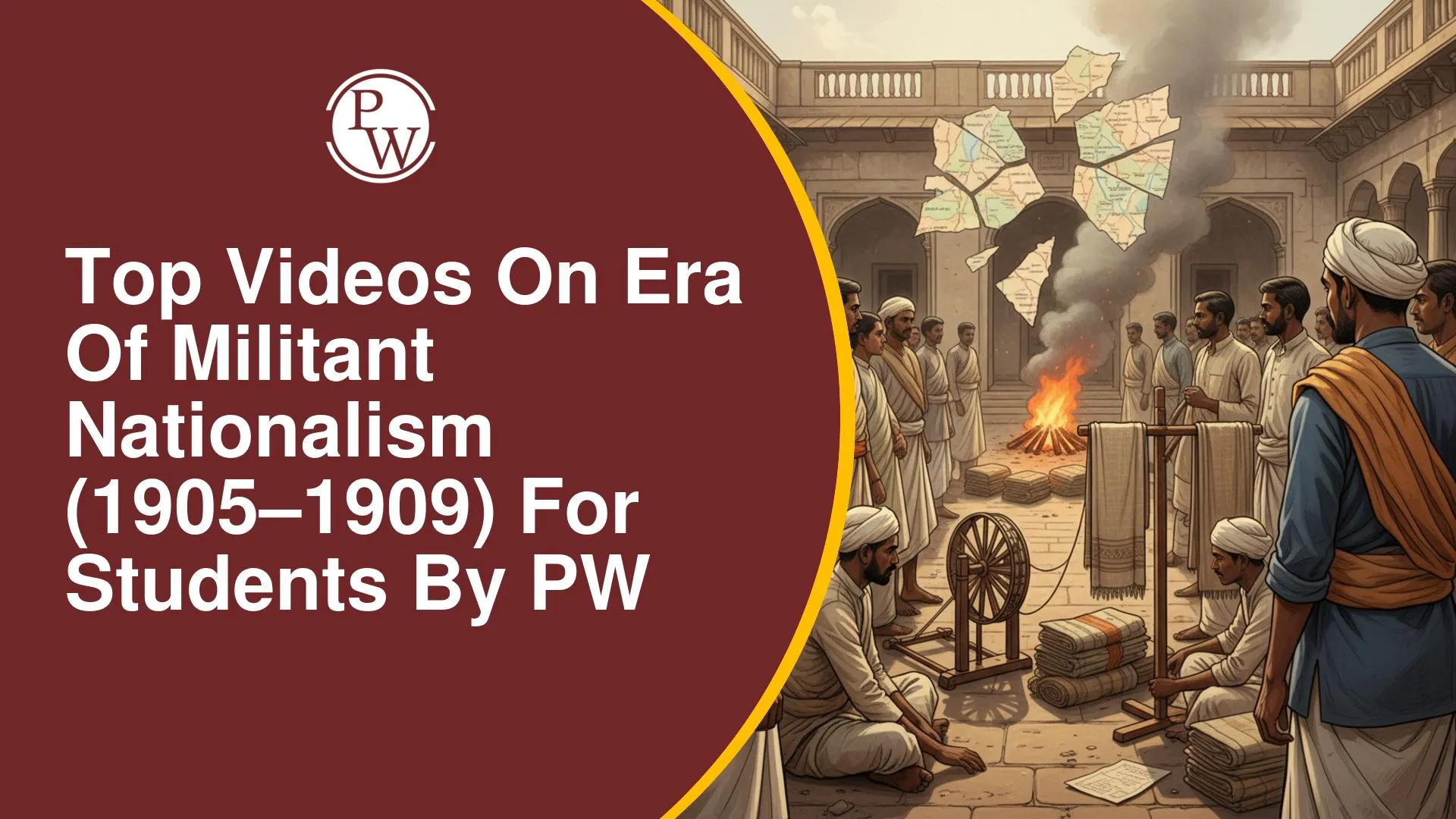
The Era of Militant Nationalism (1905–1909) marked an important phase in the Indian freedom struggle, with the Partition of Bengal, the Swadeshi and Boycott Movements, and growing differences between Moderates and Extremists. Understanding how these developments connected with revolutionary activities, nationalist leaders, the Surat Split, and British reforms can be challenging when you need to remember events, causes, and outcomes in chronological order. PW OnlyIAS YouTube videos cover this period through detailed Spectrum-based lessons, NCERT-linked explanations, and a Hindi revision session.
Video 1: Understand the Causes, Key Events, and Impact of Militant Nationalism
This full-chapter lesson explains the growth of militant nationalism following the Partition of Bengal. It covers the Swadeshi and Boycott Movements, extremist leadership, the annulment of Bengal’s Partition, and the movement’s reach and limitations. The lesson also examines the Surat Split, British strategies, the Morley-Minto Reforms, and the differences between Moderates and Extremists, connecting political developments with the changing direction of the national movement.
Use this YouTube video to revisit its major developments together. Make chronological notes on the Partition of Bengal, the Swadeshi Movement, the Surat Split, and the reforms that followed. This sequence can help you connect causes with outcomes and prepare more focused answers for Modern History questions.
Video 2: Connect Militant Nationalism With the Wider Indian Freedom Struggle
This lesson places the Era of Militant Nationalism within the broader history of the freedom struggle. It explains the Partition of Bengal and the protests that followed, then discusses the Swadeshi and Boycott Movements, revolutionary leaders, extremist ideology, and militant activities. The chapter-based approach helps connect major events with their political significance and shows how nationalist methods and ideas developed during this period.
Use this YouTube video after reading the chapter or when revising for UPSC Prelims and Mains. Focus on the relationship between the Partition of Bengal, the growth of extremist politics, and the methods used to challenge British rule. These connections can help you recall key events for objective questions and select relevant examples for descriptive answers.
Video 3: Revise the Swadeshi Movement and Lal-Bal-Pal Through NCERT-Based Learning
Based on Bipan Chandra’s Modern History and Class 12 NCERT, this lesson examines the nationalist movement during the period leading up to 1918, with a focus on the militant phase from 1905 to 1909. It discusses political developments after the Partition of Bengal, the Swadeshi and Boycott Movements, and the roles of Lala Lajpat Rai, Bal Gangadhar Tilak, and Bipin Chandra Pal, collectively known as Lal-Bal-Pal.
This lesson is useful for Class 12 students and competitive exam aspirants who want to connect textbook reading with revision of key leaders and movements. As you watch, note each leader’s contribution and the main features of Swadeshi and Boycott. These notes can help you revise personalities, political ideas, and movement-related facts before examinations.
Video 4: Revise Swadeshi, National Education, and the Movement’s Limitations in Hindi
This Hindi-language lesson explains the shift towards militant nationalist ideas and introduces Lala Lajpat Rai, Bal Gangadhar Tilak, and Bipin Chandra Pal. It covers the Swadeshi Movement, boycott, national education, and the Vande Mataram movement, then reviews the period’s contributions and limitations. This coverage helps you connect the movement’s methods and leadership with its wider political impact.
Use this YouTube video if you prefer Hindi explanations or need a final recap after studying the main events. Pay attention to both the achievements and limitations of the movement, as these can help you develop balanced answers. Revisiting the leaders, methods, and outcomes together can also make last-stage revision more efficient.
These four PW YouTube videos cover the Era of Militant Nationalism (1905–1909) through detailed chapter lessons, NCERT-based teaching, leader-focused revision, and a Hindi recap. Start with a full-chapter lesson to understand the sequence of events, use the NCERT-based session to revise Lal-Bal-Pal and the Swadeshi Movement, and return to the shorter revision format when reviewing key points.


Have questions about your prep?
Our experts can answer all your questions


 Live & recorded classes available at easeDashboard for progress trackingLakhs of practice questions



