Top 5 Videos on Harappan/Indus Valley Civilisation for Ancient History for UPSC by PW


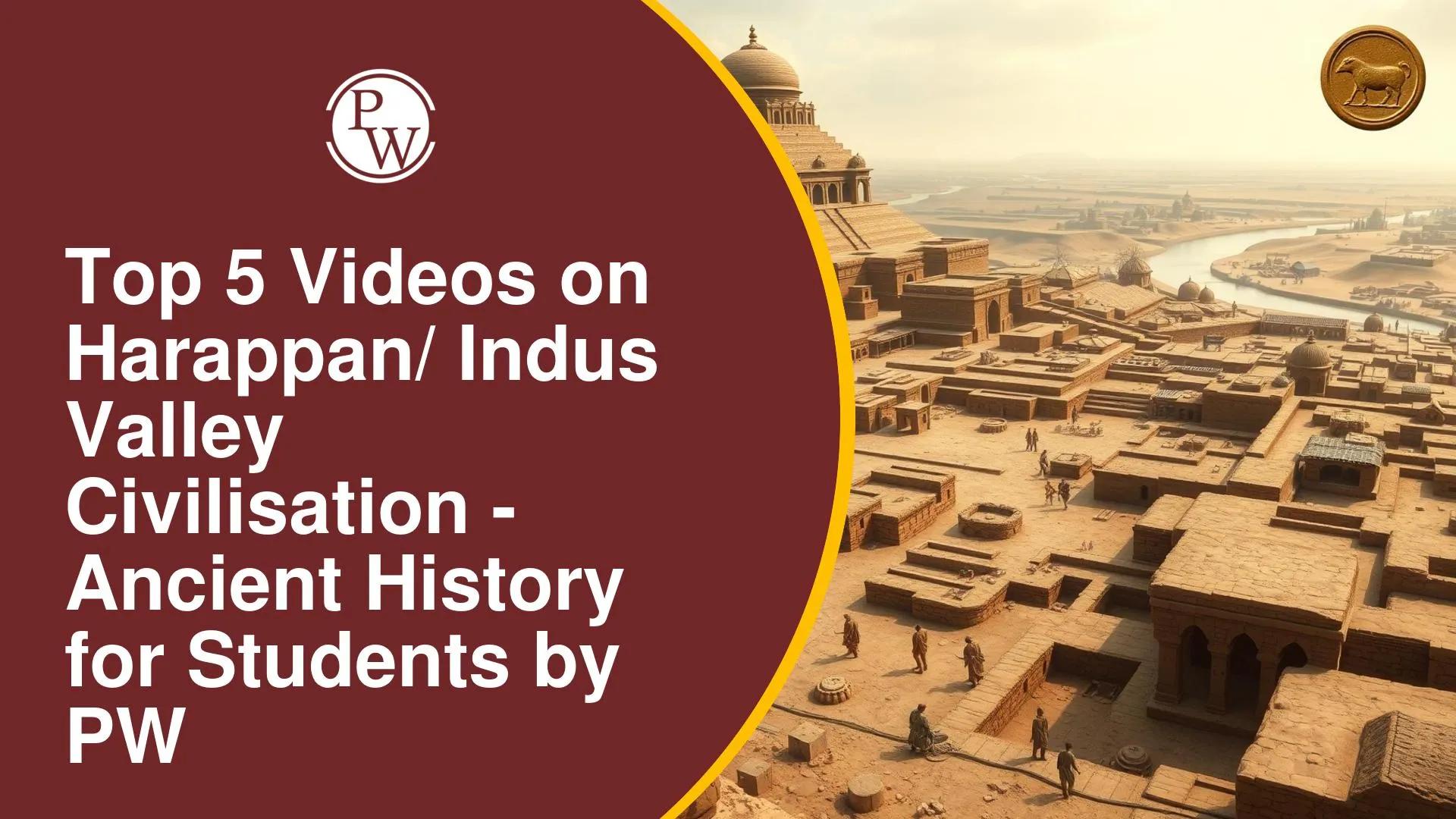
The Harappan or Indus Valley Civilisation is an important part of Ancient Indian History. Preparing this topic involves more than remembering the names of archaeological sites. You also need to understand their geographical locations, distinctive discoveries, town planning, economic activities, religious practices, and the different phases of the civilisation. These details can become difficult to retain when studied as separate facts.
PW YouTube videos approach the topic through NCERT-based explanations, archaeological evidence, maps, site comparisons, and previous-year questions (PYQs). These videos cover everything from the civilisation's origin and urban development to its decline and cultural features.
Video 1: Start With an NCERT-Based Introduction to Major Harappan Sites and Their Features
This YouTube video introduces the Harappan Civilisation through its origin, geographical spread, and major archaeological discoveries. It covers important sites such as Harappa, Mohenjodaro, Lothal, Dholavira, and Kalibangan, explaining their town planning, seals, trade, social life, economy, and religious practices.
The site-based coverage helps connect archaeological findings with the broader features of the civilisation. It also provides a foundation for understanding how historians reconstruct the political, social, and economic life of the Harappan people through material evidence.
If you are beginning the chapter, use this NCERT-based lecture to build your basic understanding and prepare organised notes. It can also help you recall important sites and their distinctive features during Prelims revision.
Video 2: Cover Urban Planning, Religious Practices, and Decline in One Exam-Focused Lecture
This session takes you through the Harappan Civilisation's timeline, origin, geographical extent, and major archaeological sites. Its coverage includes urban planning, seals, script, sculptures, Lothal's dockyard, Dholavira, and Kalibangan. It also discusses agriculture, animal domestication, crafts, technology, trade, religion, and social life.
It extends beyond the civilisation's urban features to examine theories of its decline and the post-urban phase. UPSC Prelims and Mains PYQs are also included, connecting chapter concepts with the types of questions asked in the examination.
Choose this YouTube video when you want to revise several aspects of the civilisation together, particularly its urban features and decline. The UPSC PYQ discussion also makes it useful for identifying important examination themes.
Video 3: Trace the Harappan Civilisation's Development Through Maps and Archaeological Discoveries
This YouTube video follows the development of the Harappan Civilisation through its discovery, names, timeline, origins, regionalisation, mature urban phase, and decline. It connects changes in agriculture, craft specialisation, trade, and technology with cultural developments and interactions with Mesopotamia.
Maps and archaeological evidence introduce important locations such as Harappa, Mohenjodaro, Dholavira, Lothal, Kalibangan, Rakhigarhi, and Mehrgarh. The lesson also examines public structures, seals, pottery, and bronze objects, helping students understand how material remains provide evidence of the civilisation.
This video is particularly useful for you if you find the geographical and chronological aspects difficult to remember. Follow the maps and site-based explanations to connect locations with archaeological discoveries and understand the transition between different phases.
Video 4: Practise Harappan PYQs Through Site Comparisons, Maps, and Elimination Techniques
This YouTube video focuses on previous-year questions related to the Harappan Civilisation. It revisits Dholavira's water management and town planning, Rakhigarhi, Kalibangan, and the geographical locations of major sites in relation to rivers.
Other topics include Kot Diji, Chanhudaro, Lothal, Shortugai, religious symbols, trade, beads, lapis lazuli, and cotton. The session uses map-based recall, statement analysis, comparisons, and elimination practice to approach examination questions.
It is especially useful for distinguishing between similar site features, improving geographical recall, and practising the elimination of incorrect options in UPSC Prelims.
Video 5: Revise Harappan Material Culture From Its Bronze Age Origins to Cultural Continuity
This full-chapter lesson examines Harappan Culture as a Bronze Age civilisation. It covers its excavators, geographical extent, town planning, agriculture, animal domestication, technology, crafts, trade, and social and political organisation.
The discussion also includes religion, script, weights, pottery, seals, and images. Later sections explore the civilisation's origins, mature phase, decline, cultural continuity, and its relationship with Vedic culture.
Use this YouTube video when you want to revisit the chapter through its material and cultural evidence. Its broad coverage helps connect archaeological remains with everyday life, economic activities, and historical developments, making it suitable for comprehensive revision before tests.
Preparing the Harappan Civilisation requires connecting archaeological sites with their geographical locations, material remains, and cultural features. These PW UPSC YouTube videos approach the topic through different formats, including NCERT-based learning, exam-focused chapter coverage, map-based explanations, PYQ practice, and a full-chapter review.