Top 5 Videos on the Vedic Period for Ancient History UPSC Preparation by PW
 Avisha Das20 Nov, 2026

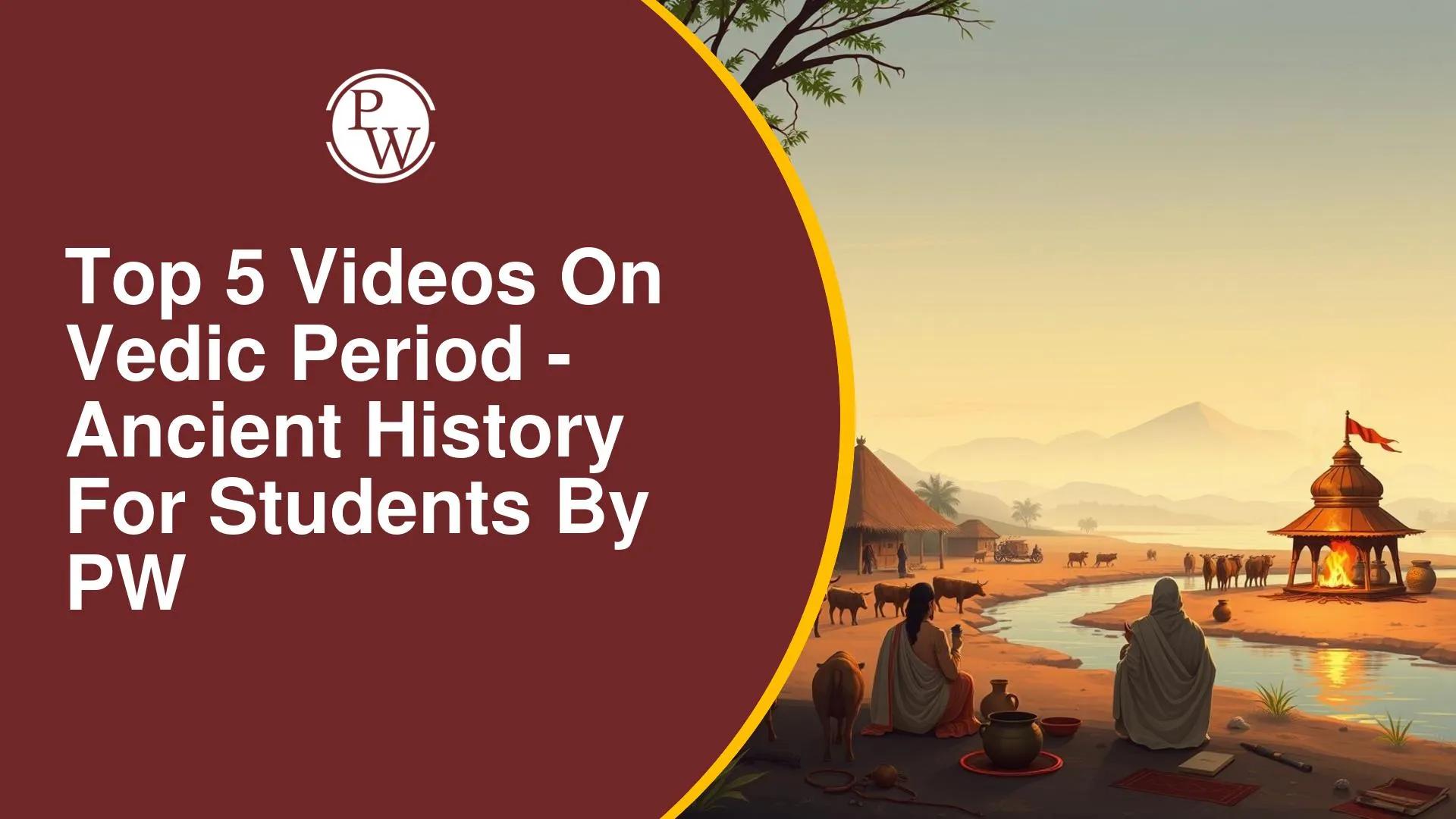
The Vedic Period is not just about remembering the four Vedas, important rivers or names of ancient tribes. You need to understand how political organisation, social divisions, economic activities and religious practices changed between the Early and Later Vedic phases. These developments also help you connect Ancient History topics with broader questions about the evolution of Indian society.
To make these concepts easier to revise, Physics Wallah offers video lessons covering the Vedic Age through NCERT explanations, comparative analysis, timelines and previous-year questions. Whether you are studying the chapter for the first time or revisiting it before a test, these five videos offer different ways to approach the topic for UPSC preparation.
Video 1: Build Your Vedic Age Foundation with Aryan Origins and NCERT Comparisons
The lecture introduces the wider historical timeline and the beginning of the Vedic Age before examining Aryan origins, language, economy and society. It explains the Rigvedic or Early Vedic Period and compares its political organisation, economy, social structure and religious practices with those of the Later Vedic Period. Vedic literature, including the Rigveda and Samaveda, also receives attention, along with philosophical developments and UPSC Prelims and Mains relevance.
Choose this video when you are building your initial notes or need to understand how the two Vedic phases differ. The NCERT-based explanation helps you connect historical developments and prepare factual as well as analytical answers.
Want to cover the complete Ancient History syllabus systematically? Check the UPSC syllabus
Video 2: Test Your Understanding of Early and Later Vedic Features Through PYQs
This lecture covers the complete Vedic Age, from the Early or Rig Vedic phase to the Later Vedic Period. It explains political structures, assemblies, tribes, warfare, economic activities, social conditions, women's position, religion, education, and rivers mentioned in the Rigveda and related texts. Period-wise comparisons, important historical terms, memory techniques and UPSC Previous Year Questions (PYQs) add a question-solving dimension to the lesson.
This video is useful when you have studied the basic concepts and want to test how well you can distinguish between the two periods. The PYQ discussion also helps you recognise important examination themes and practise factual recall.
How well do you understand the UPSC question pattern? Practise with PW UPSC Previous Year Question Papers to assess your preparation.
Video 3: Revise the Entire Vedic Period in One Sitting for Prelims
This one-shot lesson provides a Prelims-focused overview, beginning with the pre-Vedic timeline and advent of the Aryans before moving to the Early and Later Vedic phases. It covers polity, governance, society, Rigvedic references, important tribes, historical terms, major events, ancient texts and cultural developments. The connected revision sequence brings several important facts and concepts together in a single lesson.
Choose this video when you have already completed the chapter and need to revisit its important facts before a mock test or examination. It can help you revise key developments without studying each subtopic separately.
Looking for more opportunities to evaluate your Prelims readiness? Attempt PW UPSC Mock Tests under exam conditions.
Video 4: Trace Social and Cultural Evolution from Aryan Arrival to the Later Vedic Phase
This lecture brings together the Advent of the Aryans, the Vedic Period and the Later Vedic Phase through an integrated Ancient History discussion. Based on the relevant chapters of R.S. Sharma's text, it examines major historical developments, social changes and cultural evolution across these stages. Studying the connected chapters together helps you understand how different aspects of Vedic civilisation developed over time.
Use this lesson when you want to revise the chronological progression of the Vedic Age and understand the relationship between its different phases. It can also help you develop better connections while preparing analytical answers for GS Paper I.
Want to improve your Mains answer-writing approach? Read UPSC Mains Model Answers by PW
Video 5: Study Vedic Society and Political Organisation Through Hindi Explanations
This Hindi-medium lecture explains the Early and Later Vedic Periods through an NCERT-based discussion of society, political organisation, economy, religion and culture. It presents the two phases in an analytical sequence and connects their important concepts with UPSC, State PCS and other competitive examinations. The Hindi explanations can make historical terminology and comparisons easier to understand and recall.
Choose this lesson if you prefer studying Ancient History in Hindi or want another explanation of concepts that you find difficult. It is useful for revising the differences between the two phases and strengthening your understanding of Vedic society and culture.
The Vedic Period becomes easier to understand when you study its political, social, economic and religious developments together. These five PW videos offer different learning approaches, from NCERT-based concept building and PYQ practice to one-shot revision, chronological analysis and Hindi explanations. Combine them with regular note revision and question practice to strengthen your Ancient History preparation for UPSC Prelims and Mains.