







UPSC Civil Engineering Optional Subject Preparation for 2026
 Mishika Gupta26 May, 2026
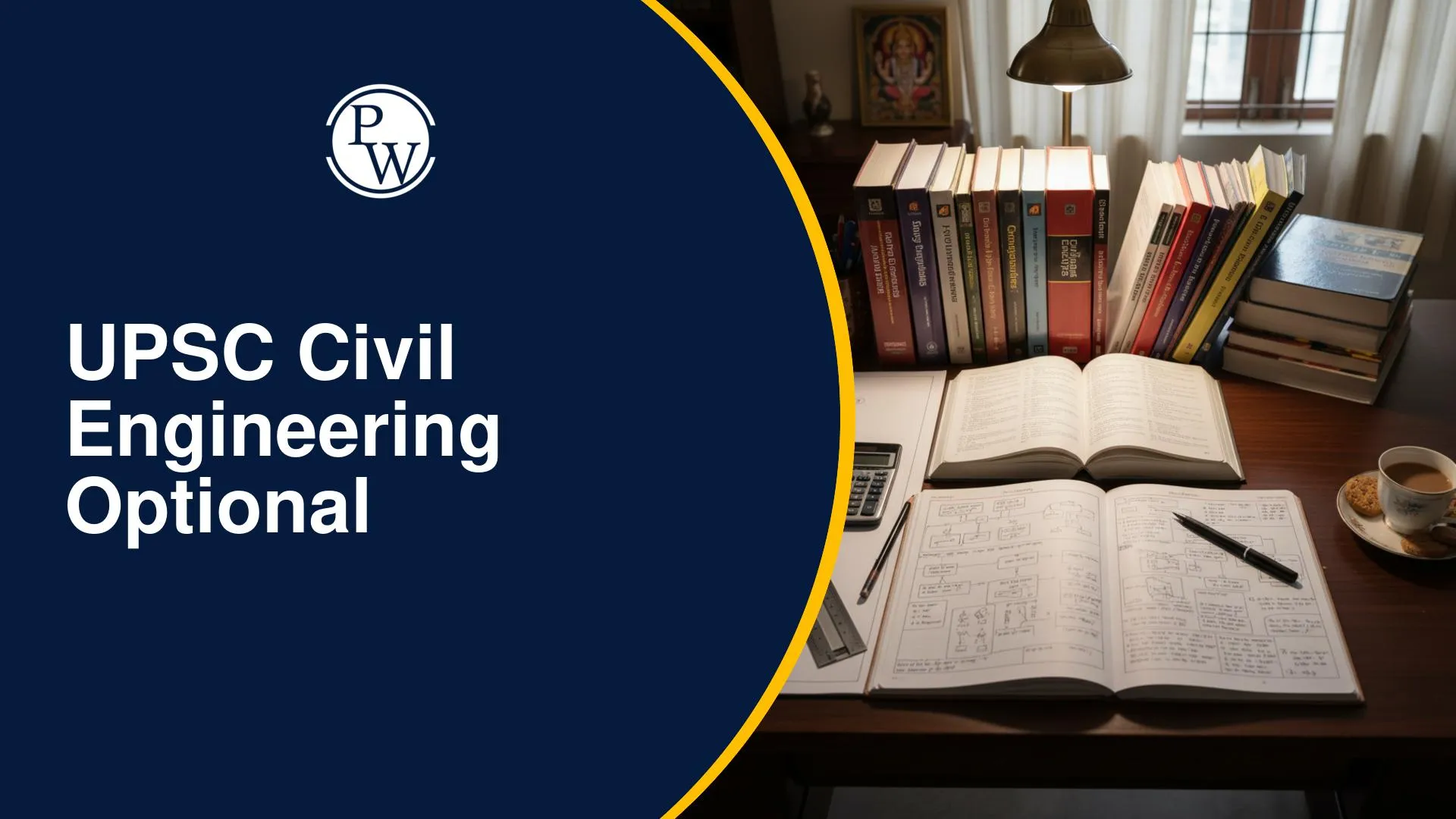
Civil Engineering Optional is a technical optional subject in UPSC Mains among aspirants from engineering backgrounds. The subject focuses on the practical and theoretical aspects of civil engineering, including structures, construction materials, transportation, hydrology, geotechnical engineering, and environmental systems.
The syllabus tests conceptual understanding, technical applications, and numerical problem-solving ability through two papers carrying a total of 500 marks. Aspirants preparing for UPSC Civil Engineering Optional 2026 should focus on strong fundamentals, regular numerical practice, engineering diagrams, and previous year question analysis for effective preparation.
UPSC Civil Engineering Optional Preparation Resources
Preparing for UPSC Civil Engineering Optional requires conceptual clarity, numerical practice, revision of engineering formulas, and understanding of technical applications. Below are some important preparation resources for the subject:
|
UPSC Civil Engineering Preparation Resources |
|
|
Topic |
Resources |
|
UPSC Civil Engineering Optional Syllabus |
View details |
|
UPSC Civil Engineering Optional PYQs |
View details |
UPSC Civil Engineering Optional Paper Pattern 2026
UPSC Civil Engineering Optional is conducted through two technical and descriptive papers in the Mains examination. Each paper carries 250 marks, making the total optional subject weightage 500 marks. Understanding the paper structure and topic distribution can help aspirants manage technical preparation more effectively.
|
UPSC Civil Engineering Optional Exam Pattern |
|
|
Subject |
Marks |
|
Civil Engineering Optional Paper I |
250 |
|
Civil Engineering Optional Paper II |
250 |
|
Optional Subject |
500 |
Why Choose UPSC Civil Engineering Optional?
Preparing for UPSC Civil Engineering Optional can be beneficial for aspirants who have an engineering background and interest in technical subjects. The subject focuses on engineering applications, numerical understanding, and conceptual problem solving.
Suitable for Engineering Background Students
Candidates from civil engineering and related technical backgrounds may find the subject more familiar because of the overlap with graduation-level concepts.
Focus on Technical and Numerical Concepts
The subject involves engineering calculations, technical understanding, and application-based questions from core civil engineering areas.
Useful for Conceptual Problem Solving
Civil Engineering Optional encourages analytical thinking and application of engineering principles in descriptive and numerical answers.
Covers Multiple Core Engineering Areas
The syllabus includes structural engineering, transportation, fluid mechanics, environmental engineering, and geotechnical engineering topics.
UPSC Civil Engineering Optional FAQs
What are the major engineering areas covered in UPSC Civil Engineering Optional?
Who should consider Civil Engineering Optional for UPSC Mains?
Is formula revision important in Civil Engineering Optional preparation?
What type of questions are asked in UPSC Civil Engineering Optional?


















Get Free Counselling Today
and Clear up all your Doubts
Get Free Counselling Today
and Clear up all your Doubts
 Live & recorded classes available at easeDashboard for progress trackingLakhs of practice questions

