







UPSC Topper 2025 AIR 42 Apurva Verma Success Story: How PW Supported Her Journey
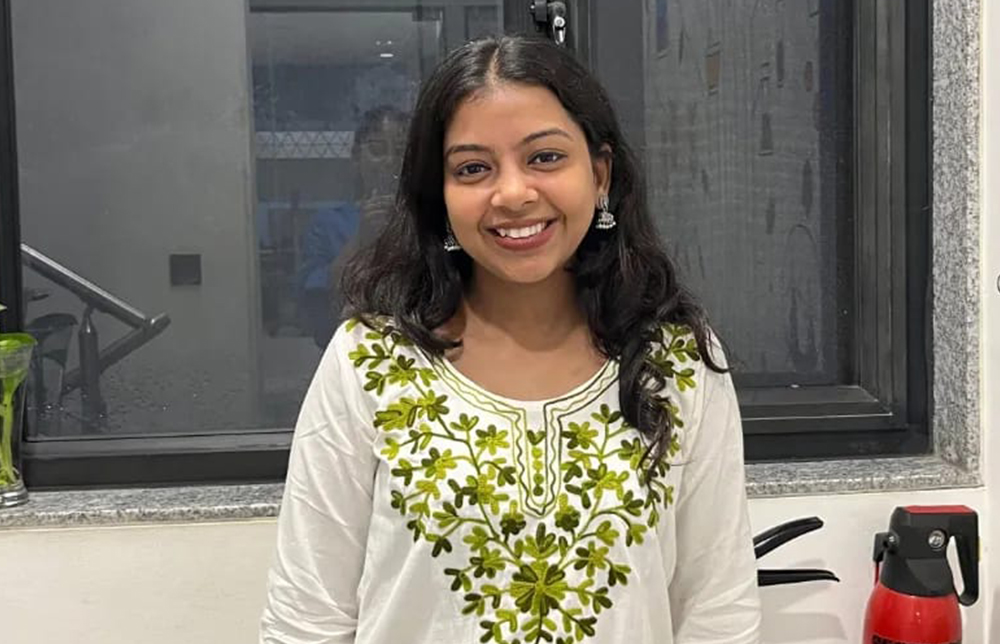
Securing a top rank in the UPSC Civil Services Examination after years of preparation requires consistency, adaptability, and the ability to continue learning even while managing professional responsibilities. For Apurva Verma, the journey continued even after she entered service.
As a working professional, she had limited time for dedicated preparation and initially found herself moving towards a comfort zone. However, encouragement from her then fiancé, family, friends, and department pushed her to appear for what she considered her final attempt. Along the way, PW’s concise online resources helped her revisit her foundation, stay updated with current affairs, and prepare for different stages of the examination.
How Apurva Continued Her UPSC Preparation While Working
By the time Apurva decided to appear for her final attempt, she was already working in service. This meant that preparation had to fit around professional responsibilities rather than happen in a full-time study environment.
The encouragement she received from people around her helped her move past that hesitation and approach the attempt with renewed determination.
For Apurva, the knowledge and preparation accumulated over the years remained a source of motivation. Rather than seeing her previous preparation as complete, she viewed it as a foundation that could still be strengthened. Her family and friends also encouraged her not to settle into her comfort zone, while her department supported her with leave during the preparation period.
Apurva Verma’s Preparation With PW Across Every Stage
Since Apurva was already working and had covered her basic foundation, she needed resources that could help her revise concepts and stay updated within a limited amount of time. This is where she found PW’s online resources useful.
She had been following PW’s Prelims Booster and Editorial Discussion content for several years and continued using PW resources for her final attempt.
“PW ke saath, I think quite a lot of time — pehle main initially Sumit sir ke jab Prelim Booster aur Editorial Discussion ke videos aate the, to I have been following it since last seven-eight years I guess, since when I started. Aur is saal bhi Prelims, Mains, interview har stage pe, kyunki I am a working person and PW ke jo online resources hain, they are crafted in that way ki ek bahut short span of time mein you can revisit things if you have covered your basics.”
Her preparation involved multiple PW resources across the examination stages. For Prelims, she followed marathon videos, while for Mains she used the Srijan Mains Program, Essay Program, and Prahar booklets. At the interview stage, she used the IGP program.
How Apurva Verma Used Prahar and Mains Resources
The limited time between Prelims and Mains made resource selection especially important for Apurva. Instead of using multiple sources for the same subject, she preferred to select one resource and revise it repeatedly.
“And for that matter maine PW Prahar ke booklets jo the aapke, kaafi crisp the. To ab hota kya hai jab hum service mein hote hain ya phir hum jab current affairs se utne updated nahi hote hain, then hamaare dimaag mein wo factor chalta rehta hai ki you know we are falling back as compared to others. But your material usme I think everything was covered and up to dated, to usne bada easy kar diya.”
She used the PW Prahar booklets for subjects such as Governance and Internal Security and focused on multiple revisions rather than constantly switching between resources. She also attempted the Mains test series and tried to implement the feedback she received.
Apurva Verma’s Strategy for Prelims and CSAT
For aspirants preparing for Prelims, Apurva emphasised strengthening static subjects, revising them multiple times, and solving previous years’ questions. She also highlighted the importance of test practice and becoming comfortable with the actual examination environment.
Her advice was particularly practical because she had experienced the difference between preparing in a comfortable setting and writing the actual examination under different conditions.
For CSAT, she recommended identifying manageable areas, strengthening the basics, and practising accordingly rather than attempting to master every difficult topic.
“To aap online resources use kariye, syllabus nikaaliye, identify kariye ki kahan se questions hain jo doable hain unko focus kariye. Jo tough waale parts hain — suppose Permutation, Combination, Probability kaafi tough hai, vast bhi hain — to uski aap ek basic practice rakhiye. But jo easy topics hain unko identify kariye aur unko master kariye ki wahan se agar koi bhi question banta hai to I will be able to do.”
Her strategy centred on prioritising achievable areas while maintaining enough practice to handle the demands of the examination.
Apurva Verma’s Approach to Revision, Tests and Essay Preparation
Apurva also highlighted the importance of treating Essay preparation as an integral part of Mains rather than leaving it for later. She recommended giving it equal importance and using feedback and mentorship to identify gaps that aspirants may not recognise themselves.
“Jo Mains ki PW test series aati hai wo likhi maine, unmein jo mujhe feedback mila usko implement karne ka try kiya. And also I would like to say Essay — Essay ko kabhi-kabhi hum thoda back burner pe daal dete hain, but it should not be because it can be game changing.”
Her preparation therefore went beyond simply consuming study material. Writing tests, reviewing feedback, revising selected resources, and working on Essay helped her make the preparation process more structured.
She also pointed towards mentorship as a way of identifying recurring problems when an aspirant is unable to objectively assess their own preparation.
Apurva Verma’s Result and Her Message for Aspirants
After years of preparation, including a phase where she had already entered service, Apurva finally saw her name on the first page of the UPSC result PDF with AIR 42.
The result was especially meaningful because this was the attempt she had once considered difficult to pursue due to work responsibilities and the pressure of returning to the preparation cycle.
Her experience shows that entering service or facing professional responsibilities does not necessarily have to mark the end of an aspirant’s UPSC journey. A strong foundation, focused resources, repeated revision, test practice, and the willingness to continue working on gaps can make preparation more manageable.
For aspirants, Apurva’s journey offers a realistic reminder that preparation does not always happen under ideal circumstances. What matters is making the available time productive, choosing resources carefully, and continuing to work towards the goal even when the journey takes longer than expected.





Get Free Counselling Today
and Clear up all your Doubts
 Live & recorded classes available at easeDashboard for progress trackingLakhs of practice questions

