







World Refugee Day 2026 – Theme, History, Significance, Objectives, and UPSC PYQs
 Aashutosh Dwivedi11 Jun, 2026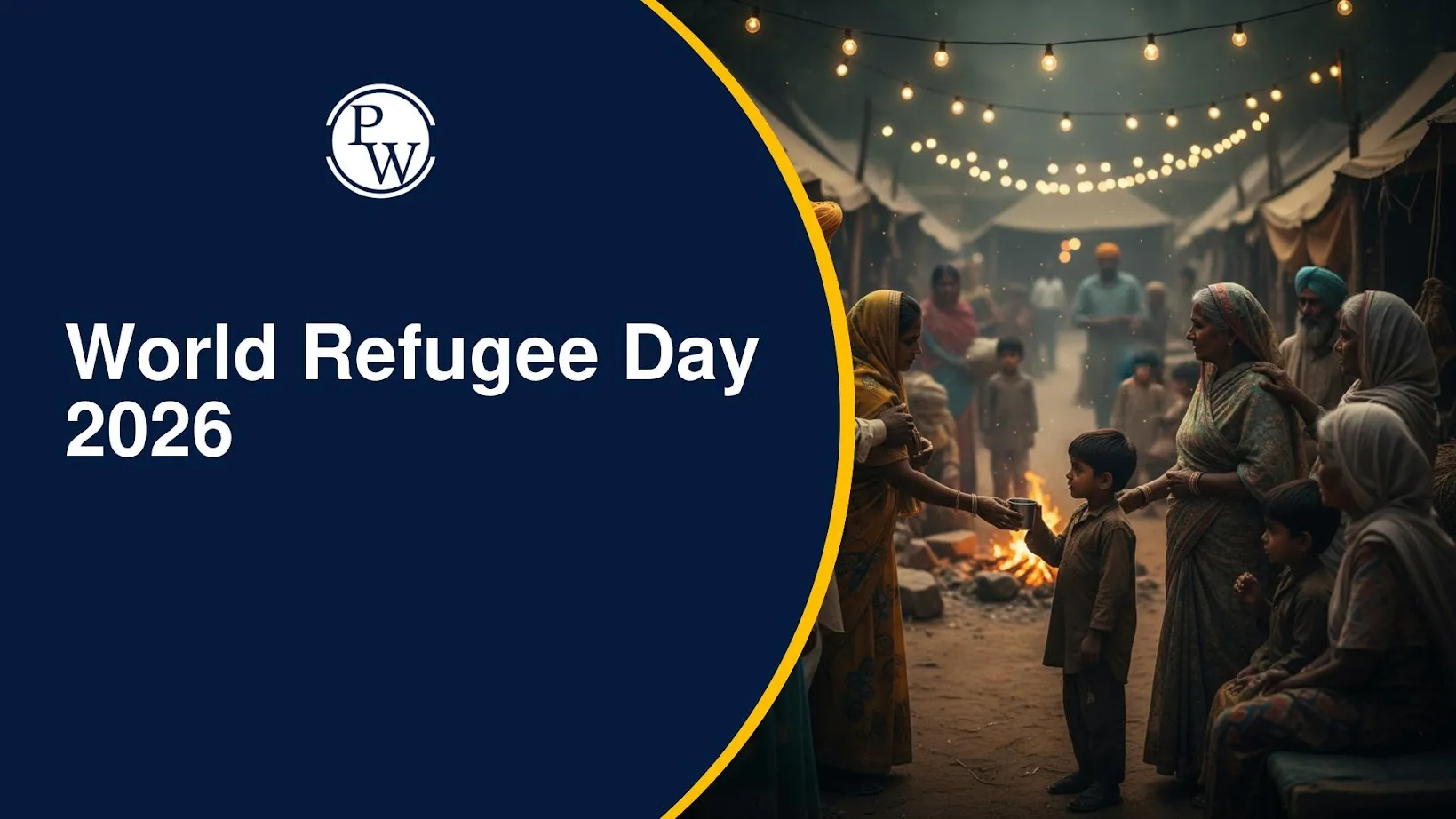
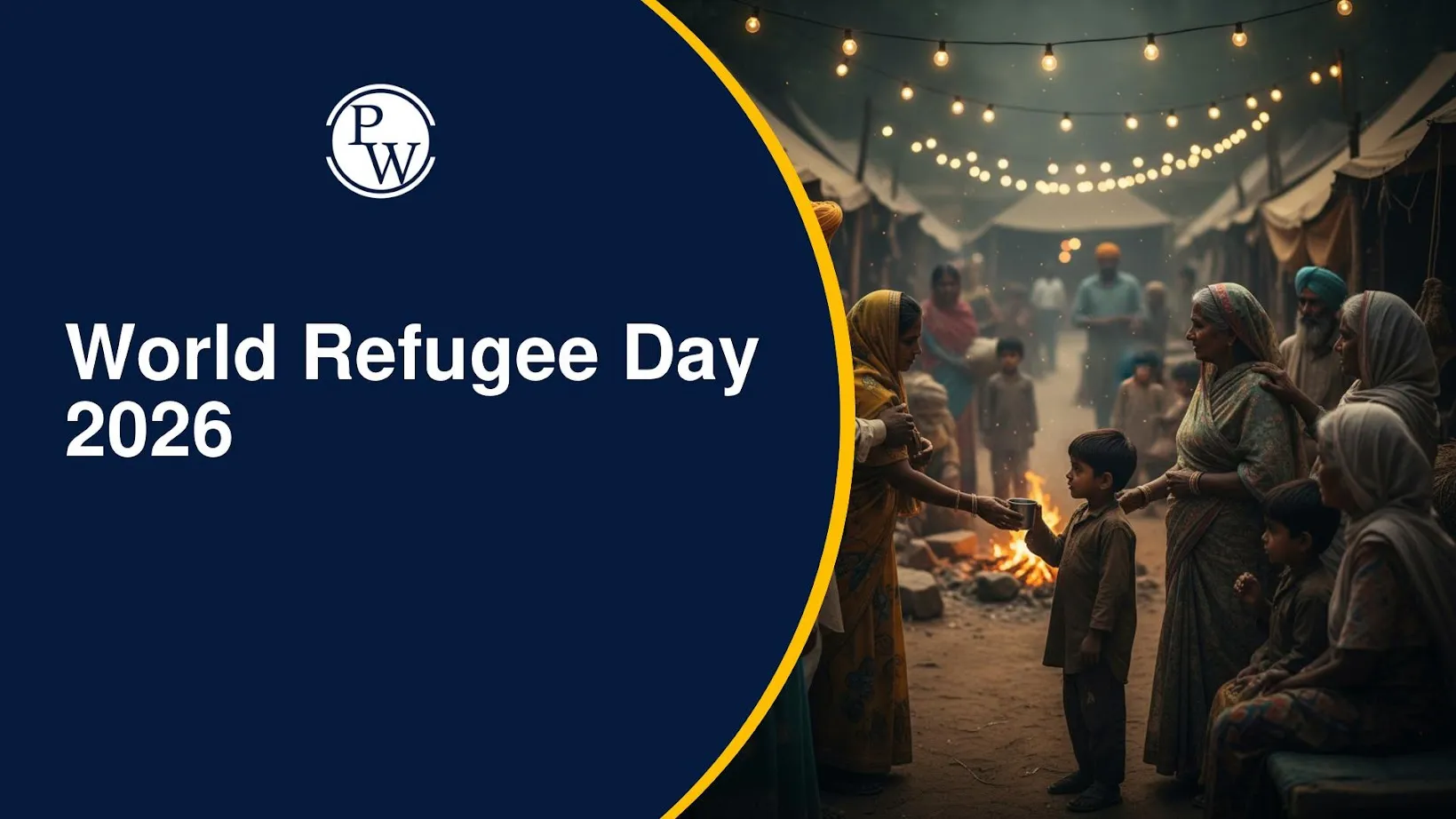
The day raises awareness about refugee rights, forced displacement, and the challenges faced by asylum seekers and stateless persons, while emphasizing international solidarity and humanitarian assistance. The official World Refugee Day Theme 2026 will be updated once announced.
This topic is relevant for UPSC IAS preparation, covering General Studies Paper II (International Relations and Social Justice), Paper I (Society), and Prelims.
Understanding Refugees and Related Terms
Refugees and displaced populations face complex challenges worldwide. Understanding the definitions and distinctions between refugees, asylum seekers, IDPs, and stateless persons is essential to grasp global displacement trends, humanitarian needs, and the significance of international protection frameworks.
-
Refugee Meaning: Individuals forced to leave their country due to a well-founded fear of persecution based on race, religion, nationality, social group membership, or political opinion.
-
Asylum Seekers: People applying for recognition as refugees in a foreign country.
-
Internally Displaced Persons (IDPs): Individuals forced to flee within their own country.
-
Stateless Persons: People without recognized nationality, often denied basic rights such as healthcare, education, and employment.
-
Returnees: Former refugees returning to their home countries, requiring reintegration support.
History of World Refugee Day
World Refugee Day was designated by the United Nations General Assembly in 2000 and first observed globally on 20 June 2001, marking the 50th anniversary of the 1951 Refugee Convention.
The day was created to honour the courage and resilience of refugees worldwide and raise awareness about the challenges faced by displaced populations. It recognizes the contributions of refugees to societies and emphasizes international solidarity and responsibility-sharing. Over the years, World Refugee Day has become an important platform to highlight forced displacement, refugee rights, humanitarian assistance, and the global efforts of organizations like UNHCR to protect and support displaced communities.
Global Refugee Statistics (2025)
Understanding the scale of displacement highlights the urgency of humanitarian action. Recent UNHCR data show millions of refugees, IDPs, and stateless persons worldwide, demonstrating the scope of global forced displacement and the need for coordinated international support.
-
Total forcibly displaced people: 117.3 million
-
Refugees: 36.4 million
-
Internally Displaced Persons: 73.5 million
-
Asylum Seekers: 8.4 million
-
Stateless persons: 4.4 million
-
Children under 18: 49 million (40% of displaced population)
-
Low- and middle-income countries host 71% of refugees, with Least Developed Countries providing asylum to 25% of the total
-
Major displacement situations: Sudan (13.4 million)
-
66% of refugees live in countries neighbouring their origin.
Refugees in India
India hosts refugees from Tibet, Sri Lanka, Afghanistan, Myanmar, and other regions, providing temporary protection and basic rights under domestic law despite not being a signatory to the 1951 Refugee Convention.
NGOs and UN agencies play a crucial role in offering humanitarian assistance, education, and livelihood support. However, challenges remain due to the absence of comprehensive domestic refugee legislation, which sometimes results in inconsistent or arbitrary treatment of asylum seekers.
Objectives of World Refugee Day
World Refugee Day aims to highlight the struggles, resilience, and contributions of refugees and displaced populations worldwide. It seeks to raise awareness about forced displacement, promote refugee rights, encourage humanitarian assistance, and foster international cooperation through organizations like UNHCR, ensuring safety, dignity, and protection for all affected communities.
-
Honour Refugees’ Courage and Resilience: Recognizes the bravery of those who flee persecution, conflict, or disasters and acknowledges their ability to rebuild lives in new environments.
-
Raise Awareness About the Refugee Crisis: Educates the public on the scale of forced displacement globally, including the challenges faced by internally displaced persons, asylum seekers, and stateless persons.
-
Promote Refugee Rights: Advocates adherence to international laws, such as the 1951 Refugee Convention, ensuring protection, access to education, work, healthcare, and freedom of movement.
-
Encourage Humanitarian Assistance: Highlights the role of governments, UN agencies, and NGOs in providing shelter, food, education, and medical care to displaced populations.
-
Foster International Cooperation: Urges countries to share responsibility for refugees, support host communities, and implement fair asylum systems.
-
Support Safe and Dignified Living Conditions: Stresses that displaced persons should be able to live without fear, rebuild communities, and access basic needs while in exile.
-
Highlight Global Displacement Issues: Draws attention to the interconnection between conflict, climate hazards, and forced migration, and the need for sustainable solutions in line with migration and refugees policies.
Legal Framework and Refugee Rights
Refugee Convention 1951 & 1967 Protocol: Defines who is a refugee and sets minimum standards for treatment.
-
Protection against refoulement (return to danger)
-
Right to work, education, housing, and public relief
-
Freedom of movement and religion
-
Access to courts and identity/travel documents
Ensures displaced populations can live with dignity while in host countries.
Role of UNHCR and International Agencies
Organizations like UNHCR and IOM play a vital role in supporting refugees and displaced persons through emergency relief, resettlement programs, advocacy, and access to education, shelter, and livelihoods worldwide.
-
UNHCR: Provides emergency relief, resettlement programs, and advocacy for displaced populations.
-
IOM (International Organization for Migration): Supports migration management and protection of forced migrants.
-
NGOs work on education, healthcare, and shelter for refugees and asylum seekers.
-
These coordinated efforts aim to stabilize lives and enable voluntary, safe return when conditions allow.
UPSC Previous Year Questions and Practice Questions
The topic of World Refugee Day 2026 is relevant for UPSC exams. The previous year questions focus on refugee protection, ethical responsibility, and India’s policies. Aspirants are asked to critically analyze issues like forced displacement, asylum seekers, and the absence of comprehensive domestic refugee laws, referencing international conventions and UNHCR frameworks.
UPSC PYQ
Mains Practice Question
UPSC LAW Optional Syllabus FAQs
What is the theme for World Refugee Day 2026?
How many forcibly displaced people are there worldwide?
What are the rights of refugees under the 1951 Refugee Convention?
Who are the stateless persons?
How does India support refugees?










 Live & recorded classes available at easeDashboard for progress trackingLakhs of practice questions

