







World Wind Day 2026 – Theme, History, Significance, Objectives, and UPSC PYQs
 Aarti .8 Jun, 2026
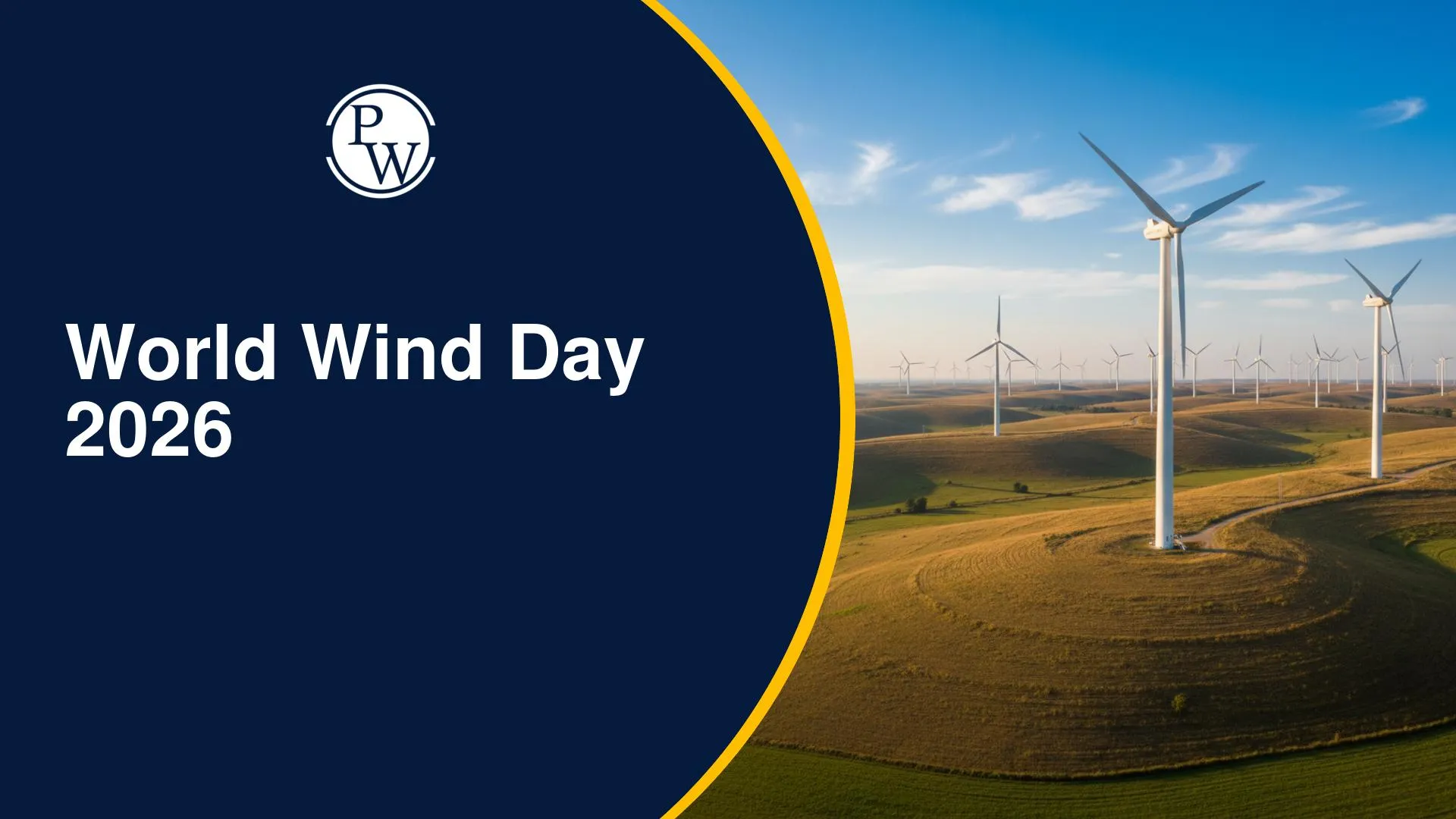
World Wind Day 2026 is observed annually on 15 June to raise awareness about the importance of wind energy as a clean, renewable, and sustainable source of power. The day is jointly organized by the Global Wind Energy Council (GWEC) and WindEurope to promote public understanding of wind power and its role in achieving global climate goals.
World Wind Day highlights how wind energy contributes to reducing greenhouse gas emissions, improving energy security, and accelerating the transition towards sustainable development. It also serves as a platform to showcase innovations in onshore and offshore wind technologies and encourage governments to invest in renewable energy infrastructure.
The World Wind Day Theme 2026 has not yet been officially announced. Once released by the organizers, it will be updated accordingly.
This topic of ‘World Wind Day 2026’ is important from the perspective of the UPSC IAS Examination, falling under General Studies Paper III (Environment, Energy Resources, Climate Change and Sustainable Development), and Prelims.
What is World Wind Day?
World Wind Day is a global awareness campaign dedicated to highlighting the potential of wind energy in addressing the world's growing energy demands while reducing dependence on fossil fuels.
The observance aims to:
-
Promote awareness about wind energy and its benefits.
-
Encourage the adoption of renewable energy sources.
-
Highlight technological advancements in wind power generation.
-
Support efforts to combat climate change.
-
Promote sustainable and low-carbon economic growth.
The day is celebrated through conferences, exhibitions, educational campaigns, community outreach programs, and discussions on renewable energy policies across different countries.
History of World Wind Day
World Wind Day originated as a European initiative organized by the European Wind Energy Association, which later became WindEurope. Key milestones include:
|
Year |
Development |
|
2007 |
First Wind Day celebrated in Europe |
|
2009 |
Global Wind Energy Council (GWEC) joined the initiative |
|
2009 onwards |
Expanded into a worldwide event known as World Wind Day |
|
Present |
Celebrated in dozens of countries through public awareness campaigns and renewable energy events |
Over the years, the observance has evolved into an important platform for discussing clean energy transitions and climate commitments.
World Wind Day Theme 2026
The World Wind Day Theme 2026 has not yet been officially announced by WindEurope and the Global Wind Energy Council (GWEC). Every year, the theme focuses on a specific aspect of wind energy, such as:
-
Energy transition
-
Climate action
-
Renewable energy adoption
-
Sustainable development
-
Green innovation
The official theme will be updated once released.
Significance of World Wind Day 2026
World Wind Day has become increasingly important as countries work toward achieving climate targets and reducing carbon emissions.
Promotes Clean Energy
Wind energy generates electricity without burning fossil fuels, helping reduce greenhouse gas emissions and air pollution.
Supports Climate Change Mitigation
The expansion of wind power contributes significantly to global efforts aimed at limiting global warming and achieving net-zero emissions.
Enhances Energy Security
Countries can reduce dependence on imported fossil fuels by increasing domestic wind power generation capacity.
Encourages Sustainable Development
Wind energy creates jobs, supports local economies, and contributes to sustainable industrial growth.
Advances Global Climate Commitments
The expansion of wind energy supports international agreements such as the Paris Climate Agreement and Sustainable Development Goals (SDGs).
Objectives of World Wind Day 2026
World Wind Day aims to raise awareness about the benefits of wind energy and encourage its adoption as a sustainable solution for meeting global energy needs.
The key objectives of World Wind Day include:
-
Increasing awareness about wind energy.
-
Promoting renewable energy adoption.
-
Encouraging investments in sustainable energy projects.
-
Supporting climate action initiatives.
-
Highlighting innovations in wind power technologies.
-
Educating citizens about clean energy benefits.
-
Strengthening international cooperation on renewable energy development.
World Wind Day 2026 highlights the growing importance of wind energy in achieving sustainable development and combating climate change. As countries accelerate their clean energy transitions, wind power is emerging as a crucial pillar of global energy security. For India, continued investment in wind infrastructure, policy support, and technological innovation will play a vital role in meeting renewable energy targets and building a low-carbon future.
Wind Energy in the World
Wind energy has emerged as one of the fastest-growing renewable energy sources globally, playing a crucial role in reducing greenhouse gas emissions and accelerating the transition towards clean energy. Countries across Europe, Asia, and the Americas are increasingly investing in onshore and offshore wind projects to enhance energy security, achieve climate targets, and support sustainable economic growth. According to recent global wind energy reports:
-
Global installed wind power capacity has crossed one terawatt (1000 GW).
-
Wind energy contributes significantly to electricity generation in countries such as China, the United States, Germany, India, Spain, and the United Kingdom.
-
Offshore wind energy is emerging as a major growth area due to higher wind speeds and greater generation potential.
Major Benefits of Wind Energy
-
Zero fuel cost
-
Low operating expenses
-
Reduced carbon emissions
-
Energy diversification
-
Long-term sustainability
The growing adoption of wind power demonstrates its importance in the global transition toward renewable energy.
Wind Energy in India
India is one of the world's leading producers of wind energy and ranks among the top countries in installed wind power capacity.
Current Status
India has developed a strong wind energy sector over the last two decades, supported by government policies and private-sector investment.
Major wind energy-producing states include:
-
Tamil Nadu
-
Gujarat
-
Karnataka
-
Maharashtra
-
Rajasthan
-
Andhra Pradesh
Importance of Wind Energy in India
-
Supports India's renewable energy targets.
-
Reduces dependence on coal-based power generation.
-
Enhances energy access in remote areas.
-
Contributes to climate change mitigation goals.
The country continues to expand both onshore and offshore wind energy projects to meet its growing electricity demands.
Government Initiatives for Wind Energy in India
The Government of India has launched several initiatives to strengthen the wind energy sector.
National Wind-Solar Hybrid Policy
Promotes the integration of wind and solar power projects to improve efficiency and grid stability.
Offshore Wind Energy Development
India is exploring offshore wind energy potential along the coasts of Gujarat and Tamil Nadu.
Renewable Purchase Obligations (RPO)
Power distribution companies are encouraged to purchase a certain percentage of electricity from renewable energy sources.
Green Energy Corridor
Developed to improve transmission infrastructure for renewable energy integration.
Production-Linked and Investment Incentives
Various policy measures encourage private sector participation and investment in renewable energy projects.
These initiatives support India's transition toward a cleaner and more sustainable energy system.
What are the Challenges in Wind Power Generation?
Despite its immense potential as a clean and renewable energy source, wind power generation faces several technical, economic, environmental, and infrastructural challenges. Addressing these issues is essential to enhance efficiency, expand capacity, and strengthen the role of wind energy in achieving sustainable development and climate goals.
Intermittent Nature of Wind
Wind availability varies by season and geography, affecting power generation consistency.
Land Acquisition Issues
Large-scale wind projects require substantial land resources.
Grid Integration Challenges
Renewable energy integration requires advanced transmission infrastructure and storage systems.
High Initial Investment
Wind projects involve significant upfront capital expenditure.
Offshore Infrastructure Requirements
Offshore wind farms require specialized technology and substantial investments.
Addressing these challenges is essential for expanding wind energy capacity in India and globally.
UPSC Previous Year Questions and Practice Questions
UPSC PYQ
Mains Practice Question
World Wind Safety Day 2026 FAQs
Who organizes World Wind Day?
What is the theme of World Wind Day 2026?
Why is wind energy important?
Which Indian states lead in wind power generation?
What is offshore wind energy?







Get Free Counselling Today
and Clear up all your Doubts
 Live & recorded classes available at easeDashboard for progress trackingLakhs of practice questions

