







NEET CBT Mode 2027: How PW Vidyapeeth Prepares You for the New Exam Pattern
NEET-UG 2027 is expected to shift from pen-and-paper to Computer-Based Test (CBT) mode, as per the Education Ministry's announcement. The syllabus is expected to stay the same. PW Vidyapeeth offers CBT mock tests and mentoring to help students adapt.

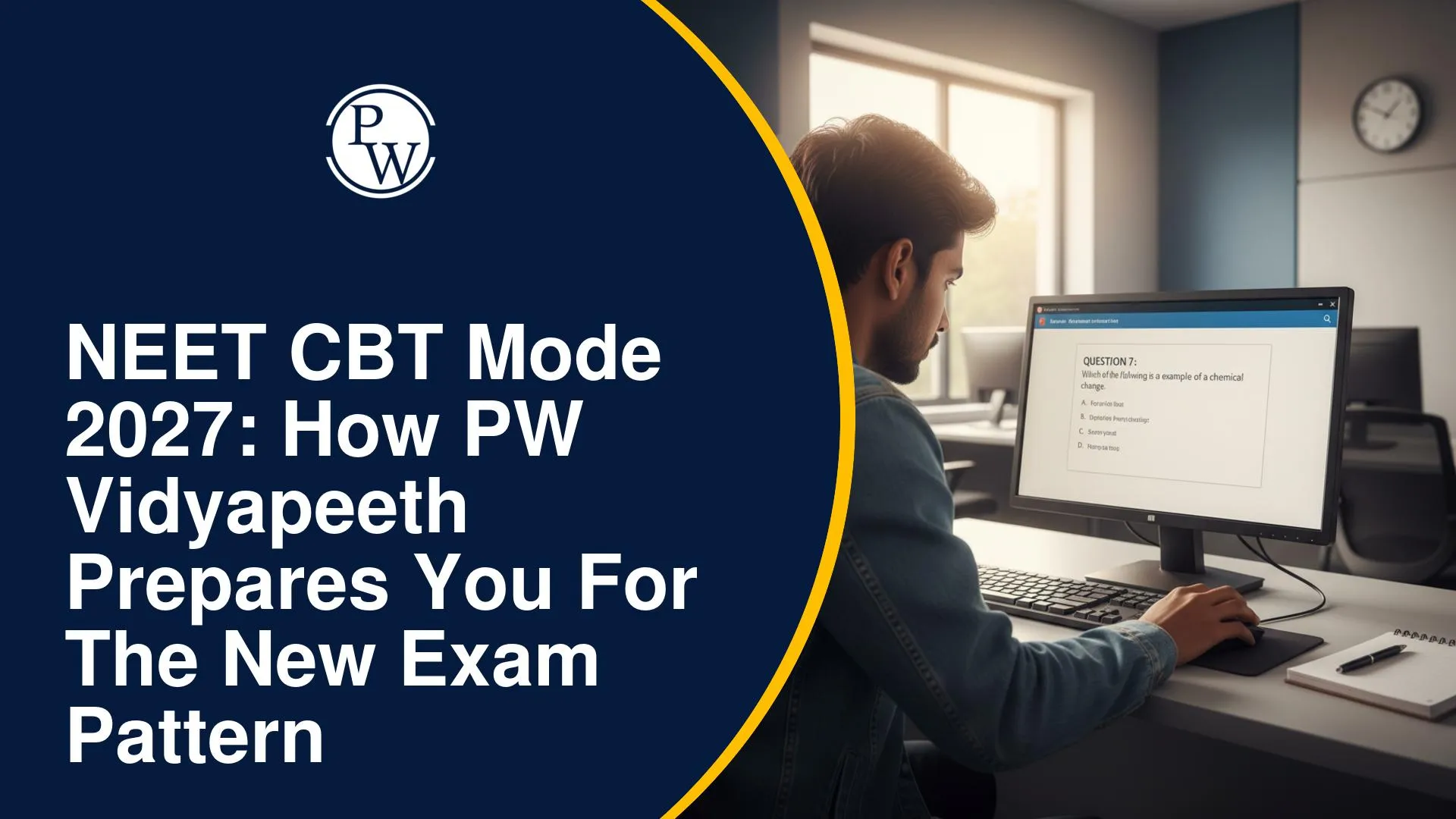
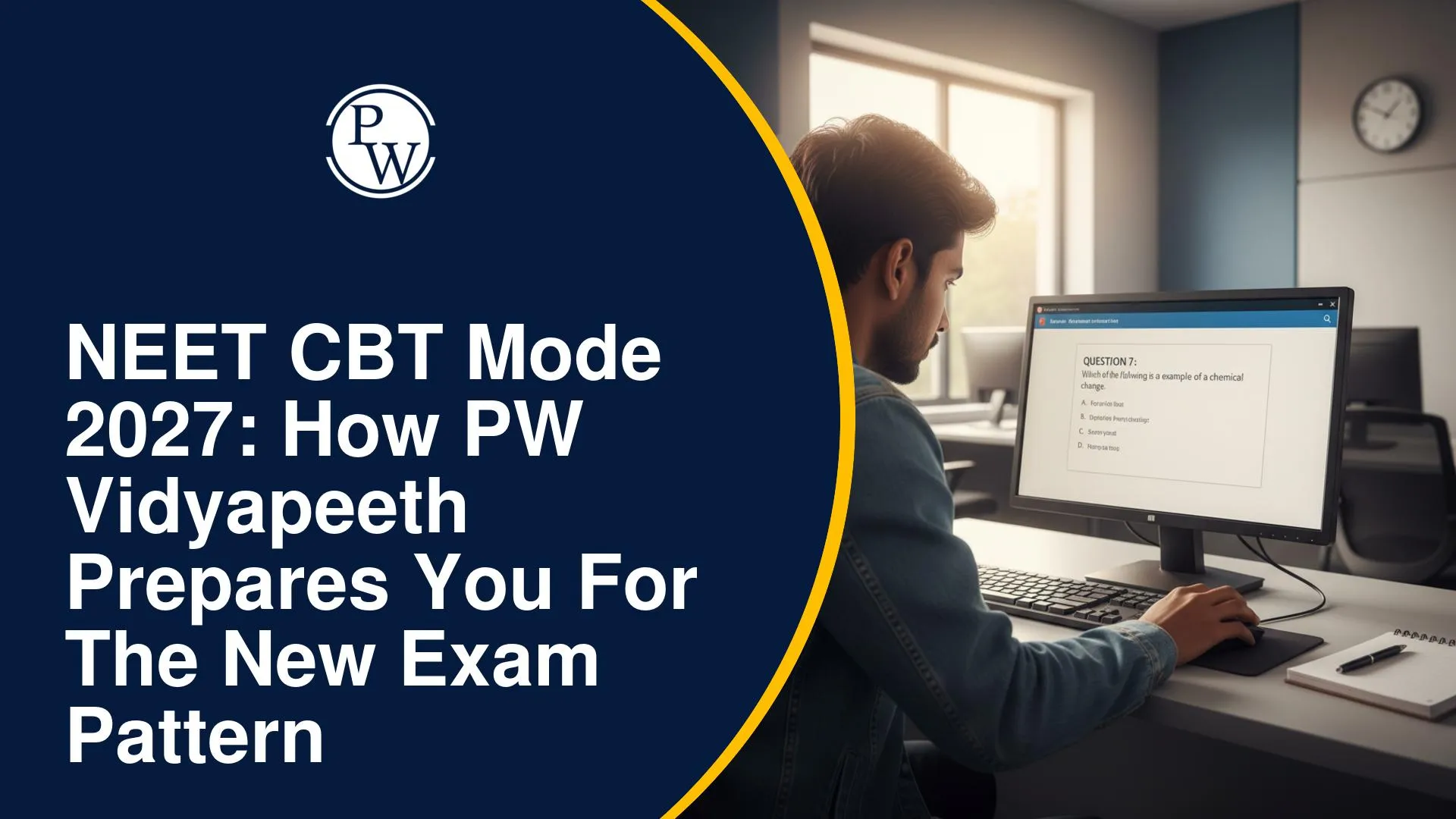
Starting with the 2027 exam cycle, NEET-UG is expected to move from the traditional OMR format to a Computer-Based Test (CBT). Although the syllabus is expected to remain unchanged, students will need to adapt to a different exam experience.
This guide explains the proposed CBT pattern, key changes, preparation strategies, and how PW Vidyapeeth supports students through CBT-style practice and mentoring.
What Is the NEET CBT Mode 2027?
NEET CBT Mode 2027 refers to the proposed shift of the NEET-UG exam from the old pen-and-paper OMR system to a Computer-Based Test. Students are expected to answer questions on a computer at their exam centre instead of filling bubbles on paper.
Union Education Minister Dharmendra Pradhan announced on May 15, 2026, that NEET-UG is expected to shift to CBT mode from the 2027 exam cycle. The National Testing Agency (NTA) has also informed the Supreme Court about this proposed change.
However, the full information bulletin with exact shift timings and city details is still awaited, so students should keep checking official NTA notifications for the final confirmed pattern.
Also Check:
- Re NEET Final Answer Key 2026 Out: Prepare for Counselling with PW VP
- From Re-Exam to Results: How 11.21 Lakh Students Qualified NEET UG 2026
- State-wise & Category-wise Toppers in NEET UG 2026 – Full Breakdown
NEET CBT Mode 2027 – Latest Update
The proposed NEET exam pattern reform came up after the NEET-UG 2026 paper leak, which led to a re-exam. A panel called the Radhakrishnan Committee, formed after an earlier 2024 leak, found that the paper-based OMR format was a major weak point behind repeated leaks.
Based on this, the committee is understood to have recommended a shift to computer-based test formats, similar to how JEE Main already works. Here are the key points every student should know:
-
The NEET 2026 re-exam, held on June 21, 2026, stayed in the traditional pen-and-paper format.
-
The NEET 2027 CBT mode is expected to begin only from the 2027 exam cycle onward.
-
More than 22 lakh students appear for NEET every year, so the exam may be expected to run in around 20 shifts.
-
A percentile-based normalisation process is expected to be used to keep scoring fair across different shifts, similar to the method already used for JEE Main.
Also check : PW NSAT 2026: JEE/NEET/Foundation Scholarship
Expected NEET CBT Exam Pattern for 2027
Under the proposed NTA NEET 2027 CBT mode, questions are expected to appear directly on a computer screen instead of a printed booklet. Students would select answers using a mouse or keyboard rather than filling an OMR sheet.
Expected features of the new NEET exam pattern include:
-
A countdown timer visible on the screen
-
A colour-coded question palette showing Answered, Not Answered, and Marked for Review status
-
"Save & Next" and "Mark for Review" buttons for smooth question navigation
-
A final review-and-submit screen before the exam ends
-
A physical rough sheet for calculations, since Biology, Physics, and Chemistry sums cannot be worked out on-screen
The exam is expected to still carry 180 compulsory questions for 720 marks, covering Physics, Chemistry, Botany, and Zoology, with +4 marks for a correct answer and -1 for a wrong one. These numbers are based on the current pattern and may be confirmed later by NTA.
NEET CBT Mode 2027 vs Pen-and-Paper Mode
The details below show the main differences between the two formats.
|
Feature |
CBT Mode |
Pen & Paper Mode |
|
Mode of Exam |
Computer-Based |
OMR Sheet |
|
Answer Submission |
Online, using mouse/keyboard |
Bubble Filling |
|
Navigation |
Screen-Based question palette |
Printed Booklet |
|
Question Review |
Digital "Mark for Review" |
Manual |
|
Time Tracking |
On-screen Timer |
Wall Clock |
Why Is NTA Introducing CBT Mode for NEET 2027?
The main goal behind the NEET online exam shift is better exam security. Printed question papers must be printed, transported, and stored at thousands of centres, and each of these steps creates a chance for leaks. A computer-based test is expected to remove most of these risks since papers would be delivered digitally instead.
Other expected benefits include:
-
Faster result processing
-
Reduced errors from OMR sheet mistakes
-
A more standardised and transparent testing experience
-
Better exam-day management for the NTA
Editorial Note: These are the commonly cited reasons behind this reform. Students should refer to official NTA notifications for confirmed implementation details.
Challenges of the Proposed NEET CBT Mode
Moving to a computer-based test is expected to bring some real challenges, especially for first-time computer users. Common concerns raised include:
-
Screen fatigue after reading many questions for over three hours
-
Limited computer exposure for students from rural areas
-
Trouble reading long Biology passages without underlining on paper
-
Getting used to on-screen time management instead of a wall clock
-
Staying calm during the exam if there is any technical delay
These challenges are real, but they can be reduced with steady, early practice on computer-based mock tests.
How to Prepare for NEET CBT Mode 2027
Since the method of attempting the exam is changing, NEET CBT preparation should now include screen-based practice, not just book study. Aspirants should:
-
Take regular CBT mock tests to get used to reading on-screen
-
Practice using a computer at least a few times every week
-
Learn to use the "Mark for Review" and "Save & Next" features confidently
-
Continue revising NCERT textbooks, since the syllabus itself is not changing
-
Review mock test results carefully to fix weak areas
-
Try the NTA Abhyas app for free CBT-style practice
Essential Skills Every NEET 2027 Aspirant Should Develop
Along with subject knowledge, students should build the following skills for NEET CBT Mode 2027:
-
Comfort with reading and solving questions on a screen
-
Fast, confident decision-making under time pressure
-
Strong time-management habits across all three subjects
-
Accuracy while working quickly
-
The habit of analysing mock test performance regularly
-
Calmness and stress management on exam day
How PW Vidyapeeth Helps Students Prepare for NEET CBT Mode
PW Vidyapeeth is helping students get ready for this expected shift well before the official exam date. Their NEET online practice test sessions are designed to match the expected look and feel of the CBT interface, so nothing feels new on exam day.
Support offered by PW Vidyapeeth includes:
-
CBT-style mock tests that copy the real exam screen
-
Regular computer-based practice sessions
-
Full digital exam simulations under timed conditions
-
Guidance from experienced faculty on every subject
-
Detailed performance analytics after each test
-
Personalised mentoring for students who need extra support
-
Time-management workshops to reduce screen fatigue
-
Regular revision tests to keep the syllabus fresh
Students preparing for NEET 2027 can visit their nearest PW Vidyapeeth centre to experience CBT-style mock exams, receive dedicated mentoring, and build confidence for the expected computer-based exam environment.
NEET CBT Mode FAQs
Is NEET 2027 going to be conducted in CBT mode?
What is the NEET CBT exam pattern?
How is CBT different from the OMR-based exam?
Will the NEET 2027 syllabus change because of CBT mode?





Get Free Counselling Today
and Clear up all your Doubts
 Live & recorded classes available at easeDashboard for progress trackingLakhs of practice questions

