
ACCA Capital Structure and Finance Costs Notes by PW
 Mehjabeen Hussain31 Oct, 2026

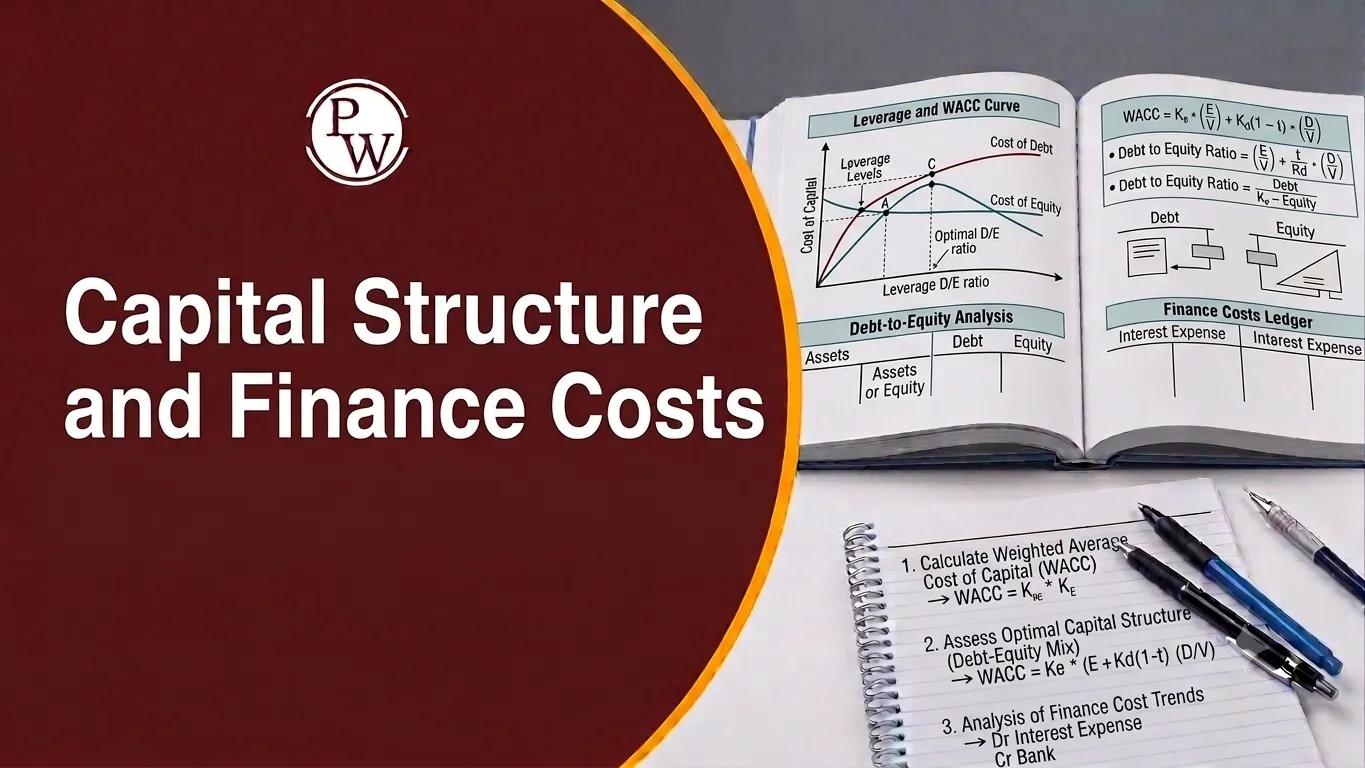
A company's capital structure shows the different forms of finance used to fund its activities. Equity financing includes share capital, while debt financing can include borrowings and loan notes. The terms attached to different types of shares and borrowings determine how they are treated in financial statements.
The Capital Structure and Finance Costs ACCA PDF by PW brings these concepts together with the accounting treatment of share capital, rights and bonus issues, dividends, interest expenses and changes in equity. It can be used to revise capital transactions and understand how different forms of finance are reflected in financial statements.
Capital Structure of Limited Liability Companies
A limited liability company is a separate legal entity in which investors become shareholders by purchasing shares. Shareholders have limited liability, while directors are appointed to manage the company on behalf of its shareholders.
The capital structure of a company refers to the combination of equity, debt and other sources of long-term finance used by the business. Understanding this structure helps you identify how a company obtains the finance required to start, operate and expand its activities.
Sources of Capital
A limited liability company can raise finance through different sources. The key sources covered in this topic are ordinary shares, preference shares and borrowings or loan notes.
Ordinary shares represent equity in the company and generally carry voting rights. Preference shares normally have preferential rights to dividends and repayment of capital, depending on their terms. Borrowings and loan notes represent debt finance and generally involve interest payments.
Share Capital
Share capital represents the funds raised by a company through the issue of shares. The topic covers ordinary shares, preference shares, rights issues and bonus issues.
A rights issue involves offering new shares to existing shareholders, generally allowing the company to raise additional finance. A bonus issue involves issuing additional shares to existing shareholders by capitalising eligible reserves and does not provide a new cash inflow to the company.
Cost of Capital
Cost of capital refers to the cost associated with obtaining finance for a business. Different sources of finance have different costs. For example, borrowings generally involve interest expenses, while shareholders expect returns through dividends and changes in share value.
Understanding the cost associated with different forms of finance helps in analysing a company's capital structure and finance costs.
Dividends and Interest Expenses
Dividends are distributions made to shareholders from available profits, subject to the relevant requirements. Interest expenses arise from borrowings and loan notes and represent a cost of debt finance.
Understanding the difference between dividends and interest is important because they relate to different forms of finance and have different accounting treatments.
Statement of Changes in Equity
The Statement of Changes in Equity shows movements in the equity of a company during an accounting period. It can include changes in share capital, reserves, retained earnings and other components of equity.
Transactions such as the issue of shares, bonus issues and dividends can affect the amounts presented within equity. Understanding these movements helps in preparing and interpreting the Statement of Changes in Equity.
Capital Structure and Finance Costs ACCA PDF
The Capital Structure and Finance Costs ACCA PDF covers the main areas required for revision, including the capital structure of limited liability companies, sources of capital, share capital, rights and bonus issues, cost of capital, dividends, interest expenses and the Statement of Changes in Equity.
Capital Structure and Finance Costs ACCA PDF
Why Choose Capital Structure and Finance Costs ACCA PDF by PW?
Capital Structure and Finance Costs covers different ways a company raises and uses finance, including ordinary shares, preference shares, borrowings, dividends and interest expenses. Revising these concepts through the ACCA PDF can help you understand how different sources of finance are classified and reflected in financial statements.
Revise Capital Structure with Capital Structure and Finance Cost, ACCA Financial Accounting (FA/F3)
Use this resource to revise ordinary shares, preference shares, borrowings and loan notes, along with the key features of different sources of finance.
Connect Capital Transactions with ACCA Financial Accounting (FA/F3)
Connect rights issues, bonus issues and other capital transactions with the wider Financial Accounting concepts covered in the ACCA syllabus.
Revise the Topic Within the ACCA FA Syllabus 2026
Use the syllabus to understand where Capital Structure and Finance Costs fit within your Financial Accounting preparation and organise your revision accordingly.
Strengthen Your Understanding of Share Capital with Share Capital of a Company
Revise the fundamentals of share capital alongside ordinary and preference shares, including how companies raise funds through the issue of shares.
Connect Capital and Finance Costs with ACCA Syllabus 2026
Review the wider ACCA syllabus to understand how Financial Accounting fits within the qualification and where capital structure and finance costs sit within the overall course.
The Capital Structure and Finance Costs ACCA PDF brings together the key areas needed to revise how limited liability companies raise finance and account for capital transactions. From ordinary and preference shares to borrowings, rights issues, bonus issues, dividends, interest expenses and the Statement of Changes in Equity, the PDF can support focused ACCA Financial Accounting revision.
FAQs
What is capital structure?
What are the main sources of capital covered in this topic?
What is a rights issue?
What is a bonus issue?


Have questions about your prep?
Our experts can answer all your questions