
Physics Wallah

BSc Courses, Subjects, Syllabus, Admission, Exams & Career Options

Physics Wallah’s BSc learning ecosystem supports students across Physics, Chemistry, Mathematics, Zoology, and Botany with concept-based classes, semester-wise preparation, study resources, PYQs, important questions, and revision sessions. Students can build strong subject foundations, prepare for university exams, and explore opportunities for higher studies and competitive exams after BSc.

B Sc Courses

A Bachelor of Science (BSc) is a popular undergraduate degree for students interested in science, research, technology, healthcare, teaching, and other professional fields. Depending on their interests, students can pursue BSc courses in subjects such as Physics, Chemistry, Mathematics, Zoology, Botany, and several other specialisations.

The BSc journey involves more than completing a university degree. Students need to understand concepts, prepare for semester examinations, solve Previous Year Questions (PYQs), revise important topics, and explore opportunities for higher education and competitive examinations. After completing BSc, students can pursue MSc programmes, prepare for examinations such as IIT JAM, CUET PG, CSIR NET, and GATE, or explore research, government, teaching, and industry opportunities.

This BSc Hub provides students with comprehensive information and learning resources related to BSc courses, eligibility, admission, subjects, syllabus, semester-wise preparation, examination preparation, study material, career opportunities, and higher education options.

What is BSc?

BSc stands for Bachelor of Science. It is an undergraduate degree programme that allows students to study scientific subjects in depth and develop a strong foundation in theoretical concepts, practical applications, analytical thinking, and problem-solving.

The duration of a BSc course generally depends on the university and programme structure. Students may pursue general or honours programmes in subjects such as Physics, Chemistry, Mathematics, Zoology, Botany, and other science disciplines.

During the course, students study core subjects along with practical and laboratory-based components, depending on their specialisation. The curriculum is generally divided into semesters or academic years, with examinations conducted according to the respective university's academic schedule.

BSc Courses and Specialisations

Students can choose from a wide range of BSc courses based on their academic background and career interests. Some popular BSc specialisations include:

  • BSc Physics

  • BSc Chemistry

  • BSc Mathematics

  • BSc Zoology

  • BSc Botany

  • BSc Physics, Chemistry and Mathematics combinations

  • BSc Life Sciences

  • BSc Biotechnology

  • BSc Computer Science

  • BSc Statistics

  • BSc Environmental Science

  • BSc Microbiology

  • Other specialised BSc programmes

The subjects, course structure, eligibility criteria, and admission process may differ from one university or specialisation to another. Students should check the official admission guidelines of the university or institution they wish to join.

BSc Eligibility Criteria

The eligibility criteria for BSc admission vary depending on the university, course, and specialisation. In general, students who have completed Class 12 or an equivalent examination with the required subjects can apply for undergraduate science programmes.

For subject-specific BSc courses, students may be required to have studied relevant subjects at the Class 12 level. For example, admission to programmes involving Physics, Chemistry, or Mathematics may require students to have studied these subjects in their qualifying examination.

The minimum marks requirement and other eligibility conditions may also vary between institutions. Candidates should carefully check the official eligibility criteria before applying.

BSc Admission Process

Admission to BSc programmes may take place through merit-based selection, entrance examinations, or a combination of both, depending on the university and course.

The general BSc admission process may include the following steps:

  1. Check the eligibility criteria for the selected BSc course.

  2. Select the university or college offering the programme.

  3. Complete the online or offline application form.

  4. Appear for an entrance examination, if applicable.

  5. Check the merit list or entrance examination result.

  6. Participate in counselling or the admission process, where required.

  7. Complete document verification and fee payment.

  8. Begin the BSc academic programme.

Students should regularly check the official website of the concerned university for the latest admission notifications, application dates, entrance examination details, and admission requirements.

BSc Subjects and Syllabus

The BSc syllabus depends on the chosen specialisation and university. Students generally study core subjects, elective papers, practical courses, laboratory work, and other components included in the university curriculum. Popular BSc subject areas include:

BSc Physics: BSc Physics students may study areas such as mechanics, electricity and magnetism, optics, thermodynamics, mathematical physics, quantum mechanics, electronics, and modern physics.

BSc Chemistry: The BSc Chemistry curriculum may include physical chemistry, organic chemistry, inorganic chemistry, analytical chemistry, spectroscopy, thermodynamics, and laboratory-based practical work.

BSc Mathematics: Students pursuing BSc Mathematics may study topics such as calculus, algebra, differential equations, geometry, real analysis, complex analysis, statistics, and other advanced mathematical concepts.

BSc Zoology: BSc Zoology generally covers areas related to animal biology, cell biology, genetics, evolution, ecology, physiology, developmental biology, and other branches of zoological sciences.

BSc Botany: BSc Botany students may study plant diversity, plant physiology, genetics, ecology, taxonomy, cell biology, biotechnology, and other areas related to plant sciences.

Students should refer to their university-specific syllabus for the exact subjects and units included in their programme.

BSc Semester-Wise Preparation

BSc students generally need to prepare for their university examinations alongside regular classes, practicals, assignments, and other academic activities. A structured semester-wise preparation strategy can help students understand concepts and revise the syllabus systematically.

A useful BSc preparation approach includes:

  • Understanding the complete semester syllabus

  • Dividing the syllabus into individual units and topics

  • Building conceptual clarity in core subjects

  • Preparing short and detailed notes

  • Practising numerical and conceptual questions

  • Solving university Previous Year Questions

  • Identifying frequently asked topics

  • Revising important questions before examinations

  • Taking mock tests and practising timed papers

  • Reviewing mistakes and improving weak areas

Students can combine regular academic learning with exam-focused preparation to perform better in university semester examinations.

BSc Study Material and Resources

Having access to organised study resources can make BSc preparation more effective. Students can use different resources according to their learning requirements and examination goals.

Important BSc study resources include:

  • BSc notes

  • Subject-wise study material

  • Unit-wise concept lectures

  • Previous Year Questions (PYQs)

  • Important questions

  • University question papers

  • Mock tests

  • Revision notes

  • One-shot revision sessions

  • University paper solutions

  • PDFs and learning resources

  • Doubt-solving sessions

Students should use these resources strategically instead of relying only on last-minute preparation. Conceptual understanding, regular revision, and PYQ practice can help students prepare more effectively for university examinations.

BSc Exam Preparation

BSc students may prepare for multiple types of examinations during and after their undergraduate studies. These include university semester examinations, postgraduate entrance examinations, and national-level competitive examinations.

A strong preparation strategy should focus on understanding concepts first and then applying them through questions and practice.

University Semester Exams: For semester examinations, students should focus on the prescribed university syllabus, important units, previous year papers, and frequently asked questions. Regular revision and answer-writing practice can also help improve examination performance.

IIT JAM: Students interested in pursuing postgraduate science programmes at IITs and other participating institutes can explore the IIT JAM examination. Candidates should check the official eligibility and subject requirements for the programme they wish to pursue.

CUET PG: CUET PG is an important entrance examination option for students seeking admission to postgraduate programmes at participating universities. BSc graduates can explore relevant MSc and other postgraduate programmes based on their academic background.

CSIR NET: Students interested in research and academic careers in science-related disciplines can explore the CSIR UGC NET examination. The examination can be an important pathway for candidates planning to pursue research and higher academic opportunities.

GATE: Depending on their subject and eligibility, BSc graduates can also explore GATE and related opportunities. Candidates should verify the eligibility criteria and paper requirements applicable to their intended programme or career path.

BSc Wallah – One Destination for Every BSc Science Student

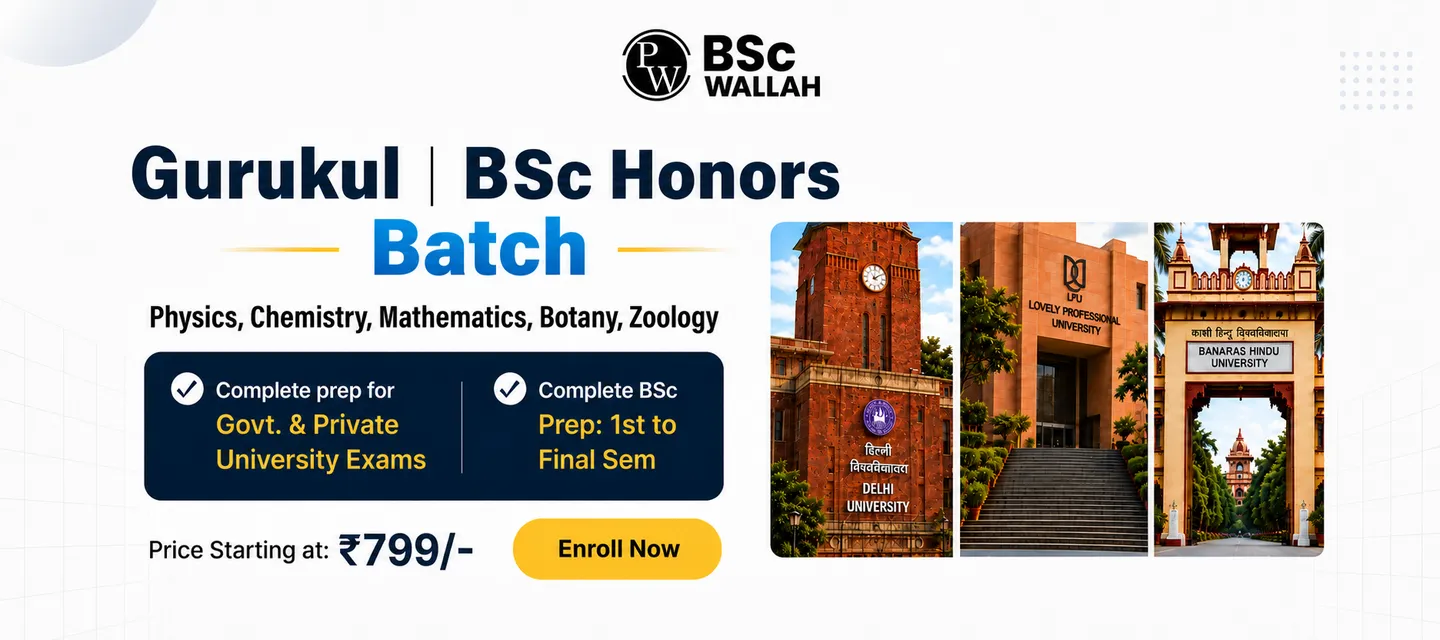
BSc Wallah is PW's dedicated learning initiative for BSc Science students, designed to bring academic learning, examination preparation, and career guidance together on one platform.

The platform focuses on helping BSc students learn concepts, prepare for university examinations, practise questions, and understand the opportunities available after graduation.

BSc Wallah covers major science subjects including:

  • Physics

  • Chemistry

  • Mathematics

  • Zoology

  • Botany

The learning ecosystem is designed around a concept-based and exam-oriented approach, with a focus on helping students manage their university syllabus and prepare for future academic and competitive goals.

Students can access free educational content through the BSc Wallah YouTube channel, with additional learning programmes and paid batches planned for the future.

Key Learning Features

BSc Wallah aims to support BSc students through:

  • Complete subject coverage

  • Semester-wise learning

  • Unit-wise concept classes

  • Concept-based teaching

  • University-oriented preparation

  • Previous Year Question (PYQ) discussions

  • Important and expected questions

  • Revision sessions

  • One-shot learning sessions

  • Mock tests

  • University paper solutions

  • Doubt-solving support

  • Notes and PDFs

  • Community learning

  • Career guidance and roadmaps

The goal is to provide BSc students with a more structured learning experience instead of requiring them to depend on scattered resources for different academic and examination needs.

BSc Career Options

A BSc degree can open opportunities across research, education, government, healthcare, technology, data, laboratory work, and various industries. Career options depend on the student's specialisation, skills, academic qualifications, and professional goals.

Some career areas after BSc include:

  • Research and scientific careers

  • Teaching and education

  • Government jobs

  • Laboratory and technical roles

  • Private-sector employment

  • Industry-based opportunities

  • Data and analytical roles

  • Environmental and life science careers

  • Healthcare and allied science fields

  • Internships and placements

Students should identify their career interests early and build relevant skills alongside their undergraduate degree.

What to Do After BSc?

After completing BSc, students have several academic and career pathways. The right option depends on their subject, interests, career goals, and eligibility.

Pursue MSc: MSc is one of the most common higher education options after BSc. Students can pursue postgraduate studies in their respective science discipline or a related field.

Prepare for IIT JAM: Students interested in postgraduate science education can explore IIT JAM and other relevant entrance examinations for admission to participating institutions.

Appear for CUET PG: CUET PG provides another pathway for eligible graduates seeking admission to postgraduate programmes at participating universities.

Explore CSIR NET: Students interested in research, teaching, and academic careers in science can explore CSIR NET after meeting the applicable eligibility requirements.

Explore GATE: Eligible students can explore GATE for higher education and other opportunities depending on their academic background and the applicable examination rules.

Research Career: Students interested in scientific research can pursue higher education and develop research skills through MSc, PhD, fellowships, and research-based opportunities.

Government Jobs: BSc graduates can explore various government recruitment examinations and job opportunities based on their subject, eligibility, and the requirements of individual posts.

Industry Opportunities: Graduates can also explore opportunities in relevant industries depending on their specialisation and additional skills. Internships, practical experience, certifications, and technical skills can strengthen career prospects.

BSc Scholarships and Fellowships

Students pursuing BSc and those planning higher education can explore scholarships offered by government organisations, universities, institutions, and private foundations.

After graduation, eligible students interested in research may also explore fellowships associated with postgraduate education, research programmes, and national-level examinations.

Scholarship and fellowship eligibility varies by programme. Students should always check the latest official notification for eligibility, application dates, financial assistance, and selection criteria.

How to Prepare for a Successful BSc Journey?

A successful BSc journey requires consistent academic preparation and a clear understanding of long-term goals. Students can follow these strategies:

  1. Understand the university syllabus at the beginning of each semester.

  2. Build strong conceptual foundations in core subjects.

  3. Follow a realistic weekly study schedule.

  4. Prepare notes while studying each topic.

  5. Practise questions regularly.

  6. Solve Previous Year Questions to understand examination trends.

  7. Revise important topics multiple times.

  8. Take mock tests before semester examinations.

  9. Clear doubts instead of leaving difficult topics unresolved.

  10. Start exploring higher education and career options early.

Students preparing for competitive examinations should gradually align their academic learning with the syllabus and requirements of their target examination.

Why Choose a Concept-Based Approach for BSc Preparation?

BSc subjects often involve interconnected concepts that become increasingly advanced as students progress through their degree. Memorising answers without understanding the underlying concepts may make it difficult to handle application-based questions and competitive examinations.

A concept-based approach helps students:

  • Understand the fundamentals

  • Connect topics across different units

  • Solve conceptual and numerical problems

  • Retain information for longer

  • Prepare for university examinations

  • Build a foundation for competitive examinations

  • Develop stronger subject knowledge for higher studies

Combining conceptual learning with PYQ practice and regular revision can help students prepare for both academic and future competitive goals.


BSc FAQs

What is BSc Wallah?

BSc Wallah is PW's dedicated learning initiative for B.Sc Science students. It focuses on Physics, Chemistry, Mathematics, Zoology, and Botany, with concept-based and exam-oriented learning resources designed to support university preparation and future academic goals.

What is the eligibility for B.Sc admission?

B.Sc eligibility criteria vary by university and specialisation. Generally, candidates who have completed Class 12 or an equivalent qualification with the required subjects can apply. Students should check the official eligibility requirements of their preferred university.

How should I prepare for B.Sc semester exams?

Students should follow their university syllabus, understand concepts, prepare notes, practise important questions, solve Previous Year Questions, revise regularly, and attempt mock tests or previous university papers.

What can I do after B.Sc?

After B.Sc, students can pursue MSc, prepare for examinations such as IIT JAM, CUET PG, CSIR NET, or GATE where eligible, explore research opportunities, apply for government jobs, or pursue careers in relevant industries.

Is B.Sc good for a career in research?

B.Sc can provide a foundation for a research career. Students interested in research can pursue MSc and further qualifications such as PhD or relevant research fellowships, depending on their academic goals and eligibility.
Popup Close ImagePopup Open Image
Talk to a counsellorHave doubts? Our support team will be happy to assist you!
Popup Image
avatar

Get Free Counselling Today

and Clear up all your Doubts

Talk to Our Counsellor just by filling out the form.
Student Name
Phone Number
IN
+91
OTP
Join 15 Million students on the app today!
Point IconLive & recorded classes available at ease
Point IconDashboard for progress tracking
Point IconLakhs of practice questions
Download ButtonDownload Button
Banner Image
Banner Image
Free Learning Resources
Know about Physics Wallah
Physics Wallah is an Indian edtech platform that provides accessible & comprehensive learning experiences to students from Class 6th to postgraduate level. We also provide extensive NCERT solutions, sample paper, NEET, JEE Mains, BITSAT previous year papers & more such resources to students. We also provide extensive NCERT solutions, sample papers, NEET, JEE Mains, BITSAT previous year papers, which maPhysics Wallah also caters to over 3.5 million registered students and over 78 lakh+ Youtube subscribers with 4.8 rating on its app.
We Stand Out because
We provide students with intensive courses with India’s qualified & experienced faculties & mentors. PW strives to make the learning experience comprehensive and accessible for students of all sections of society. We believe in empowering every single student who couldn't dream of a good career in engineering and medical field earlier.
Our Key Focus Areas
Physics Wallah’s main focus is to create accessible learning experiences for students all over India. With courses like Lakshya, Udaan, Arjuna & many others, we have been able to provide a ready solution for lakhs of aspirants. From providing Chemistry, Maths, Physics formulae to giving e-books of eminent authors, PW aims to provide reliable solutions for student prep
What Makes Us Different
Physics Wallah strives to develop a comprehensive pedagogical structure for students, where they get a state-of-the-art learning experience with study material and resources. Apart from catering students preparing for JEE Mains and NEET, PW also provides study material for each state board like Uttar Pradesh, Bihar, and others

Copyright © 2026 Physicswallah Limited All rights reserved.