






B.Sc Zoology 1st Semester Syllabus, University-wise Subject List
B.Sc Zoology 1st Semester syllabus mainly covers Non-Chordates (Protista to Pseudocoelomates), Principles of Ecology, Systematics, Animal Form & Function, and Cell Biology (in some universities). Practicals focus on specimen identification, microscopy, ecological experiments, water analysis, and laboratory techniques. While the syllabus varies slightly across universities, the core topics remain largely similar.

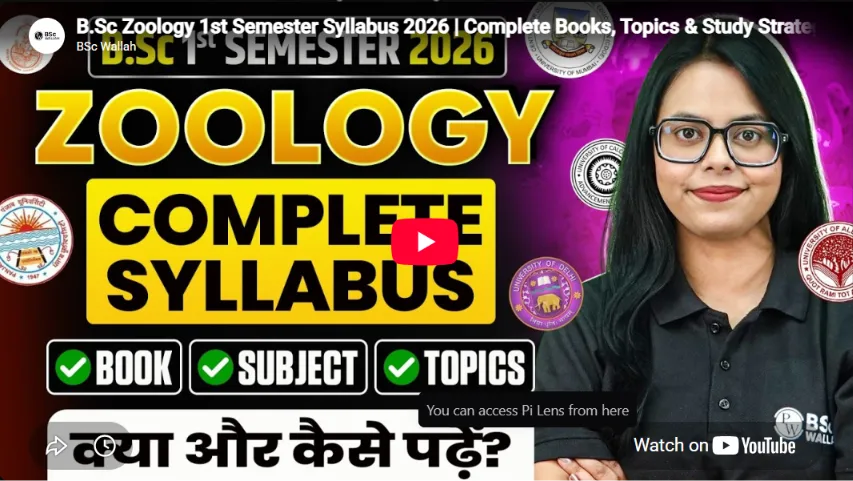
The B.Sc Zoology 1st Semester syllabus introduces students to the fundamentals of animal biology, taxonomy, ecology, and physiology. Most universities begin with the study of Non-Chordates, covering their classification, characteristics, and diversity, while also introducing ecological principles, systematics, and basic physiological processes. Some institutions additionally include Cell Biology and Molecular Biology to strengthen foundational concepts.
Along with theory, practical training forms an essential part of the curriculum. Students learn specimen identification, microscopy, slide preparation, ecological analysis, and laboratory techniques through hands-on experiments. This guide provides a university-wise overview of the B.Sc Zoology 1st Semester syllabus, helping students understand key subjects, practical components, and important topics for semester examinations.
B.Sc Zoology 1st Semester Syllabus
The B.Sc Zoology 1st Semester curriculum across various universities focuses on foundational biological concepts essential for advanced study. This semester predominantly covers animal diversity, ecology, and basic physiological processes. Both written and practical examinations are crucial components, carrying significant importance in overall assessment. Understanding the syllabus structure is key for effective preparation and academic success.
Delhi University (DU) B.Sc Zoology First Semester Syllabus
The DU B.Sc Zoology First Semester syllabus focuses on Non-Chordate diversity, animal classification, and ecological principles with theory and practical components.
| Paper / Subject | Theory Syllabus | Practical Syllabus |
| Non-Chordates | Introduction to Animalia; Protista: structure, classification, and characteristics; Porifera, Cnidaria (Coelenterata), Ctenophora, Platyhelminthes, and Aschelminthes. | Identification of protists (Euglena, Amoeba, Paramecium); pond water observation; specimen identification of non-chordates; soil sample analysis for nematode diversity. |
| Principles of Ecology | Introduction to Ecology, contributions of scientists, population ecology, community ecology, ecosystem, and applied ecology. | Life table and survivorship curve preparation; population density calculation using Quadrat method; Shannon-Wiener Diversity Index; aquatic ecosystem analysis; DO, COD, pH, turbidity, free CO₂, and alkalinity measurement; field visit report. |
Banaras Hindu University (BHU) B.Sc Zoology First Semester Syllabus
The BHU B.Sc Zoology First Semester syllabus covers animal diversity, taxonomy, and physiological functions of animals with practical identification skills.
| Paper / Subject | Theory Syllabus | Practical Syllabus |
| Systematics & Animal Diversity | Taxonomy and classification methods; Zoological nomenclature; taxonomic characters; species concept; diversity of non-chordates. | Identification of specimens like fish and Drosophila with zoological names; insect preservation; protozoan fixation; transverse section studies. |
| Animal Form & Function | Nutrition and digestion; gas exchange and internal transport; respiration and excretion; nervous system (CNS & PNS); receptors and sense organs; reproduction and fertilization. | Study of physiological structures and models; cold anesthesia and narcotization techniques. |
Lucknow University B.Sc Zoology First Semester Syllabus
The Lucknow University syllabus emphasizes diversity and biology of non-chordates from simple to advanced invertebrates.
| Paper / Subject | Theory Syllabus | Practical Syllabus |
| Diversity & Biology of Non-Chordates | Protista and Porifera; Cnidaria; Platyhelminthes; Aschelminthes; Annelida; Arthropoda; Mollusca; Echinodermata; Hemichordata; classification, characteristics, examples, and life cycles. | Identification of freshwater protozoans (Amoeba, Euglena, Paramecium, Vorticella); sponge identification; specimen and slide study of different non-chordate groups; spotting and documentation of features. |
Rajasthan University B.Sc Zoology First Semester Syllabus
The Rajasthan University syllabus combines animal diversity with cell biology and microbiology fundamentals.
| Paper / Subject | Theory Syllabus | Practical Syllabus |
| General Principles of Classification & Protozoa | Nomenclature and systematics; classification and structure of Euglena, Amoeba, Paramecium; Porifera, Cnidaria, Platyhelminthes, parasitic nematodes, and Annelids. | Study of museum specimens and slides; identification of protozoans like Entamoeba, Euglena, Leishmania; specimen study of sponges and lower invertebrates. |
| Cell Biology & Microbiology | Cell theory; cell organelles including plasma membrane, ER, Golgi apparatus, mitochondria, lysosomes, nucleus, and microtubules; bacteria and viruses. | Cell structure study; mitosis observation using acetocarmine staining of onion root tips; preparation of mounts. |
Patna University B.Sc Zoology First Semester Syllabus
The Patna University syllabus focuses on non-chordate diversity, ecology, and biological analysis techniques.
| Paper / Subject | Theory Syllabus | Practical Syllabus |
| Non-Chordates & Ecology | Diversity of non-chordates from Protista to Pseudocoelomates; ecological principles including population, community, ecological curves, and formulas. | Water analysis (DO, pH, temperature); demographic studies; population mapping; specimen identification; study of protozoans, helminths, sponges, and coelenterates; microscope handling. |
Mumbai University B.Sc Zoology First Semester Syllabus
The Mumbai University syllabus focuses on life processes and physiological mechanisms in animals.
| Paper / Subject | Theory Syllabus | Practical Syllabus |
| Life Processes | Movement and locomotion; nutrition and digestive systems; respiration and respiratory surfaces; circulation and heart types; excretion; osmoregulation; control and coordination; reproduction and fertilization. | Comparative study of organ systems; heart anatomy; respiratory, excretory, and reproductive structures; Paramecium food vacuole and ciliary movement; effect of pH and temperature; enzyme studies (Amylase, Trypsin); laboratory calculations (ppm, molarity, normality, dilution). |
Maharshi Dayanand University (MDU) B.Sc Zoology First Semester Syllabus
The MDU syllabus introduces basic biology, classification, and non-chordate zoology concepts.
| Paper / Subject | Theory Syllabus | Practical Syllabus |
| Introduction to Biology & Non-Chordates | Classification and systematics; classical zoology; protists to pseudocoelomates; animal classification basics; Protostomes and Metazoa; Porifera, Cnidaria, Ctenophora, Platyhelminthes, and Nematodes. | Practical work based on theory topics, especially non-chordate specimen identification and study. |
General Pedagogical Advice for Semester Exams
Effective semester exam preparation requires a strategic approach involving syllabus analysis, quality notes, proper presentation, timely revision, and consistent answer writing practice.
-
Syllabus Analysis: Important for understanding credit weightage and scoring.
-
Study Resources: Identify appropriate reference materials for building high-standard notes.
-
Note-Making: Making notes is very important and should never be skipped for good performance. Everything is about your notes.
-
Presentation (Zoology Specific): Presentation matters significantly.
-
Diagrams: Must be clear and well-drawn.
-
Content: Points should be relevant, avoiding excessive repetition.
-
Preparation Timeline: Start preparations well in advance, not just before exams.
-
Revision: The last 10 days are for thorough revision.
-
Answer Writing Practice: Practice answer writing for framing and time management.
B.Sc Zoology 1st Semester Syllabus FAQs
What are the primary core subjects covered in B.Sc Zoology Semester 1 across most universities?
What kind of practical skills are emphasized in the 1st semester Zoology practical exams?
What is the significance of the Molecular Biology unit mentioned in some syllabi for 1st semester?




Get Free Counselling Today
and Clear up all your Doubts
 Live & recorded classes available at easeDashboard for progress trackingLakhs of practice questions

