







Automated Business Processes, Meaning, Process, Tools and Challenges
Check how automated business processes revolutionize CA tasks, enhancing accuracy, reducing workload, and empowering students with essential tools for modern accounting efficiency
 Muskan Verma1 Nov, 2024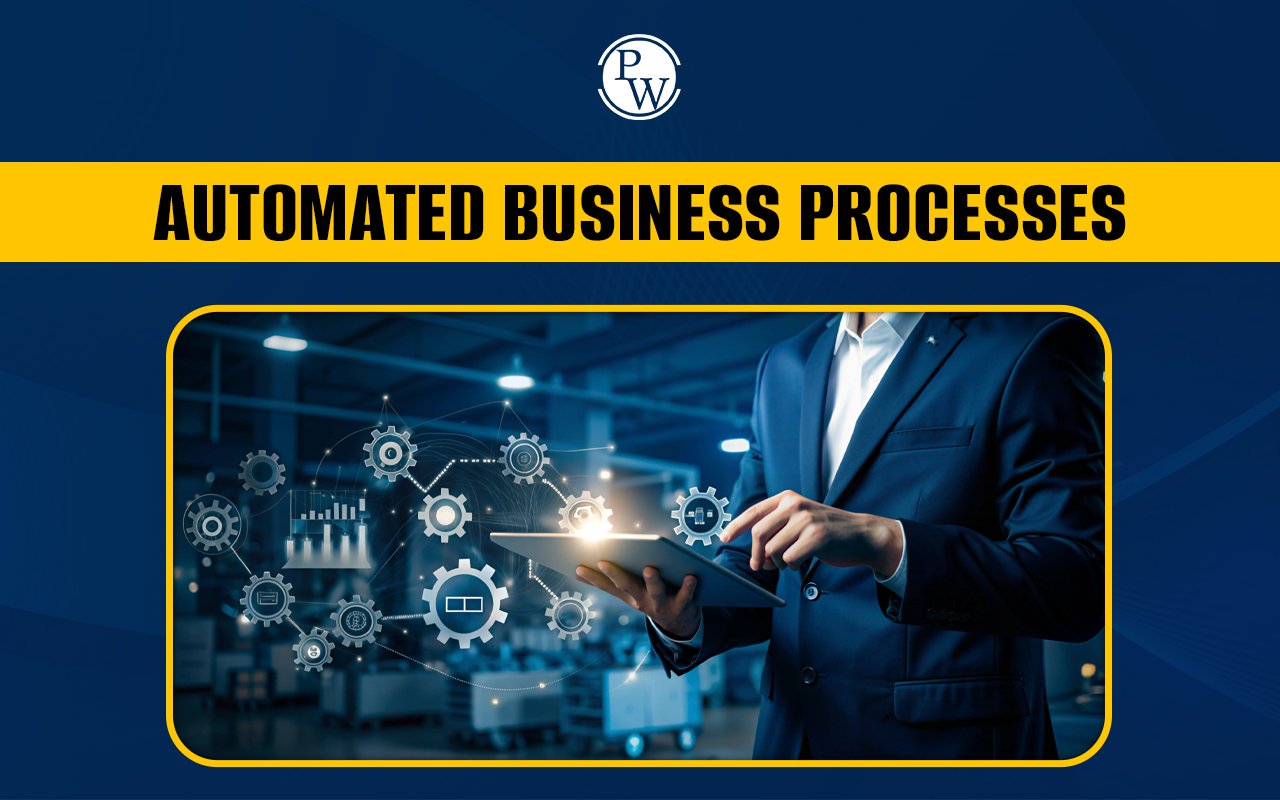
Automated Business Processes: In today’s business landscape, automation has transformed traditional workflows. For Chartered Accountants (CAs), integrating automated business processes enhances efficiency, accuracy, and productivity. By automating routine tasks, CAs can focus on value-driven activities like strategic decision-making, client advisory, and complex financial analysis.
This blog dives into the significance of automated business processes in the accounting field, explores key automation tools, and highlights how CA students can leverage these technologies to excel in their careers.What Are Automated Business Processes?
Automated business processes refer to systems that perform repetitive tasks with minimal or no human intervention. These systems leverage advanced software to handle routine functions like data entry, calculations, and compliance checks. Automation is beneficial not only for time efficiency but also for minimizing errors, ensuring consistency, and improving data management across various business functions. In the realm of accounting, automated business processes are used for bookkeeping, tax filing, payroll management, financial reporting, and more. These technologies enable CAs to streamline workflows, eliminate manual errors, and ensure faster, more accurate results.Importance of Automated Business Processes
For CA professionals, the role of automated business processes cannot be overstated. Here’s why automation is crucial in the accounting field:Enhanced Accuracy
Manual errors in accounting can lead to significant financial repercussions. Automation reduces the risk of errors, leading to precise calculations and data consistency.Time Efficiency
With routine tasks handled automatically, CAs save substantial time, enabling them to focus on complex tasks and advisory roles.Cost Reduction
By using automated business processes, firms can save costs on resources, streamline workflows, and improve overall operational efficiency.Compliance and Security
Automation tools are updated regularly to meet regulatory standards, ensuring compliance with laws while securing sensitive financial data.Real-Time Analytics
Many automation platforms offer real-time data analytics, helping CAs make informed decisions based on up-to-date financial data.Also Check: Government Policies for Business Growth
Areas Where CAs Use Automated Business Processes
For CA students, understanding the areas of application for automated business processes is essential. Here are some key areas where automation makes a difference:Bookkeeping and Data Entry
Automation in bookkeeping simplifies data entry, reconciliation, and ledger management. Automated tools record transactions, categorize expenses, and prepare financial statements, allowing for real-time access to accurate data.Tax Compliance and Filing
Automated systems manage tax calculations, file returns, and generate tax reports while staying up-to-date with regulatory changes. This ensures timely, error-free filing and helps avoid penalties.Payroll Management
Handling payroll can be complex, but automated business processes streamline payroll calculations, tax deductions, and benefit distributions, making it easier to manage payroll for multiple employees.Financial Reporting
Automation tools prepare balance sheets, income statements, and cash flow statements with minimal input, saving time in financial reporting and reducing the need for manual adjustments.Audit and Risk Management
Automated audit software identifies discrepancies, highlights anomalies, and tracks compliance risks, making the audit process more efficient and thorough.Tools for Automated Business Processes in Accounting
For CA students aspiring to work in modern accounting environments, familiarity with automation tools is crucial. Here are some widely-used platforms for automated business processes: QuickBooks : Automates bookkeeping, invoicing, and payroll, widely used by small and medium-sized businesses. Tally ERP : Known for automating accounting, inventory management, and tax compliance, making it popular in India. Zoho Books : Offers automation for invoicing, expense tracking, and tax filing with cloud integration, suitable for remote work. SAP : Provides comprehensive automation for large enterprises, covering financial reporting, supply chain, and tax compliance. Xero : Streamlines accounting processes with automation in payroll, invoicing, and financial reporting, ideal for collaborative work. By mastering these tools, CA students can enhance their skill sets and stay competitive in the job market.Steps to Implement Automated Business Processes
For CA students, understanding the implementation steps is vital. Here’s a simplified guide to implementing automated business processes in accounting:Step 1: Identify Processes for Automation
Determine which tasks are repetitive and time-consuming. Common tasks include data entry, tax filing, payroll, and financial reporting.Step 2: Select Suitable Automation Tools
Choose tools based on business size, budget, and specific needs. For example, QuickBooks and Zoho Books are ideal for small businesses, while SAP suits larger firms.Step 3: Integrate with Existing Systems
Ensure the chosen tools integrate seamlessly with existing software, such as Excel or ERP systems, to prevent data silos and optimize workflows.Step 4: Train the Team
Automation is effective only when users understand the tools. Providing training ensures that everyone uses the automation tools effectively and adheres to best practices.Step 5: Monitor and Optimize
Continuously track performance and gather feedback to make improvements, as technology evolves and new features are introduced.Benefits of Automated Business Processes
For CA students, mastering automated business processes opens up a world of career opportunities: Improved Employability : Employers prefer candidates who can leverage technology to enhance productivity and accuracy. Increased Analytical Skills : By reducing time spent on repetitive tasks, students can focus on developing critical analytical and strategic skills. Enhanced Productivity : Automation reduces workload, allowing CA students to manage multiple tasks efficiently. Practical Knowledge : Understanding automation gives CA students hands-on experience with tools that are widely used in modern accounting.Challenges and Solutions in Automated Business Processes
While automated business processes offer numerous benefits, they also come with challenges:High Initial Costs
Automation tools can be costly initially, especially for small businesses. However, the long-term savings in labor costs and error reduction often offset these expenses.Data Security Concerns
Automation involves handling sensitive data, which can be at risk. Using secure, reputable tools with encryption features can mitigate this concern.Resistance to Change
Employees may resist switching to automated systems. Training and showcasing the benefits of automation can help ease this transition.Need for Continuous Learning
Technology evolves rapidly, and CA students must stay updated. Regular training and certifications can ensure they stay current with the latest advancements in automated business processes.Future of Automated Business Processes in Accounting
The future of accounting is heavily influenced by technology, with automation becoming a central component. Emerging technologies like AI and machine learning will further transform automated business processes, allowing systems to perform complex analyses, generate predictive insights, and assist in decision-making. For CA students, understanding these advancements will position them as future-ready professionals. By integrating automation skills into their knowledge base, students can contribute effectively to a technology-driven accounting landscape. The integration of automated business processes in accounting has revolutionized how Chartered Accountants operate, emphasizing accuracy, efficiency, and adaptability. For CA students, mastering these automated systems is essential for career growth, as it equips them with practical skills relevant to modern business needs. By embracing automation, CA students can become strategic advisors, helping businesses navigate complex financial landscapes with ease and expertise. To further boost your CA exam preparation, explore PW CA Courses , designed to help you crack the CA exams with expert guidance and structured study plans.| Also Read: |
| Supply Under GST |
| Income from House Property |
| Role of Information Technology in Strategic Management |
| Advanced Accounting Financial Statements Of Companies |
Automated Business Processes FAQs
What are automated business processes in accounting?
Automated business processes in accounting refer to software and systems that perform routine tasks, minimizing manual work and boosting accuracy.
How can CA students benefit from learning automated business processes?
Learning automation helps CA students save time, reduce errors, and develop skills in advanced accounting technology, boosting career readiness.
Which accounting tasks can be automated?
Tasks like bookkeeping, tax filing, payroll management, and financial reporting can be automated, streamlining complex processes for accuracy and efficiency.
What are some popular tools for automated business processes in accounting?
Common tools include QuickBooks, Tally, Zoho Books, SAP, and Xero, each offering automation features tailored to various accounting needs.
How can CA students start implementing automated processes?
They can begin by identifying repetitive tasks, choosing suitable tools, automation training, and regularly updating skills to stay current with technology.



Talk to a counsellorHave doubts? Our support team will be happy to assist you!


Check out these Related Articles





Join 15 Million students on the app today!
 Live & recorded classes available at easeDashboard for progress trackingMillions of practice questions at your fingertips


Free Learning Resources
PW Books
Notes (Class 10-12)
PW Study Materials
Notes (Class 6-9)
Ncert Solutions
Govt Exams
Our Other Websites
Class 6th to 12th Online Courses
Govt Job Exams Courses
UPSC Coaching
Defence Exam Coaching
Gate Exam Coaching
Other Exams
Know about Physics Wallah
Physics Wallah is an Indian edtech platform that provides accessible & comprehensive learning experiences to students from Class 6th to postgraduate level. We also provide extensive NCERT solutions, sample paper, NEET, JEE Mains, BITSAT previous year papers & more such resources to students. Physics Wallah also caters to over 3.5 million registered students and over 78 lakh+ Youtube subscribers with 4.8 rating on its app.
We Stand Out because
We provide students with intensive courses with India’s qualified & experienced faculties & mentors. PW strives to make the learning experience comprehensive and accessible for students of all sections of society. We believe in empowering every single student who couldn't dream of a good career in engineering and medical field earlier.
Our Key Focus Areas
Physics Wallah's main focus is to make the learning experience as economical as possible for all students. With our affordable courses like Lakshya, Udaan and Arjuna and many others, we have been able to provide a platform for lakhs of aspirants. From providing Chemistry, Maths, Physics formula to giving e-books of eminent authors like RD Sharma, RS Aggarwal and Lakhmir Singh, PW focuses on every single student's need for preparation.
What Makes Us Different
Physics Wallah strives to develop a comprehensive pedagogical structure for students, where they get a state-of-the-art learning experience with study material and resources. Apart from catering students preparing for JEE Mains and NEET, PW also provides study material for each state board like Uttar Pradesh, Bihar, and others
Copyright © 2026 Physicswallah Limited All rights reserved.