






Time And Value Of Supply, Definition, Importance, and Application
Learn the concepts of time and value of supply in GST and understand their definitions, importance, and practical applications in taxation and compliance.
 Muskan Verma1 Nov, 2024
Share
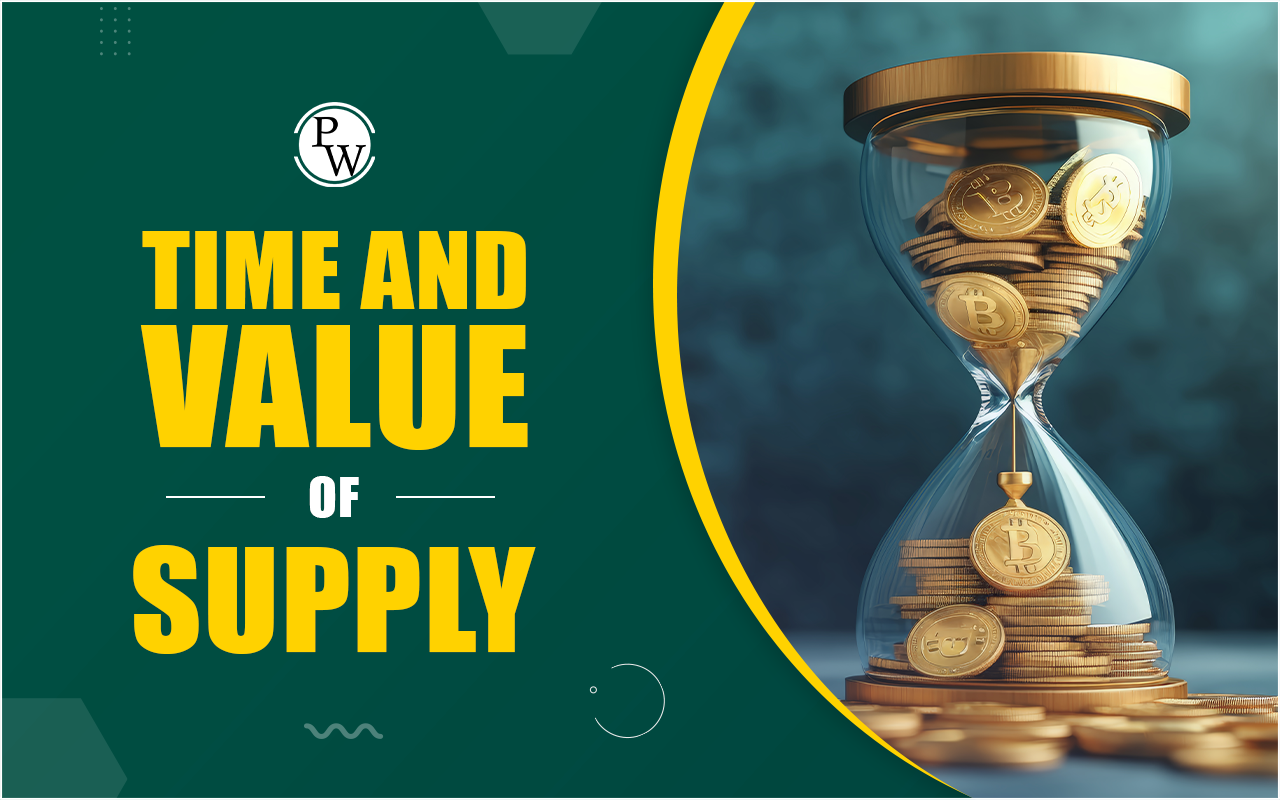
Time And Value Of Supply: As CA students delve into the GST framework, they will encounter numerous scenarios where the time and value of supply play a critical role. A clear comprehension of time and the value of supply helps ensure compliance with the law and assists in effective tax planning. In this article, we will explore the intricacies of time and the value of supply, breaking down their definitions, components, and significance in the GST landscape.
What is Supply Under GST?
Before we dive deeper, it’s important to clarify what constitutes ‘supply’ under the GST regime. The term "supply" encompasses a variety of transactions, including:- Sale of goods
- Provision of services
- Transfer, barter, or exchange of goods or services
- Import of goods or services
What is Time of Supply?
Time of supply refers to the point in time when a supply of goods or services is considered to have taken place. Understanding the time of supply is crucial because it determines when the tax liability arises and when the supplier must file their GST return. The time of supply is different for goods and services and can also vary based on the nature of the transaction.Time of Supply of Goods
According to Section 12 of the CGST Act, the time of supply for goods is determined by the following: Supply with Invoice: If an invoice is issued for the supply, the time of supply is the date of issue of the invoice. Supply without Invoice: If an invoice is not issued, the time of supply is the date of delivery of goods. Continuous Supply of Goods: For continuous supply, the time of supply is the due date of payment or the date of receipt of payment, whichever is earlier.Time of Supply of Services
Section 13 of the CGST Act governs the time of supply for services. Key points include: Supply with Invoice: The time of supply is the date of issue of the invoice. Supply without Invoice: If no invoice is issued, the time of supply is the date of receipt of payment. Continuous Supply of Services: For continuous supplies, the time of supply is the earliest of the due date of payment or the date of receipt of payment.Time of Supply in Specific Scenarios
Certain scenarios may require specific attention regarding time of supply: Reverse Charge Mechanism (RCM): For services under RCM, the time of supply is the date of receipt of the goods or services. Change in Tax Rate: If there’s a change in the tax rate, the time of supply is based on the rate applicable on the date of supply.Practical Example
Let’s assume a supplier issues an invoice for the sale of goods on March 5 and the goods are delivered on March 10. The time of supply is March 5 because the invoice was issued before the goods were delivered.
Value of Supply
The value of supply is another critical aspect of GST, as it determines the amount on which tax is calculated. The value of supply includes not only the price charged but also various other components, as outlined in the GST framework.What is Value of Supply?
According to Section 15 of the CGST Act, the value of supply is the transaction value, which is the price paid or payable for the supply of goods or services. However, several components must be considered to ascertain the correct value of supply.Components Included in Value of Supply
The value of supply includes the following components: Price: The amount charged for the goods or services. Taxes: Any taxes, including GST, must be included in the transaction value. Additional Charges: Any additional costs, such as packaging, transportation, and handling, must also be considered.Components Excluded from Value of Supply
Certain components may be excluded from the value of supply: Discounts: Discounts allowed before or at the time of supply can be excluded, provided they are documented. Subsidies: Any subsidy directly linked to the supply of goods or services is excluded from the value of supply.Special Valuation Rules
In some cases, specific valuation rules apply: Related Parties: If the supplier and recipient are related, the transaction value may not be acceptable, and the value of supply may need to be determined using alternate methods. Import of Services: The value of supply of imported services is based on the value determined under the respective agreements and can include additional charges.Practical Example
A business supplies goods worth ₹10,000 and charges ₹500 for shipping. If the GST rate is 18%, the total value of supply for GST calculation is ₹10,500 (₹10,000 + ₹500).Also Check: GST Compliance
Importance of Time and Value of Supply
Lets understand the importance of Time and Value of Supply: Tax Compliance: Understanding the Time and Value of Supply is crucial for compliance with GST regulations. This knowledge helps avoid penalties and legal issues. Accurate Tax Calculation: Knowing how to determine the correct value of supply ensures accurate tax calculation and prevents losses due to under-reporting or over-reporting. Client Advisory: As future CAs, students will be required to advise clients on GST matters. Mastery of time and value of supply enables CAs to provide reliable advice and enhance their professional reputation. Examination Success: Both the time and value of supply are integral topics in CA examinations. A thorough understanding will not only help in exams but also lay the foundation for practical applications in the field. For CA students, understanding the concepts of Time and Value of Supply under GST is essential for a successful career in taxation and finance. These principles guide the determination of tax liabilities, ensuring compliance and accurate financial reporting. By grasping these concepts, future CAs will be well-prepared to navigate the complexities of the GST framework and provide valuable services to their clients. As you study these topics, focus on real-world applications and stay updated on any changes in GST laws to enhance your expertise. To further boost your CA exam preparation, explore PW CA Courses , designed to help you crack the CA exams with expert guidance and structured study plans.| Also Read: |
| Supply Under GST |
| Income from House Property |
| Role of Information Technology in Strategic Management |
| Advanced Accounting Financial Statements Of Companies |
Time and Value of Supply FAQs
What is the time of supply in GST?
The time of supply refers to the point when a supply of goods or services is considered to have occurred, determining when tax liability arises.
How is the value of supply calculated?
The value of supply is calculated based on the transaction value, which includes the price charged and any additional costs such as shipping and taxes.
What factors influence the time of supply?
The time of supply can be influenced by factors such as whether an invoice is issued, the type of supply (goods or services), and any applicable tax rates.
Are discounts included in the value of supply?
Discounts allowed before or at the time of supply can be excluded from the value of supply if properly documented.
Why is understanding time and value of supply important for CA students?
A clear understanding of these concepts ensures compliance with GST regulations, and accurate tax calculations, and enhances client advisory skills.


Talk to a counsellorHave doubts? Our support team will be happy to assist you!


Check out these Related Articles






Join 15 Million students on the app today!
 Live & recorded classes available at easeDashboard for progress trackingMillions of practice questions at your fingertips


Free Learning Resources
PW Books
Notes (Class 10-12)
PW Study Materials
Notes (Class 6-9)
Ncert Solutions
Govt Exams
Class 6th to 12th Online Courses
Govt Job Exams Courses
UPSC Coaching
Defence Exam Coaching
Gate Exam Coaching
Other Exams
Know about Physics Wallah
Physics Wallah is an Indian edtech platform that provides accessible & comprehensive learning experiences to students from Class 6th to postgraduate level. We also provide extensive NCERT solutions, sample paper, NEET, JEE Mains, BITSAT previous year papers & more such resources to students. Physics Wallah also caters to over 3.5 million registered students and over 78 lakh+ Youtube subscribers with 4.8 rating on its app.
We Stand Out because
We provide students with intensive courses with India’s qualified & experienced faculties & mentors. PW strives to make the learning experience comprehensive and accessible for students of all sections of society. We believe in empowering every single student who couldn't dream of a good career in engineering and medical field earlier.
Our Key Focus Areas
Physics Wallah's main focus is to make the learning experience as economical as possible for all students. With our affordable courses like Lakshya, Udaan and Arjuna and many others, we have been able to provide a platform for lakhs of aspirants. From providing Chemistry, Maths, Physics formula to giving e-books of eminent authors like RD Sharma, RS Aggarwal and Lakhmir Singh, PW focuses on every single student's need for preparation.
What Makes Us Different
Physics Wallah strives to develop a comprehensive pedagogical structure for students, where they get a state-of-the-art learning experience with study material and resources. Apart from catering students preparing for JEE Mains and NEET, PW also provides study material for each state board like Uttar Pradesh, Bihar, and others
Copyright © 2025 Physicswallah Limited All rights reserved.
Get App