






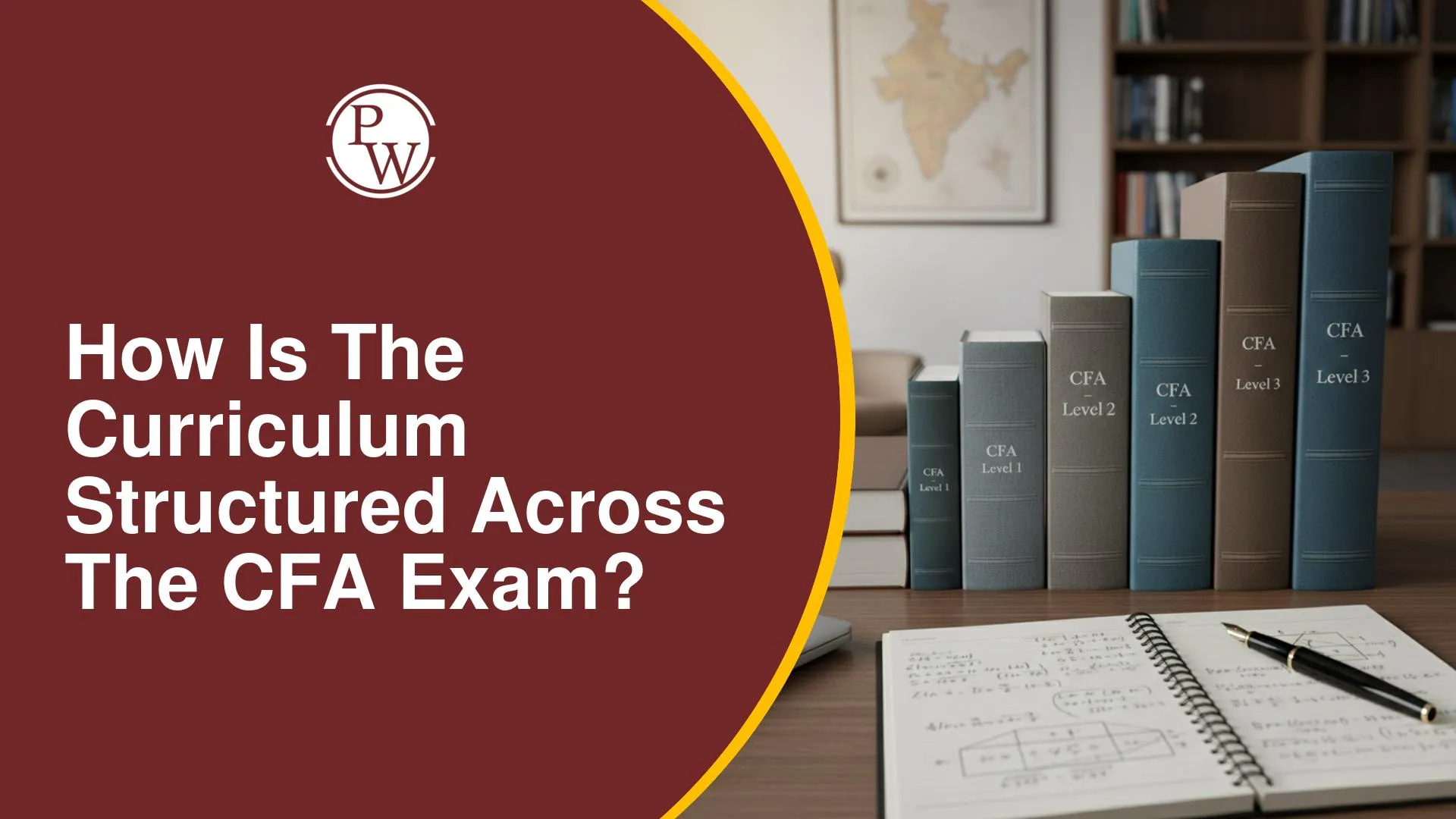
How is the Curriculum Structured Across the CFA Exam?
 Ekta Rakesh Singh7 Apr, 2026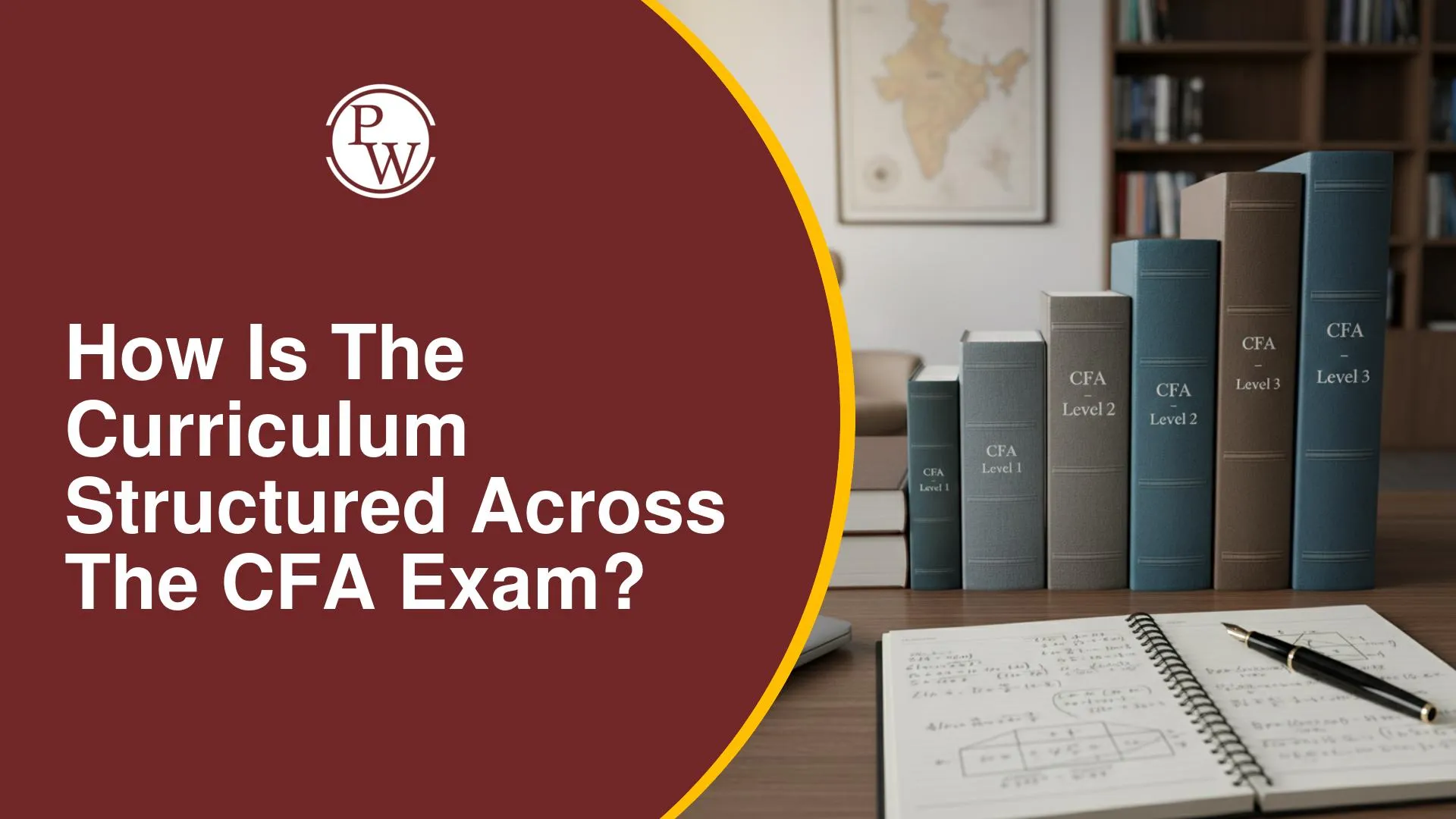
The CFA exam is known for its depth and structured learning approach across three levels. To prepare effectively, it is important to understand how the curriculum is designed at each stage. The CFA Level I and II exams are scheduled for May 2026, while Level III will be held in August 2026.
Each level focuses on a different skill set—from basic concepts to advanced portfolio management. Knowing the syllabus structure, topic weightage, and progression helps candidates plan better and improve their chances of success. Learn here how the curriculum is structured across the CFA Exam
CFA Curriculum Structure Across Levels
The CFA Program progresses through three distinct levels. Each level introduces new skills and deepens understanding. This phased approach ensures candidates build a comprehensive knowledge base. CFA exam syllabus levels 1, 2, and 3 structure is provided below:
Level I: Foundation and Basic Concepts
Level I focuses on fundamental investment tools and concepts. Candidates learn key terms, basic formulas, and core ideas of the investment industry. Questions are typically multiple-choice, testing foundational knowledge. This level establishes the groundwork for advanced topics.
Level II: Analysis and Application
Level II moves to applying knowledge in practical scenarios. Candidates use their accumulated understanding to analyze situations and propose solutions. The exam features item sets with multiple-choice questions, requiring analytical skills. This stage evaluates how well candidates can interpret data and solve problems.
Level III: Integration and Portfolio Management
Level III requires candidates to integrate various concepts and apply them to real-world investment scenarios. This level combines item set questions with constructed response questions. It tests the ability to synthesize information for portfolio management and wealth planning. This stage ensures candidates can make informed investment decisions.
CFA Program Structure Subjects and Weightage
The CFA Program curriculum is updated regularly. This ensures it stays relevant to modern financial practices. The topic weights vary by level, reflecting the increasing complexity and focus. The table below shows the general topic weights for each level.
Level I Topic Weights
The Level I exam focuses on building a strong foundation across all core areas of finance. The topic weights highlight how importance is distributed among subjects, helping candidates prioritize high-weight areas like Ethics, Financial Statement Analysis, and Investments while ensuring balanced preparation across the entire syllabus.
| Topic | Exam Weight |
|---|---|
| Ethical and Professional Standards | 15-20% |
| Quantitative Methods | 6-9% |
| Economics | 6-9% |
| Financial Statement Analysis | 11-14% |
| Corporate Issuers | 6-9% |
| Equity Investments | 11-14% |
| Fixed Income | 11-14% |
| Derivatives | 5–8% |
| Alternative Investments | 7-10% |
| Portfolio Management | 8-12% |
Level II Topic Weights
The Level II exam shifts toward application and analysis, and the topic weights reflect this deeper focus. While most subjects continue from Level I, their weightage indicates a stronger emphasis on valuation, financial analysis, and real-world case interpretation, making it essential for candidates to allocate study time strategically.
| Topic | Exam Weight |
| Ethical and Professional Standards | 10–15% |
| Quantitative Methods | 5-10% |
| Economics | 5-10% |
| Financial Statement Analysis | 10-15% |
| Corporate Issuers | 5-10% |
| Equity Investments | 10-15% |
| Fixed Income | 10-15% |
| Derivatives | 5-10% |
| Alternative Investments | 5-10% |
| Portfolio Management and Wealth Planning | 10-15% |
CFA Level III Topic Weights
The CFA Level III exam is centered on portfolio management and wealth planning, with topic weights clearly emphasizing practical decision-making skills. The inclusion of specialized pathways and higher weightage for asset allocation and portfolio construction highlights the exam’s focus on real-world investment strategy and client-focused solutions.
| Topic | Exam Weight |
|---|---|
| Asset Allocation | 15–20% |
| Portfolio Construction | 15–20% |
| Performance Measurement | 5–10% |
| Derivatives and Risk Management | 10–15% |
| Ethical and Professional Standards | 10–15% |
| Pathways (Portfolio Management or Private Markets or Private Wealth) | 30–35% |
CFA Topic-Wise Syllabus
The CFA Topic-Wise Syllabus provides a clear breakdown of all subjects and their underlying concepts, helping candidates understand exactly what to study at each stage of their preparation.
Level I & II Topics
It helps candidates first understand core concepts and then apply them through analysis, valuation, and case-based learning.
Ethical & Professional Standards
This subject builds the ethical foundation required in the finance industry.
-
CFA Code of Ethics & Standards of Professional Conduct
-
Ethical decision-making framework
-
Professional integrity and misconduct
-
Duties to clients, employers, and markets
-
Conflicts of interest
-
Global Investment Performance Standards (GIPS)
-
Ethical practices in investment management
Quantitative Methods
This subject focuses on mathematical and statistical tools used in finance.
-
Time Value of Money (TVM)
-
Discounted cash flow techniques
-
Descriptive statistics (mean, median, variance)
-
Probability concepts and distributions
-
Sampling and estimation
-
Hypothesis testing
-
Correlation and regression analysis
-
Time series analysis (advanced levels)
Economics
This subject explains how economic factors impact financial markets.
-
Demand and supply analysis
-
Market structures (perfect competition, monopoly, etc.)
-
Elasticity and consumer behavior
-
Macroeconomic indicators (GDP, inflation, unemployment)
-
Monetary and fiscal policy
-
Business cycles
-
Currency exchange rates
-
International trade and capital flows
Financial Statement Analysis (FSA)
This subject helps in understanding company financial health.
-
Financial reporting standards (IFRS vs GAAP)
-
Income statement, balance sheet, cash flow statement
-
Revenue recognition and inventory methods
-
Long-term assets and depreciation
-
Liabilities and equity analysis
-
Financial ratios and performance analysis
-
Earnings quality and analysis techniques
Corporate Issuers
This subject focuses on corporate finance and decision-making.
-
Corporate governance
-
Stakeholder management
-
Capital budgeting techniques (NPV, IRR)
-
Cost of capital
-
Capital structure decisions
-
Dividend policy
-
Working capital management
-
ESG (Environmental, Social, Governance) factors
Equity Investments
This subject deals with stock markets and valuation.
-
Types of equity securities
-
Primary and secondary markets
-
Market indices and efficiency
-
Industry and company analysis
-
Equity valuation models (DCF, multiples)
-
Dividend discount models
-
Growth vs value investing
Fixed Income
This subject focuses on bonds and debt instruments.
-
Types of fixed-income securities
-
Bond pricing and valuation
-
Yield measures (YTM, spot rates)
-
Duration and convexity
-
Interest rate risk
-
Credit risk analysis
-
Securitized products (MBS, ABS)
Derivatives
This subject introduces financial contracts derived from assets.
-
Forward contracts
-
Futures contracts
-
Options (calls and puts)
-
Swaps (interest rate, currency)
-
Derivative pricing basics
-
Hedging and risk management
-
Arbitrage concepts
Alternative Investments
This subject covers non-traditional investment options.
-
Real estate investments
-
Private equity
-
Hedge funds
-
Commodities
-
Infrastructure investments
-
Portfolio diversification using alternatives
Portfolio Management
This subject focuses on managing investments effectively.
-
Risk and return concepts
-
Portfolio diversification
-
Capital Asset Pricing Model (CAPM)
-
Modern Portfolio Theory (MPT)
-
Asset allocation strategies
-
Investor types (individual vs institutional)
-
Portfolio planning and construction
Level III Advanced Topics
It emphasises strategic thinking and integrates all concepts into practical, client-focused scenarios.
Asset Allocation
-
Strategic vs tactical allocation
-
Risk-return optimization
-
Multi-asset portfolio design
Portfolio Construction
-
Portfolio strategies (active vs passive)
-
Wealth management planning
-
Institutional portfolio management
Performance Measurement
-
Portfolio performance evaluation
-
Attribution analysis
Derivatives & Risk Management
-
Advanced hedging strategies
-
Risk management frameworks
Pathways (Specialization)
-
Portfolio Management
-
Private Wealth
-
Private Markets (PE, real estate, etc.)
CFA Exam Pattern
The CFA Institute has designed the CFA exam pattern to test not just knowledge, but also application and real-world decision-making skills. Each level follows a slightly different format, gradually increasing in complexity and analytical depth.
| Feature | Level I | Level II | Level III |
| Exam Format | MCQs (Standalone) | Item Sets (Case-based) | Essay + Item Sets |
| Total Questions | ~180 | ~88 | Varies (Essay + MCQs) |
| Sessions | 2 | 2 | 2 |
| Duration | ~4.5 hours | ~4.5 hours | ~4.5 hours |
| Question Type | Direct questions | Case study-based | Written answers + case-based |
| Focus Area | Concepts & basics | Application & valuation | Portfolio management & strategy |
| Difficulty Level | Moderate | High | Advanced |
| Negative Marking | No | No | No |
| Mode of Exam | Computer-based | Computer-based | Computer-based |
Practical Skills Modules
The CFA Program includes Practical Skills Modules (PSMs). These modules help candidates apply curriculum knowledge to real-world situations. PSMs use videos, multiple-choice questions, and case studies. Completing at least one PSM per level is required to receive exam results. This ensures practical readiness for finance careers.
Curriculum Structured Across the CFA Exam FAQs
Q1: How often is the CFA curriculum updated?
Q2: Why are Ethical and Professional Standards important in the CFA Program?
Q3: What do the Practical Skills Modules (PSM) offer?





Get Free Counselling Today
and Clear up all your Doubts
 Live & recorded classes available at easeDashboard for progress trackingLakhs of practice questions

