








3 Best Videos on Methods of Calculating National Income for Class 12 Economics by PW

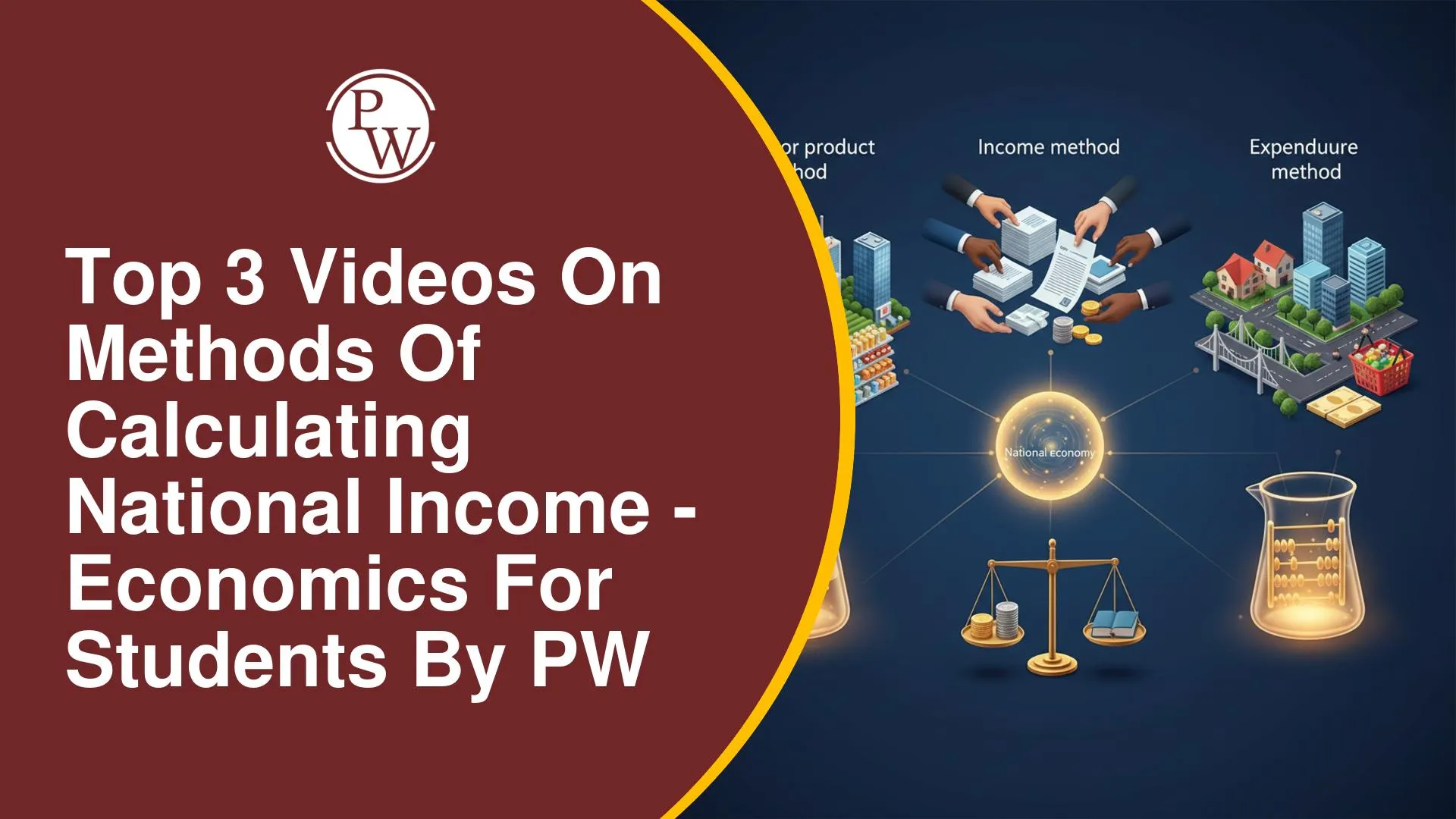
Methods of Calculating National Income can be confusing because the Value Added, Income, and Expenditure Methods use different components and calculation steps. You may mix up domestic and national income, overlook adjustments, or include incorrect figures while solving numerical questions. Understanding which items belong to each method and how to apply the relevant formulas is essential for avoiding calculation errors and presenting accurate answers in Class 12 Economics examinations.
PW’s Economics YouTube videos explain these three methods through a full lesson, a focused explanation of the Income Method, and a quick revision of the Expenditure Method. You can first understand the concepts and their application, then revisit individual components and practise numerical questions.
Video 1: Learn All Three National Income Methods With Numerical Practice
This Class 12 Economics lecture covers the Methods of Calculating National Income in a sequence that connects concepts with exam-style questions. It introduces the GDP deflator before explaining the Value Added Method, related aggregates, sector-wise and inter-firm analysis, the Income Method and its components, and the Expenditure Method. Numerical practice, board-answer presentation, and marking-scheme guidance help students understand how to apply the methods and present their working clearly.
Use this video to study the chapter for the first time or revise all three methods before an examination. Following the numerical examples step by step can help you understand which components to include, how the calculations differ, and how to organise your answers.
Video 2: Practise Previous Year Questions and Improve Your Answer Presentation
This short lecture focuses on calculating national income through the Income Method. It explains domestic income using compensation of employees, operating surplus, and mixed income of self-employed persons, then covers the adjustment involving income from abroad to arrive at national income. The video also addresses missing entries in numerical questions and reviews components such as wages, employer contributions, bonuses, rent, interest, profit, royalty, tax, dividends, and undistributed profit.
Watch this video when you need to revise the components of the Income Method or practise short numerical questions. Its concise format makes it useful for a quick recap, while the component-wise explanation helps you identify the relevant figures and avoid leaving out necessary items during calculations.
Video 3: Revise Cash Flow Adjustments and Prepare a Complete Statement
This YouTube video explains national income calculation through the Expenditure Method, covering household and nonprofit institution spending, investment, government expenditure, and net exports. It also clarifies gross and net capital formation, changes in stock, exports, imports, depreciation, indirect taxes, and income from abroad. Alternative terms, missing values, and common substitutions in numerical questions help students understand how to use the available information when solving problems.
Choose this YouTube video to revise the Expenditure Method before attempting numerical questions or taking a test. Focus on identifying each component correctly and understanding how adjustments affect the final calculation. Practising the steps independently after watching the explanation can help improve accuracy and reduce avoidable errors.
The Cash Flow Statement chapter becomes easier to revise when you understand the concepts, practise numerical questions, and review the treatment of different adjustments. These three PW YouTube videos support these steps through a complete chapter lesson, previous year question practice, and a focused revision session.


Have questions about your prep?
Our experts can answer all your questions