








Top 3 Videos on Cash Flow Statement for Class 12 Accountancy by PW

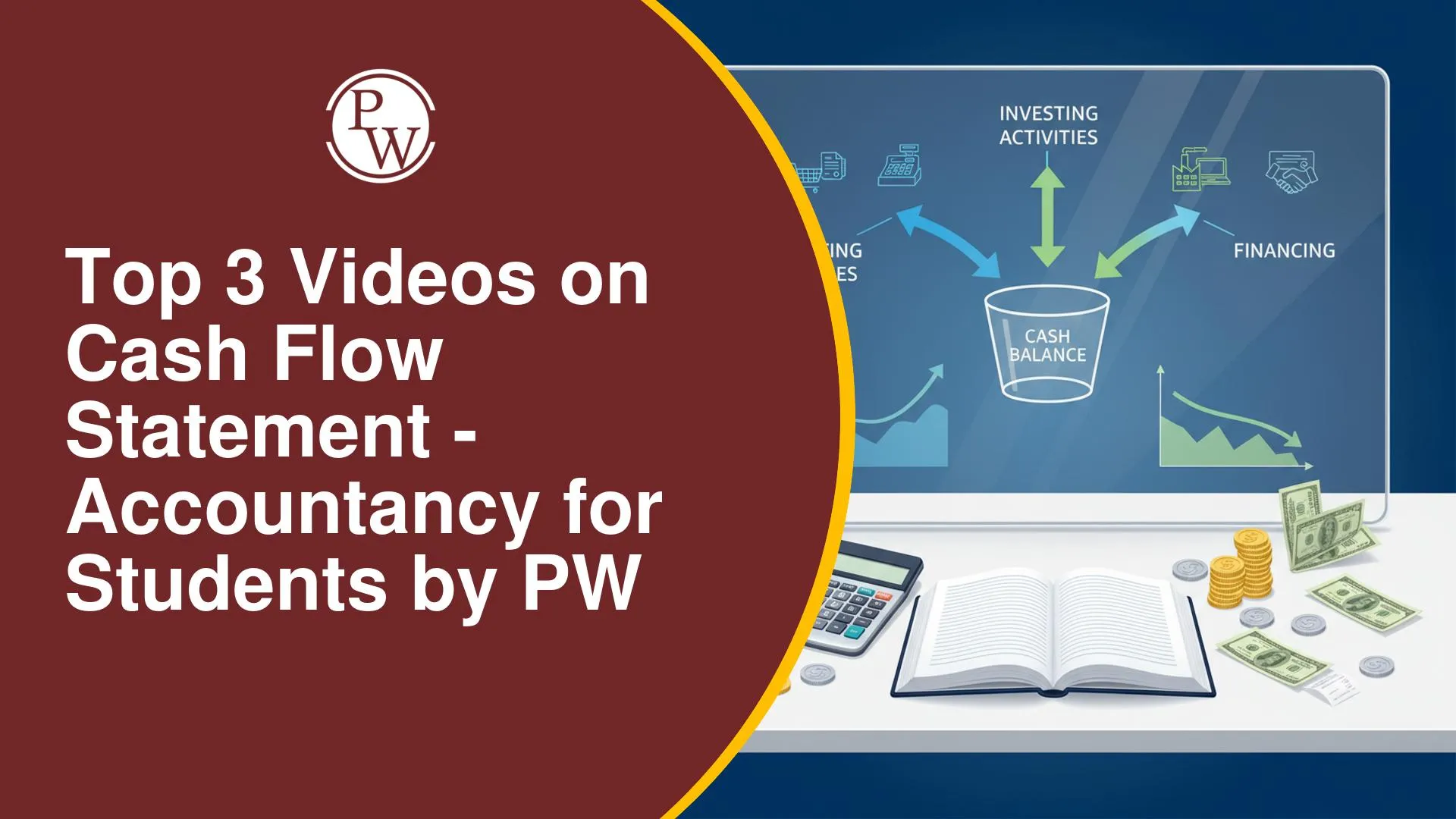
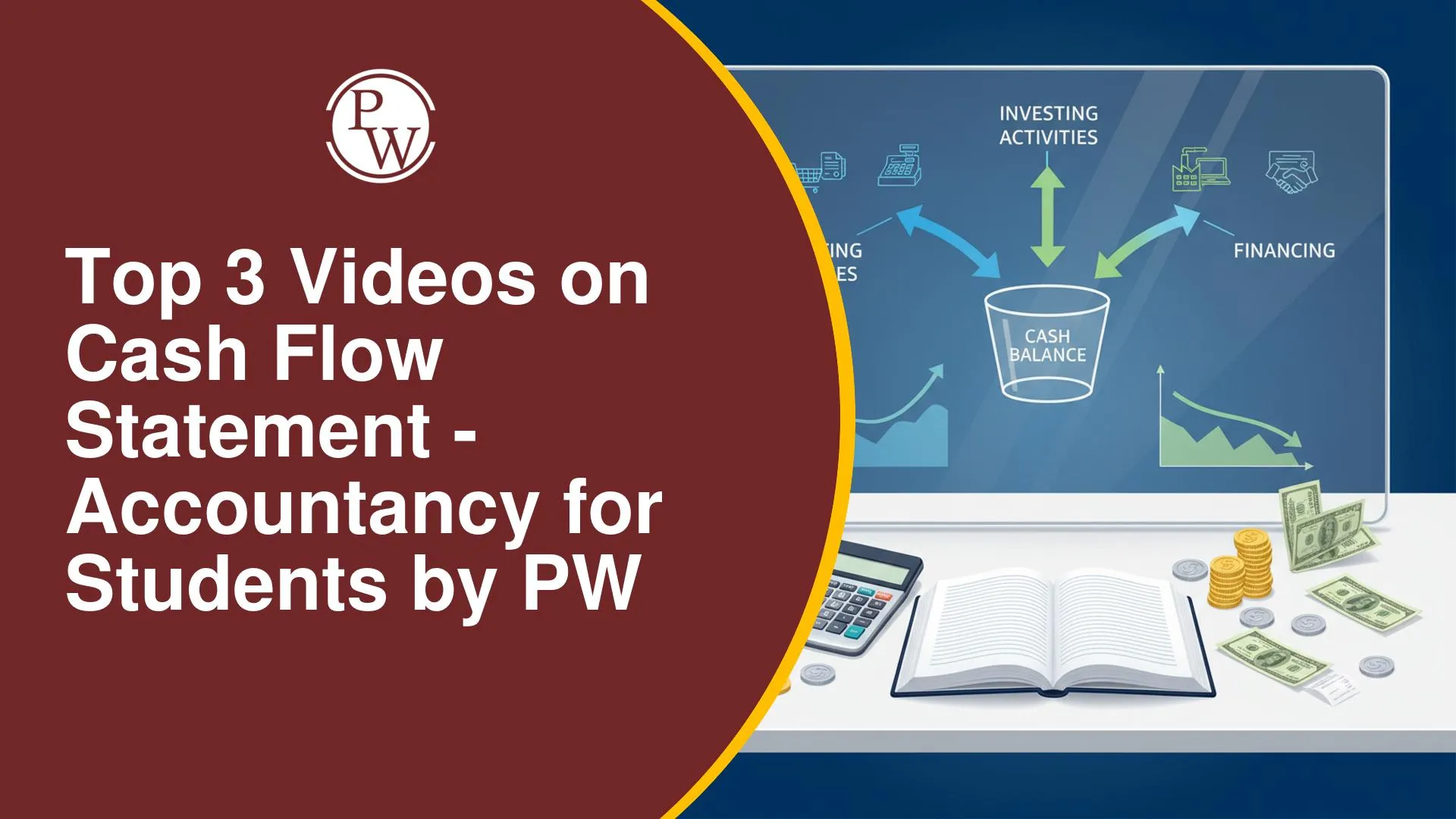
Cash Flow Statement can be challenging in Class 12 Accountancy because you must distinguish cash transactions from non-cash items and classify activities correctly as operating, investing, or financing. Applying adjustments for tax, dividends, and other items can also lead to calculation errors. Without sufficient practice, you may struggle to prepare the statement accurately and present your answers in the correct format.
PW’s Accountancy YouTube videos approach the Cash Flow Statement through full-chapter explanations, previous-year questions, and practical revision sessions. You can begin with the basic concepts and statement format, move on to CBSE-style questions, and then test your understanding through MCQs and complete numerical problems.
Video 1. Build a Strong Understanding of Cash Flow Statement With One-Shot Learning
This one-shot lesson introduces the Cash Flow Statement from the basics, covering its meaning, cash and cash equivalents, and the difference between cash and non-cash items. It explains operating, investing, and financing activities, the statement format, key assumptions, and practical questions based on A Ltd. and Loyd Ltd. The lesson also includes revision guidance to help students connect these concepts with CBSE board examination preparation.
Choose this YouTube video if you are learning the chapter for the first time or need to revise its major concepts in one sitting. Follow the worked examples carefully to understand how transactions are classified and how the information is used to prepare a Cash Flow Statement.
Video 2: Cash Flow Statement PYQs to Strengthen Your Board Preparation
In this lesson, previous-year questions are used to revise Cash Flow Statement according to the CBSE and NCERT syllabus. The session revisits important formats and concepts through board-style questions, with attention to interpreting question requirements, applying the appropriate format, and presenting answers clearly. As part of a chapter-wise PYQ series, it provides focused practice for Class 12 Accountancy examinations.
Watch this YouTube video after understanding the basics or when preparing for a mock test. Attempt each question before following the explanation, then compare your working and final presentation with the solution. This approach helps you identify recurring mistakes and become more familiar with the demands of board-style questions.
Video 3: MCQs and Practical Questions of Cash Flow Statement for Effective Revision
This revision lesson begins with key terms and the classification of operating, investing, and financing activities. It uses MCQs to test core concepts before revisiting the statement format. The session then covers operating activity calculations, bonus, dividend and tax adjustments, an investing activity question, and a complete Cash Flow Statement using the direct and indirect methods for board examination practice.
Use this lesson when you already understand the chapter and want to check your recall through questions. Practise the MCQs first, then work through the numerical problems step by step. Pay particular attention to adjustments and activity classification, as careful treatment of these details is essential for preparing accurate statements.
These three PW YouTube videos cover Cash Flow Statement preparation through concept learning, previous-year questions, MCQs, and practical problems. Start with the one-shot lesson to understand the format and activity classification, use the PYQ session to practise board-style questions, and finish with the revision lesson to test your understanding of adjustments and calculations.


Have questions about your prep?
Our experts can answer all your questions